- Start with a clinical question
Inline citations link to the journals, guidelines, and drug references behind the answer.
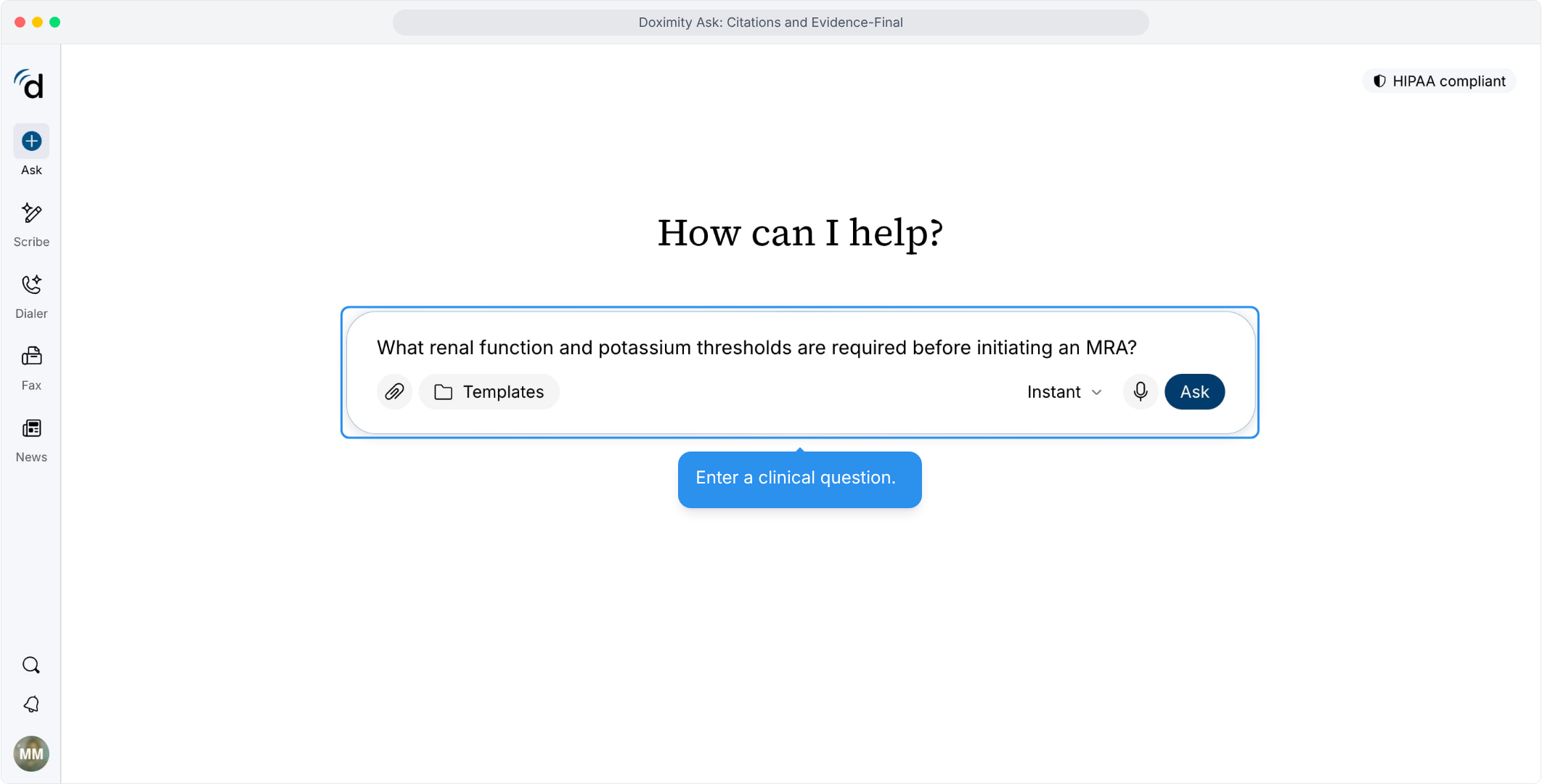
- See guideline-based recommendations
Recommendations are tied to the guidelines they come from.
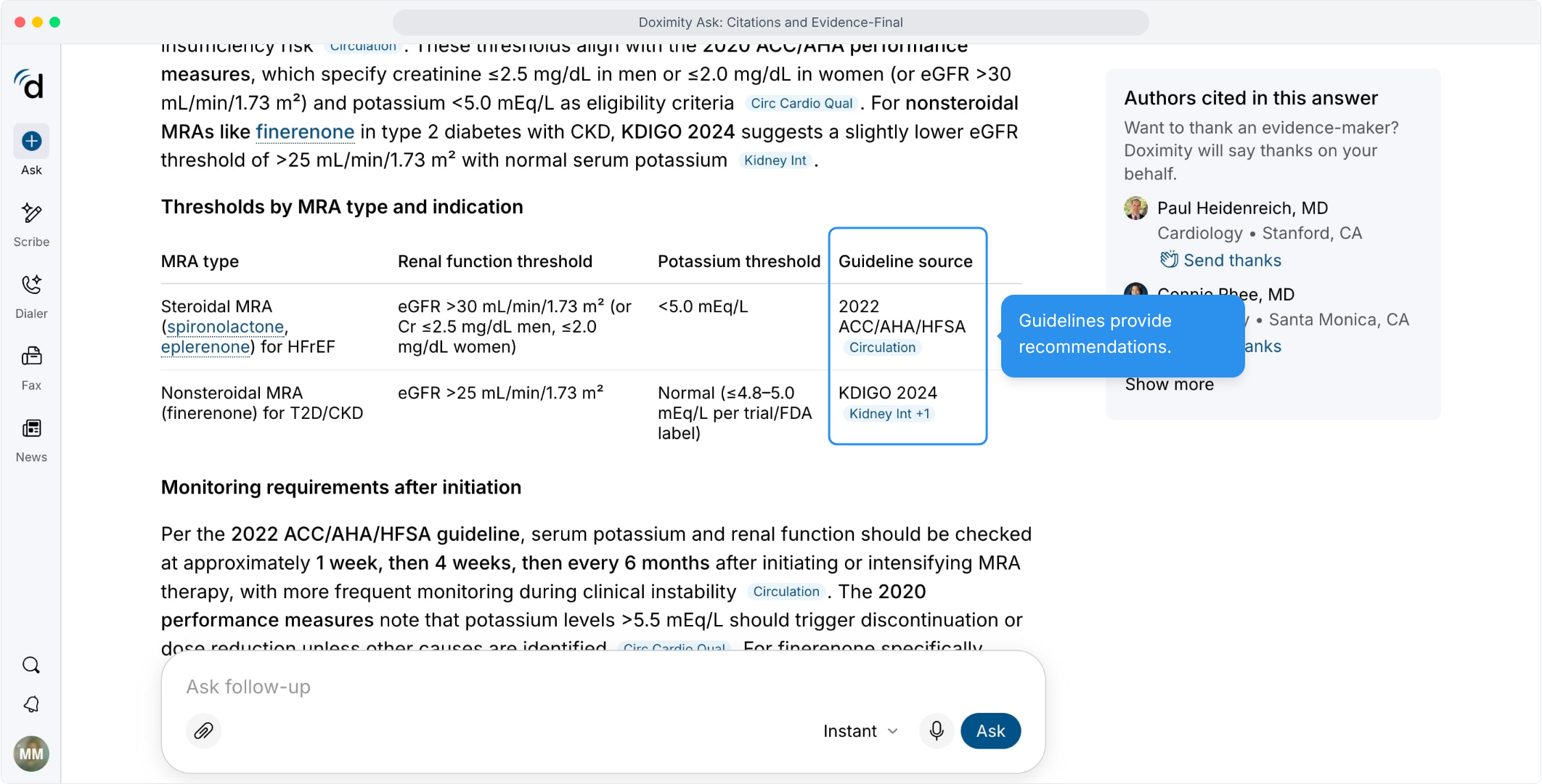
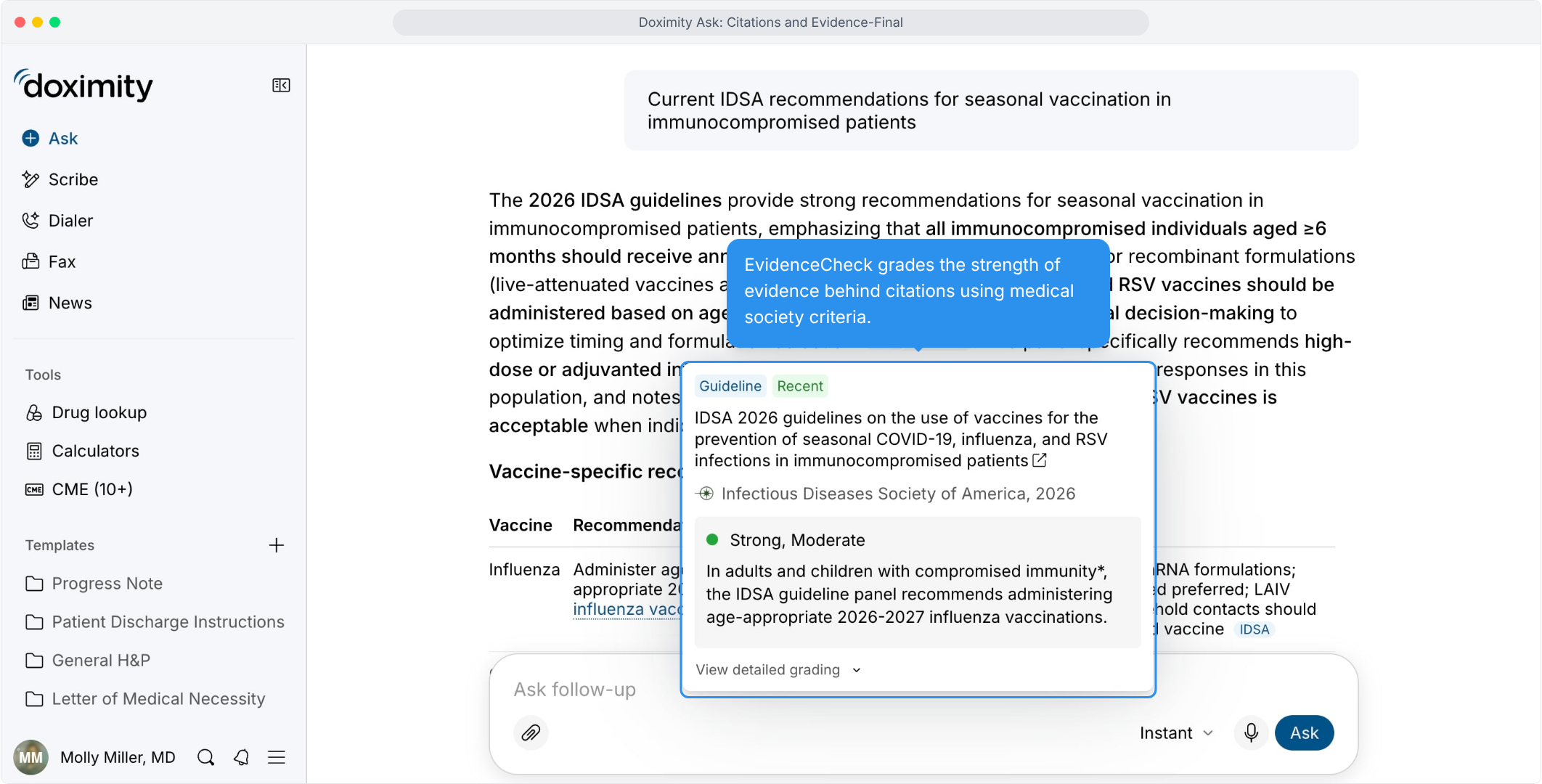
- Preview guidelines at a glance
Hover over a citation for a concise summary of the source.
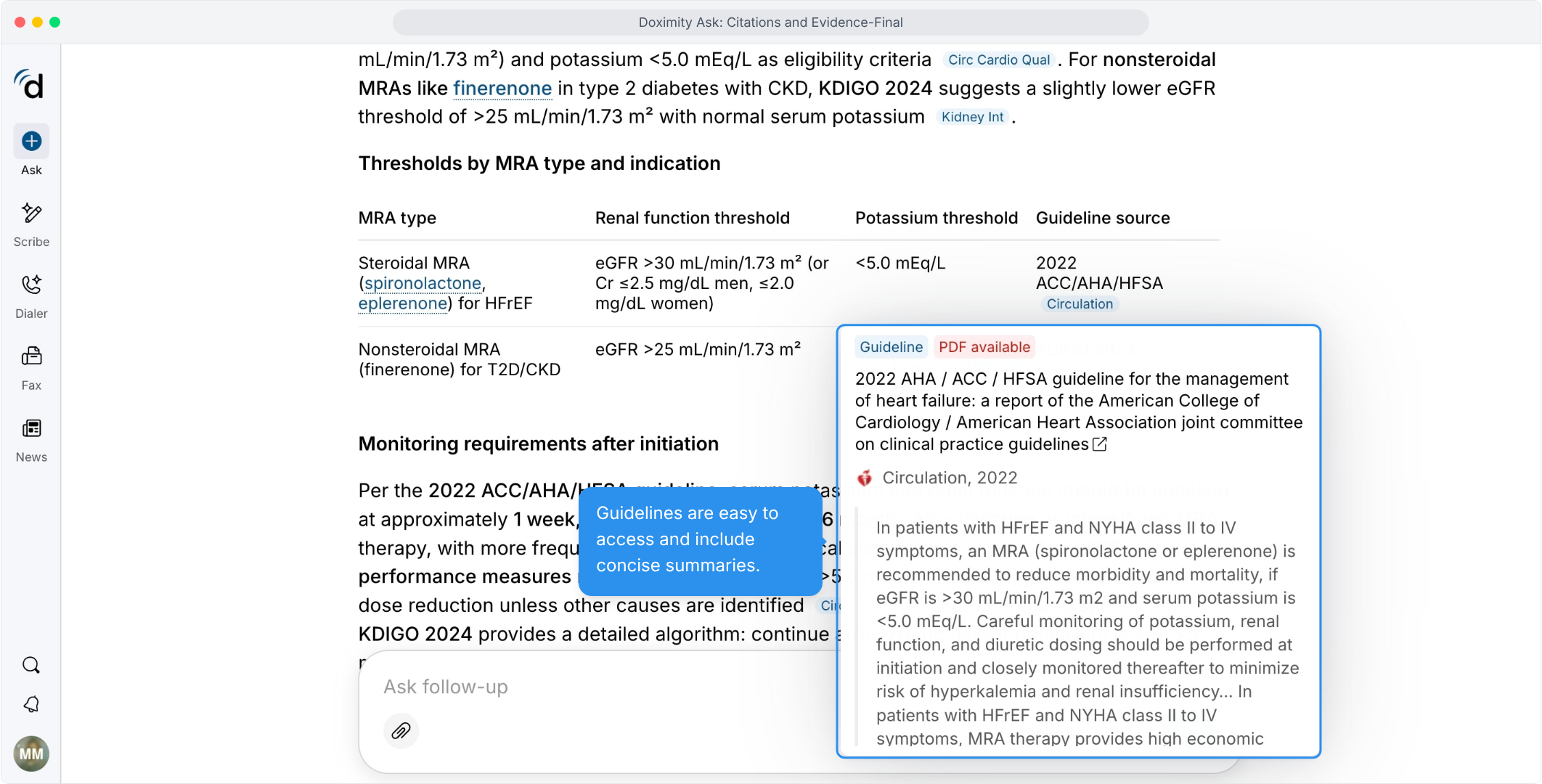
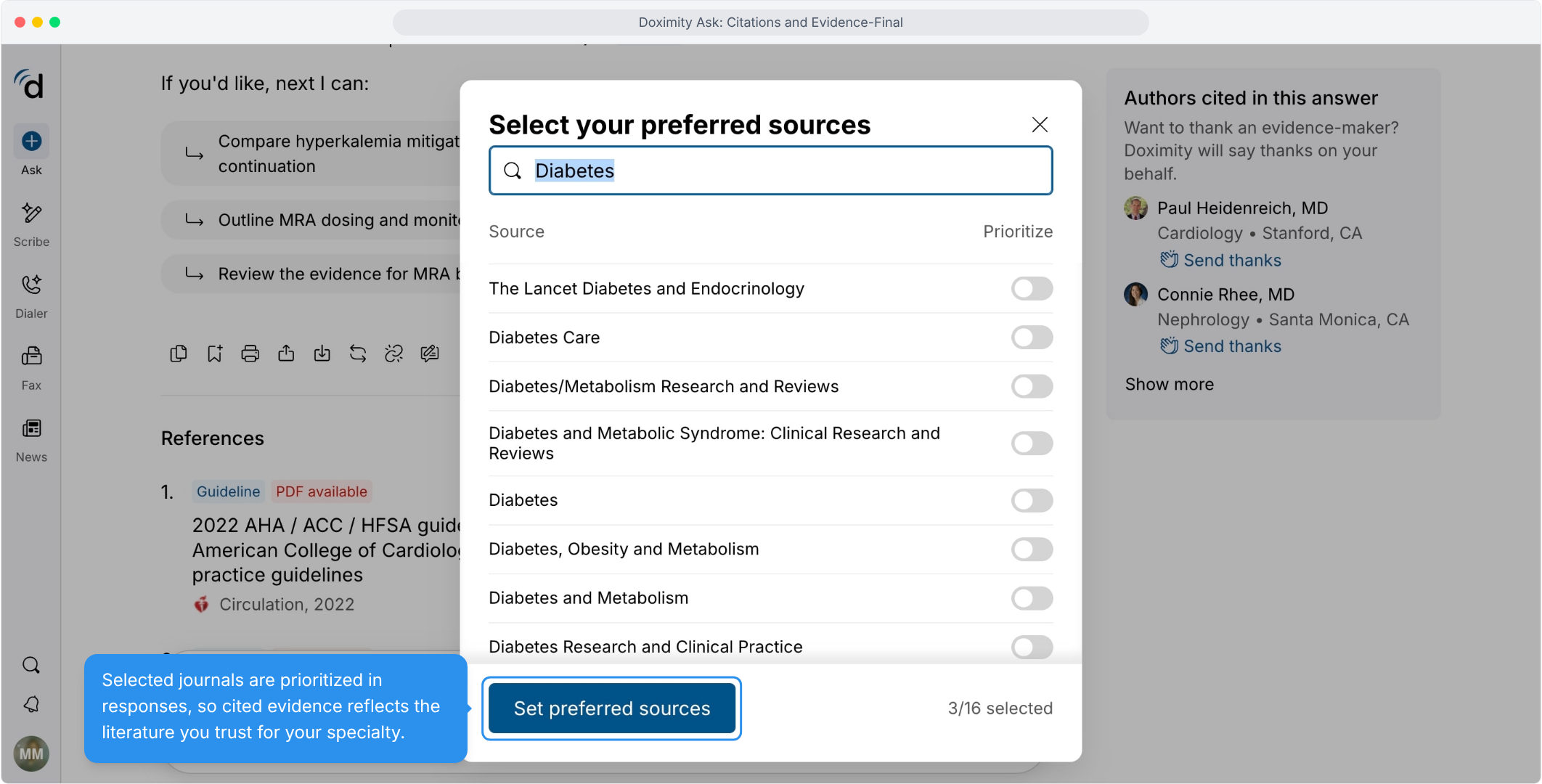
- Set preferred sources
Prioritize journals from more than 2,000 peer-reviewed titles.
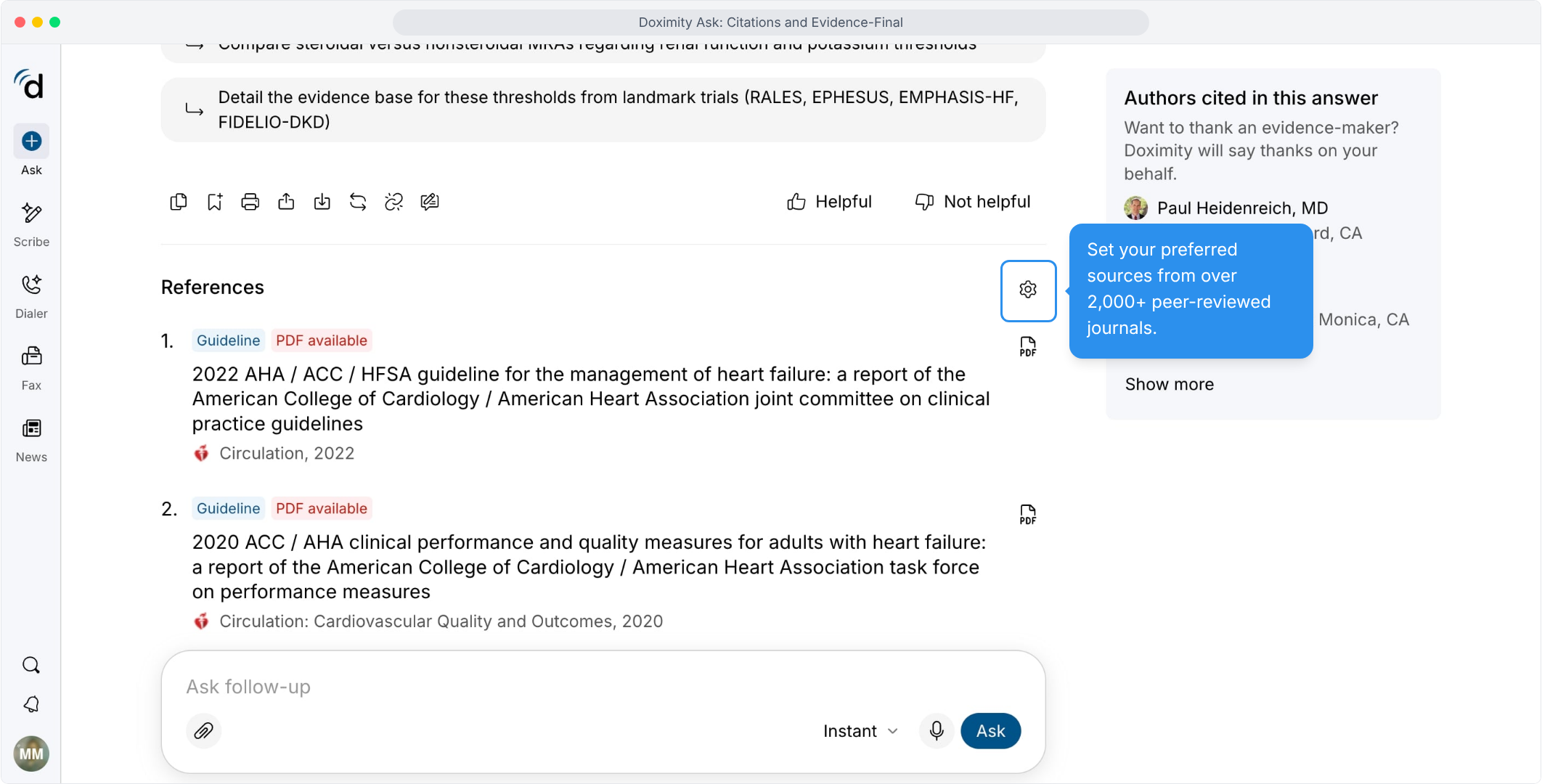
- Choose the journals you trust
Cited evidence reflects the literature you rely on in your specialty.
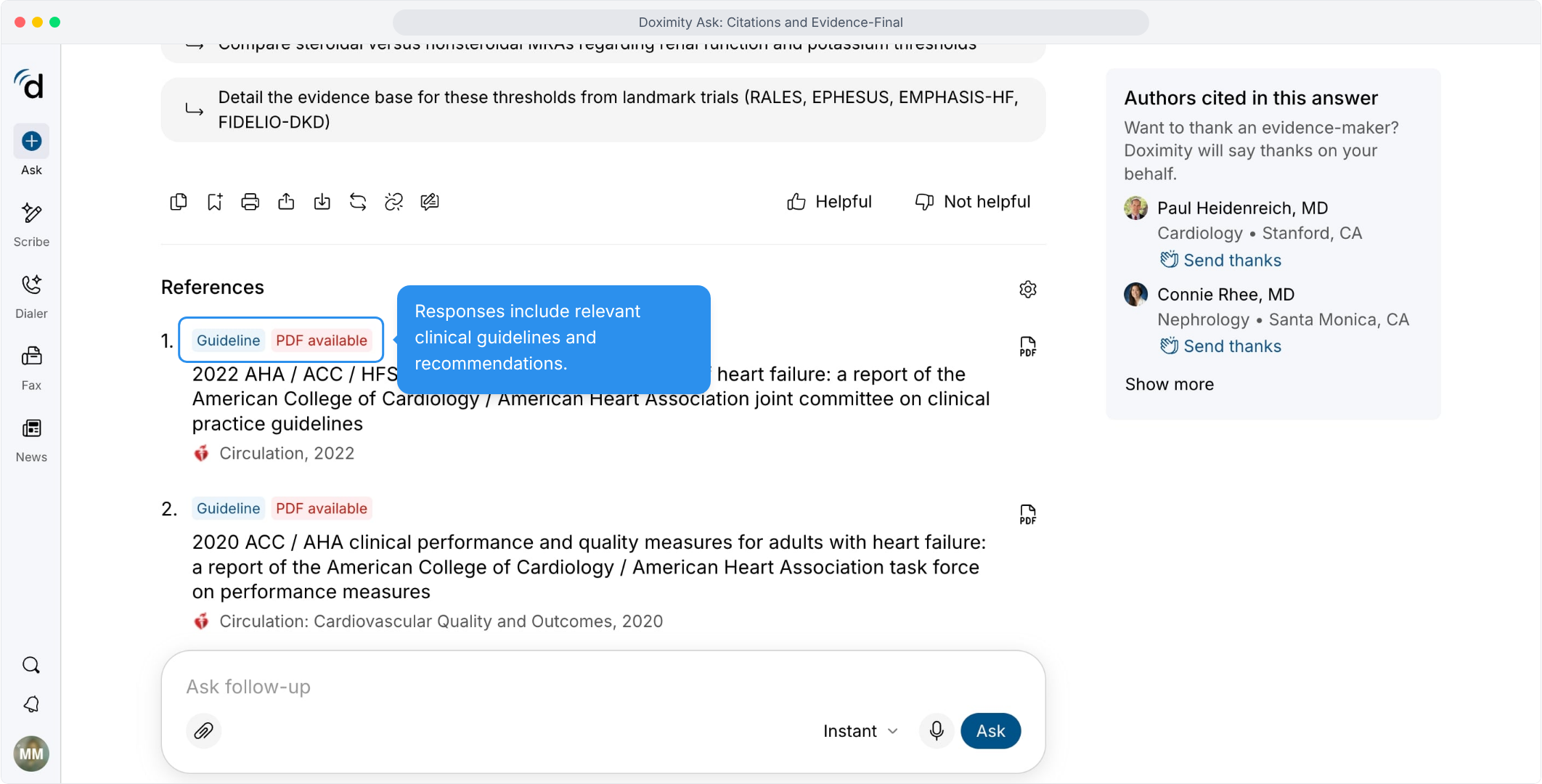
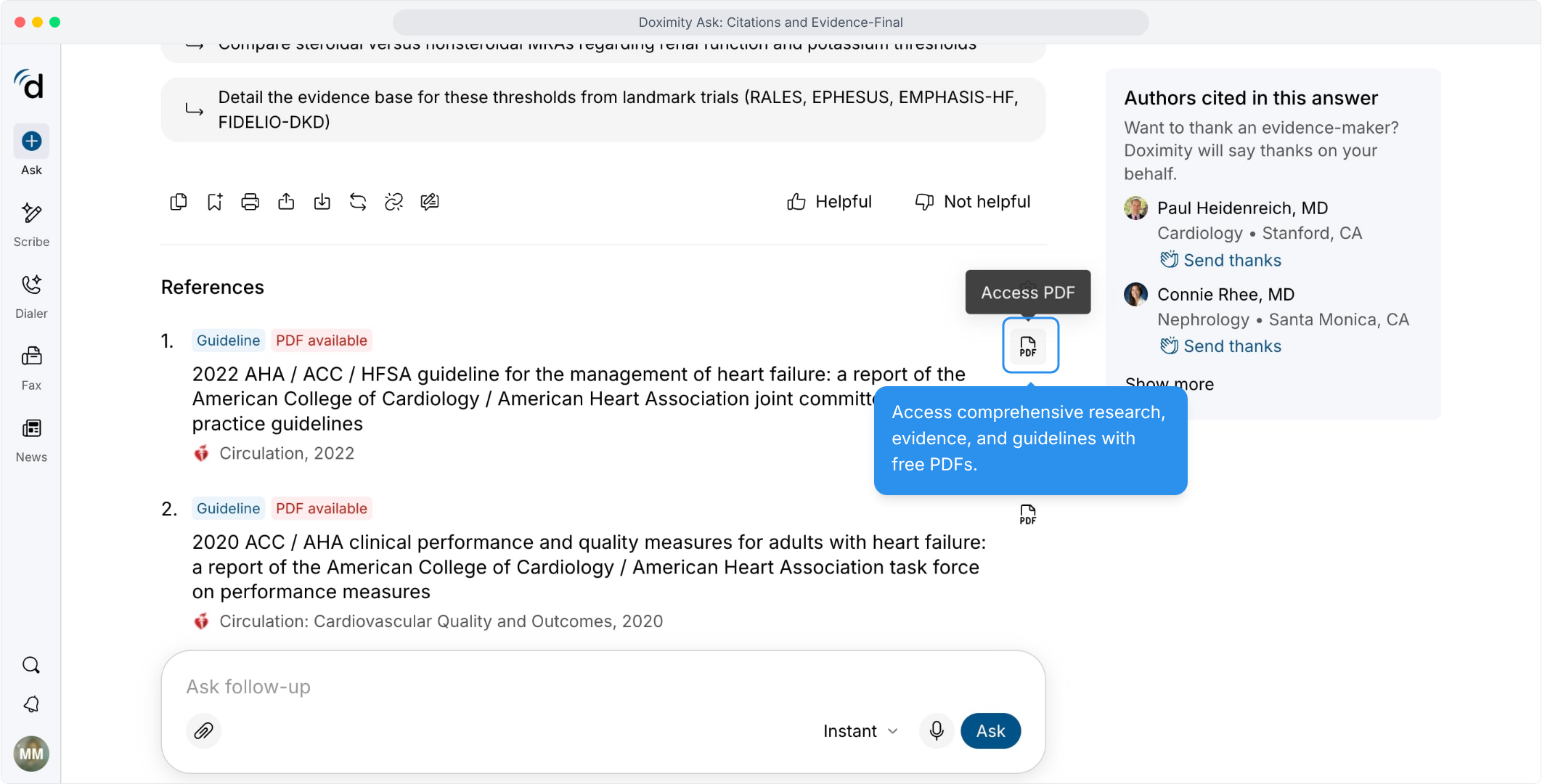
- Trace the answer to its guidelines
Guideline sources are labeled in the references list.
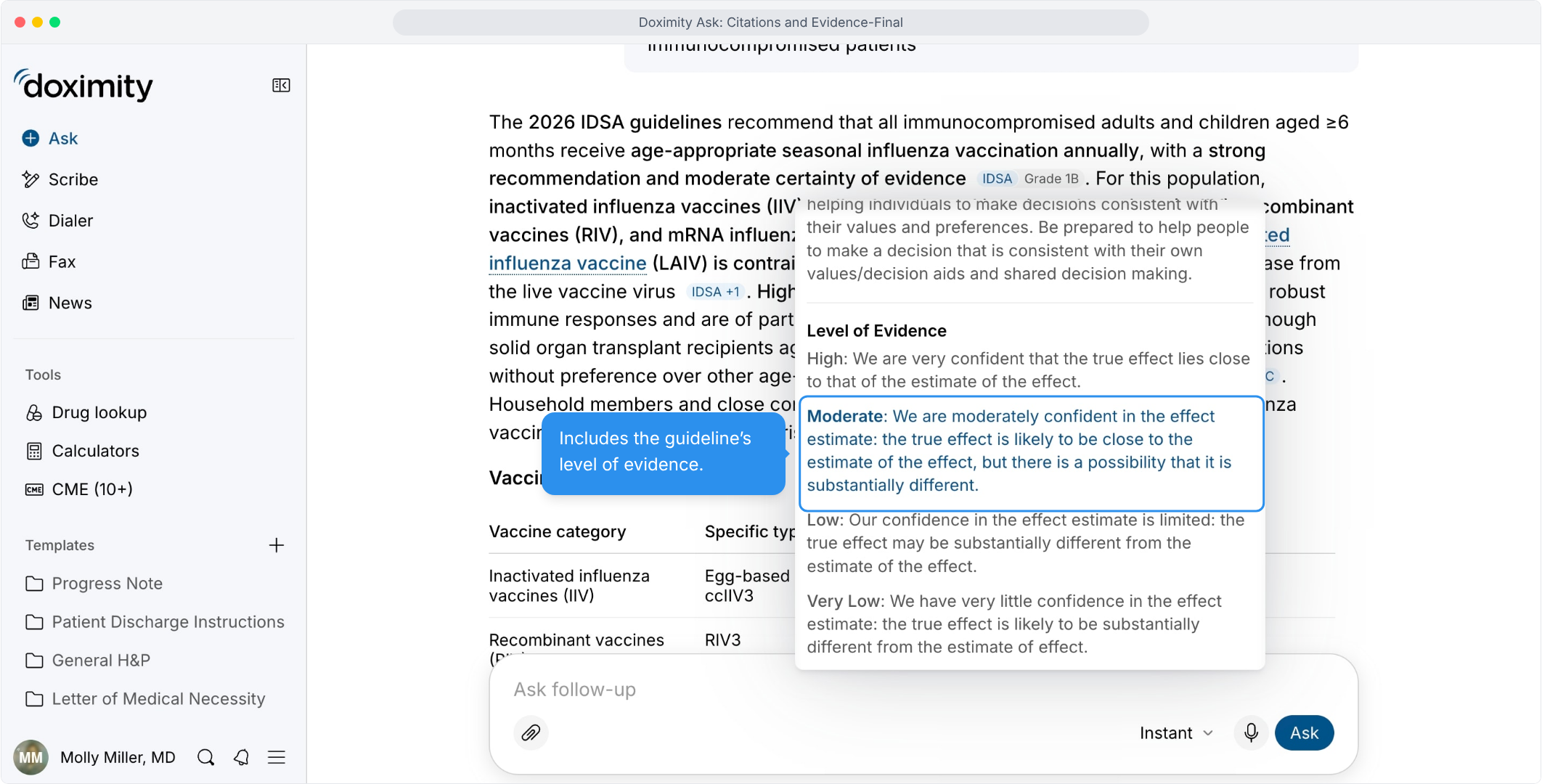
- Check how strong the evidence is
Citations are graded using medical society criteria
- Gauge the strength of the recommendation
See what "strong" or "conditional" means in the guideline's terms.
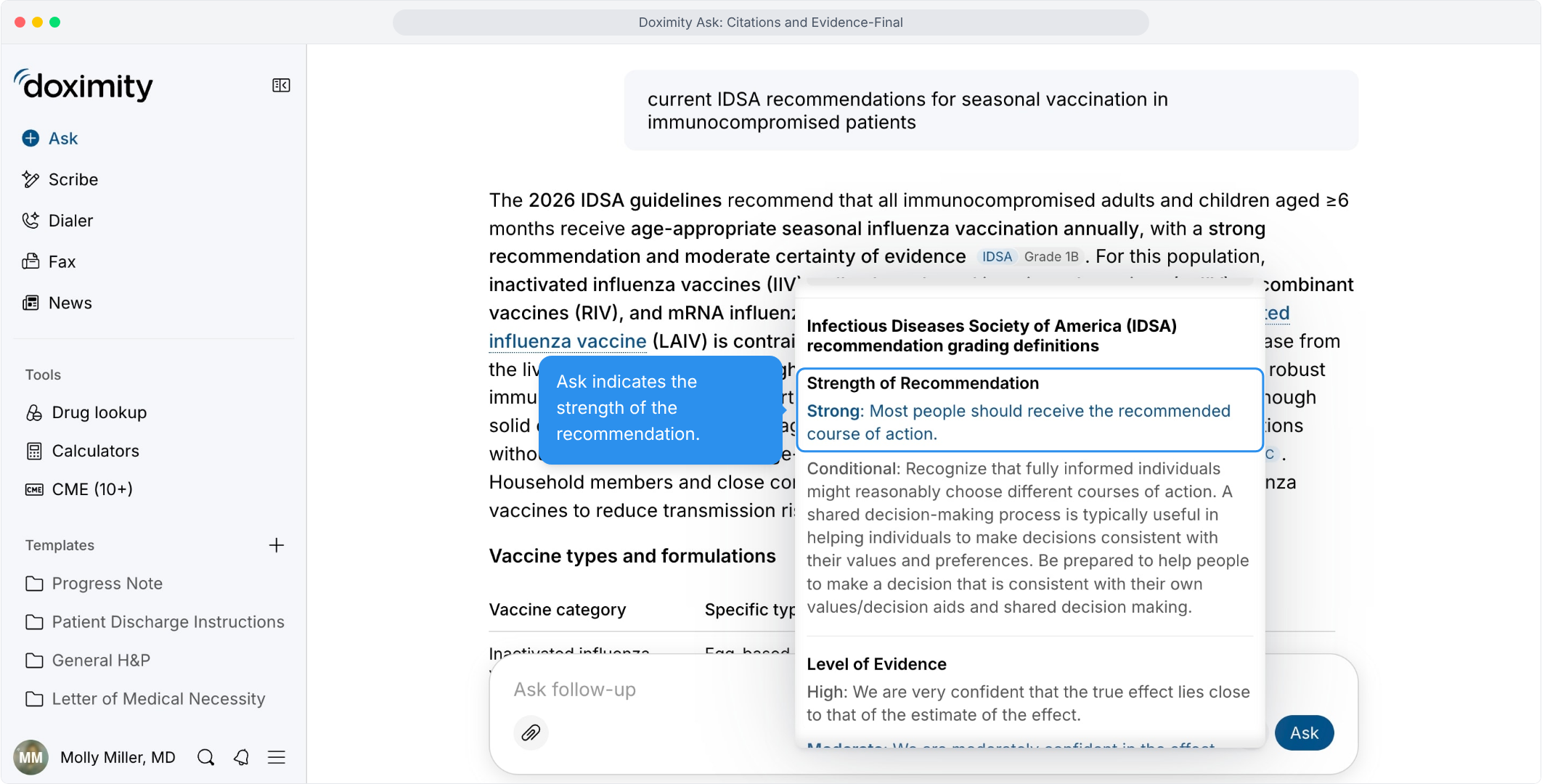
- Assess the level of evidence
Know how confident the guideline is in the underlying data.
- Access direct research
Go from a citation to the full guideline or article.
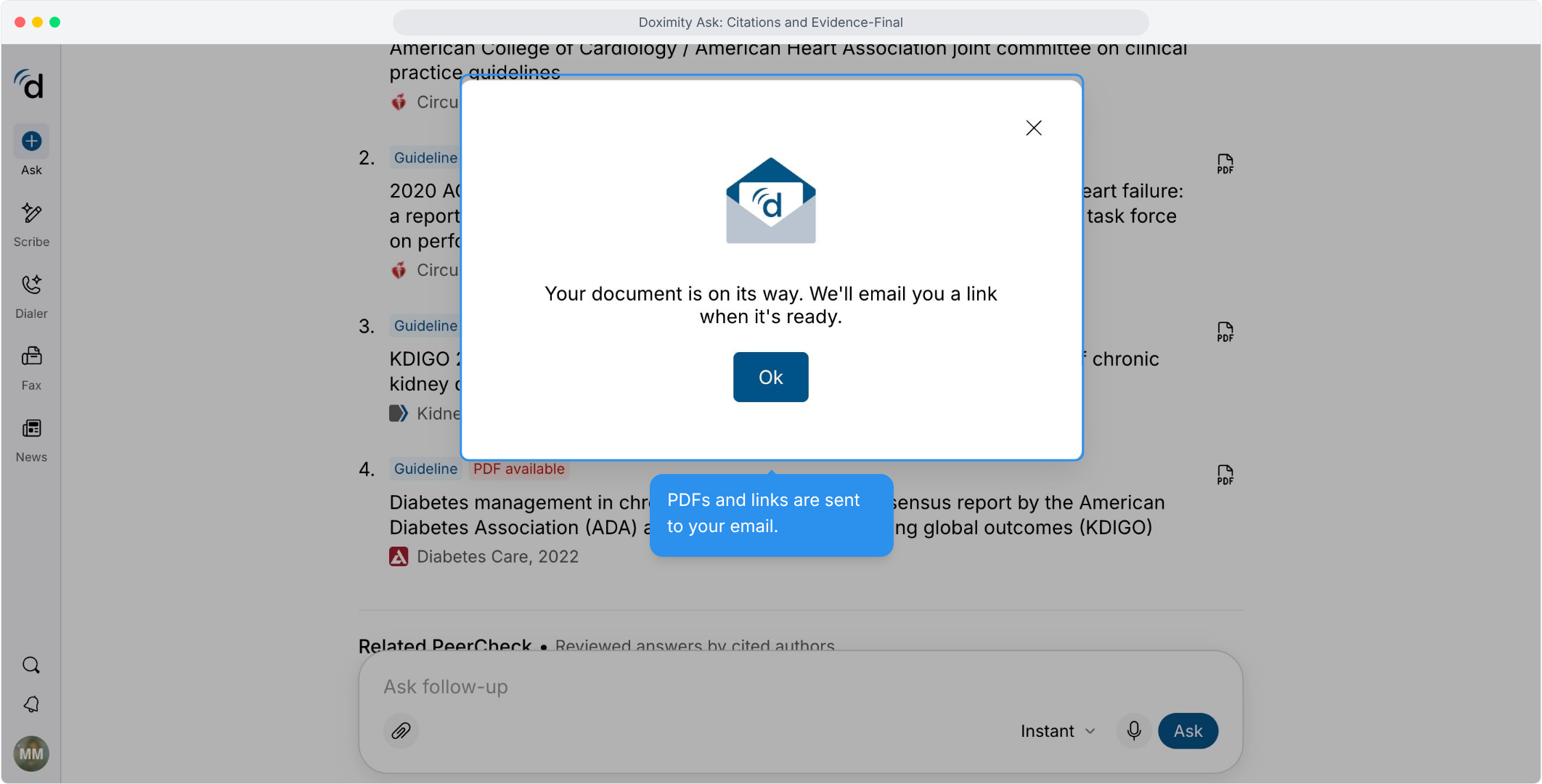
- Get PDFs by email
A link arrives in your inbox when the document is ready.
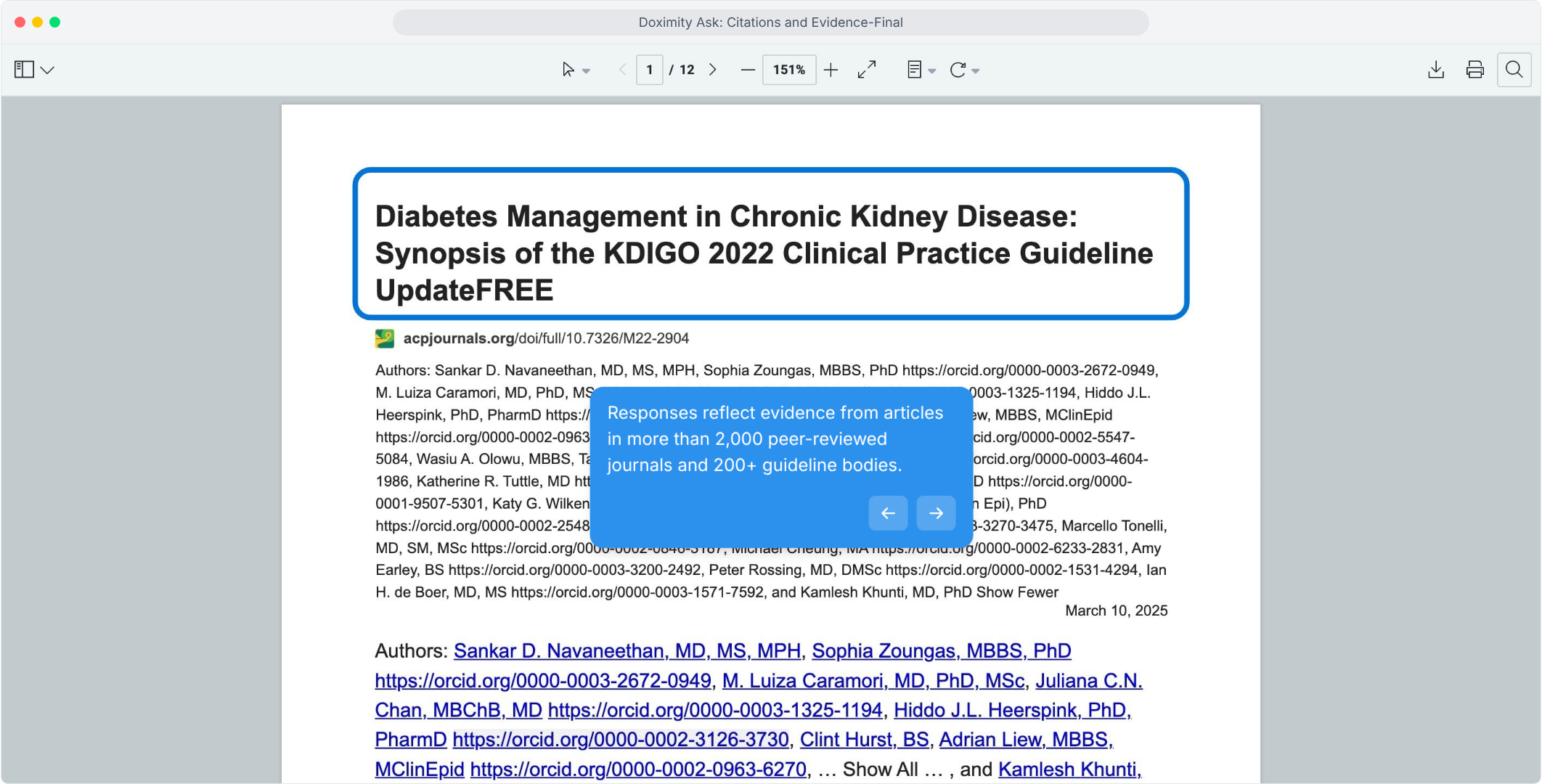
- Draw on journals and guidelines
Evidence from 2,000+ peer-reviewed journals and 200+ guideline bodies.
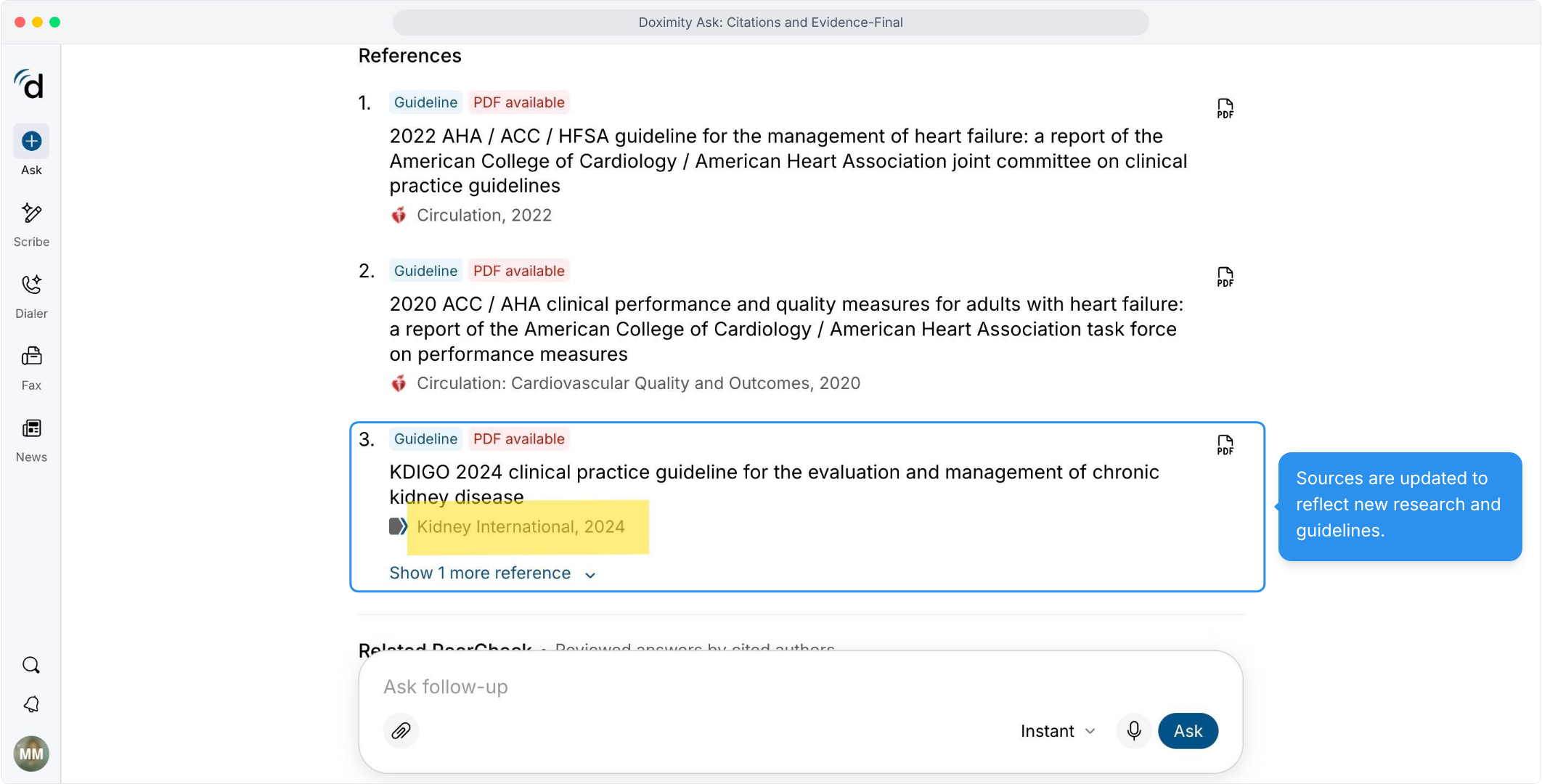
- Stay current with new research
Sources are updated to reflect new studies and guidelines.
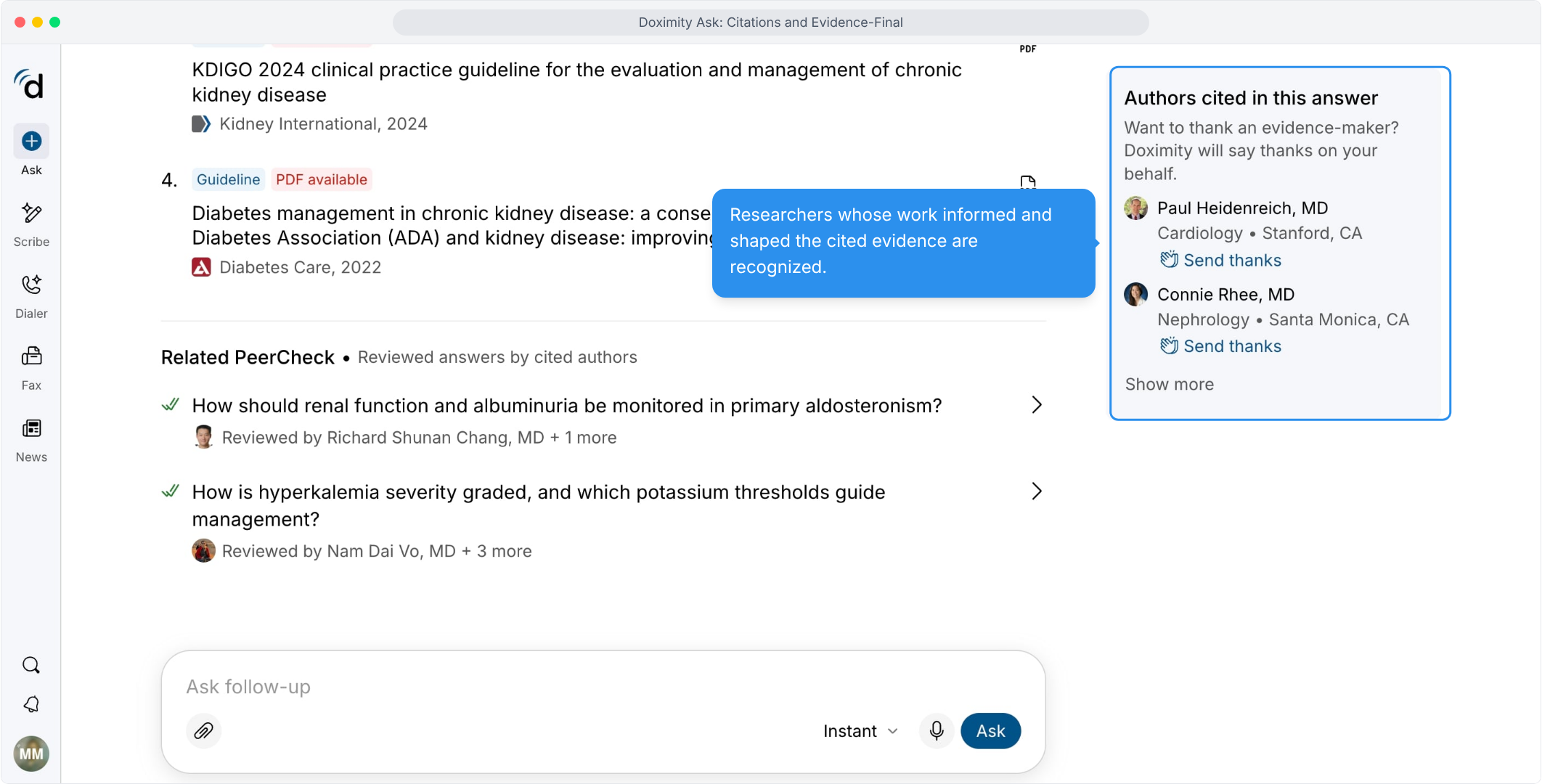
- Discover the clinicians behind the evidence
Cited authors are listed with their specialty and location.
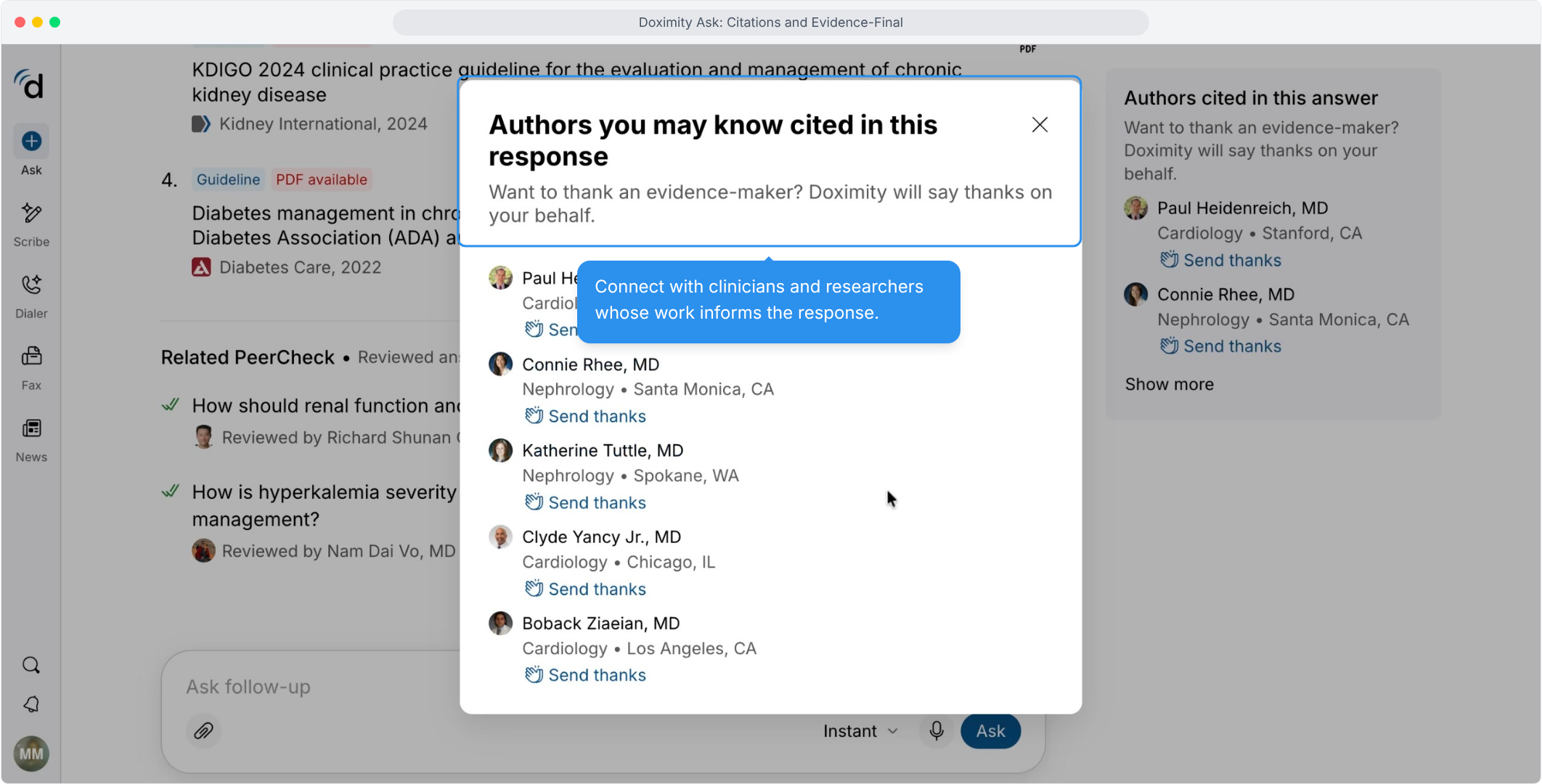
- Connect with clinicians and researchers
Send thanks to clinicians whose work informs the response.
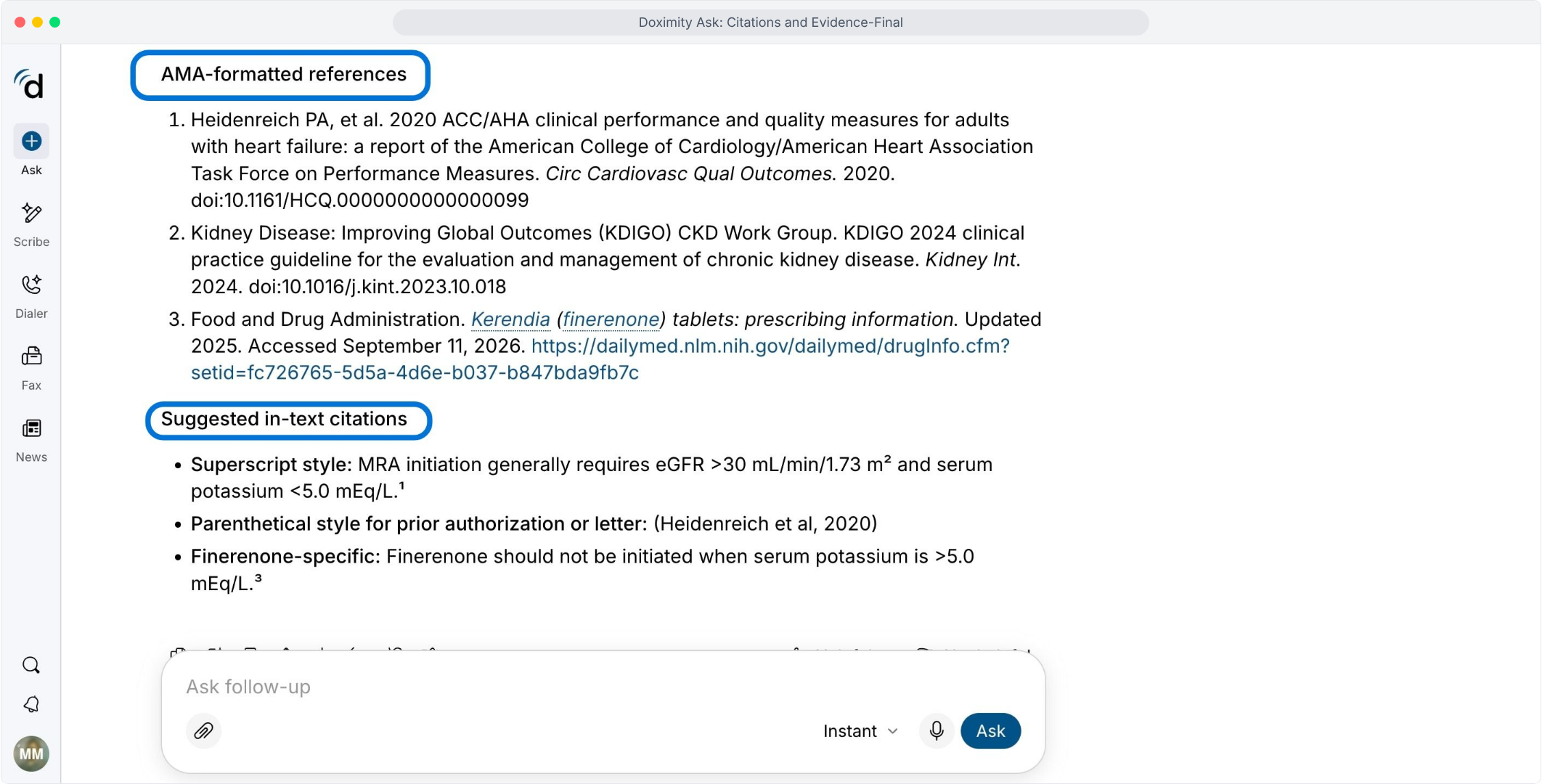
- Create AMA citations
Formatted references and in-text citations for letters and prior authorizations.

Features
Citations and Evidence
Doximity Ask grounds every response in traceable evidence — inline citations link directly to the peer-reviewed journals, guidelines, and drug references behind the answer.