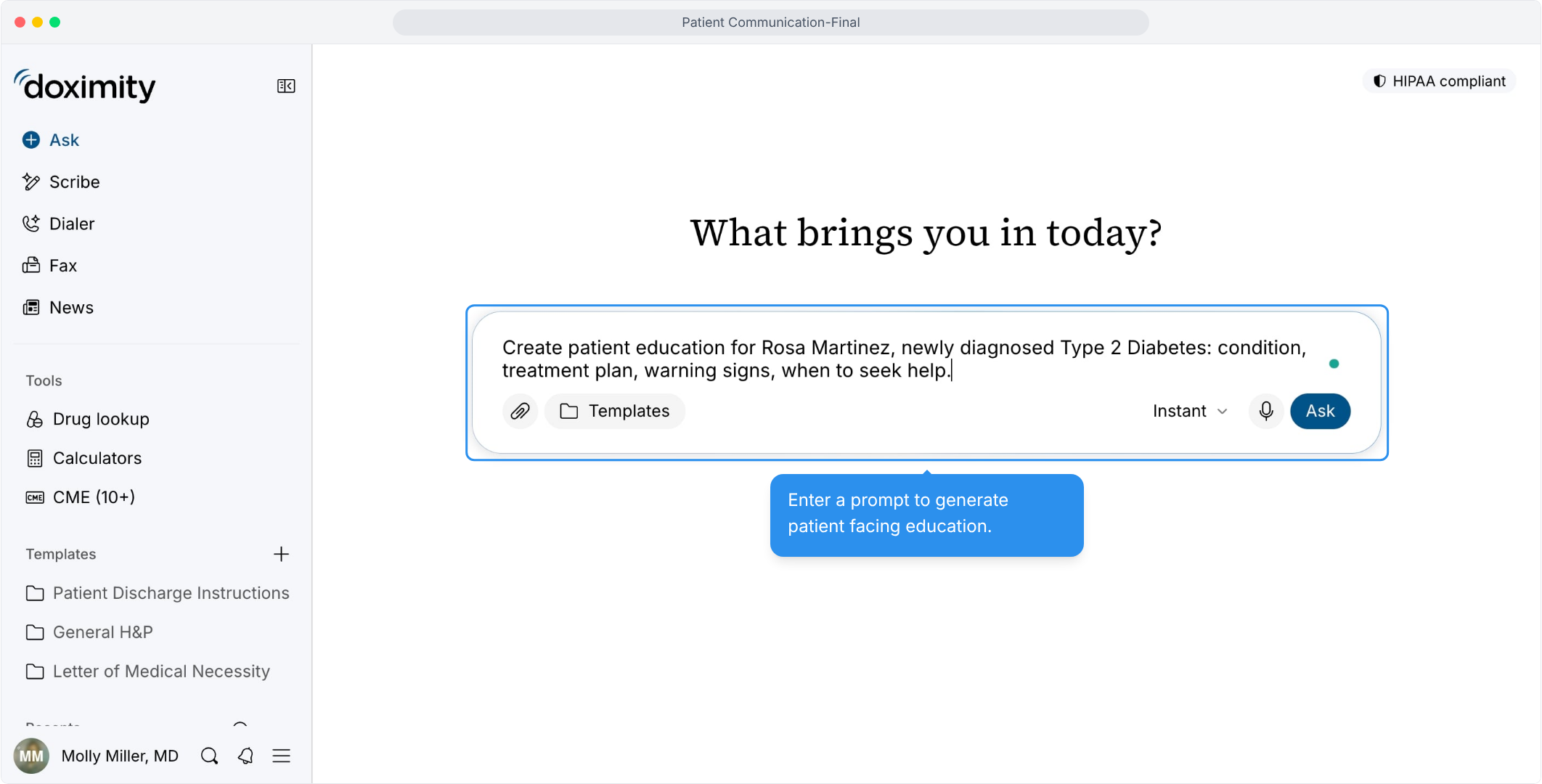
- Start with a prompt
Create patient materials without starting from scratch.
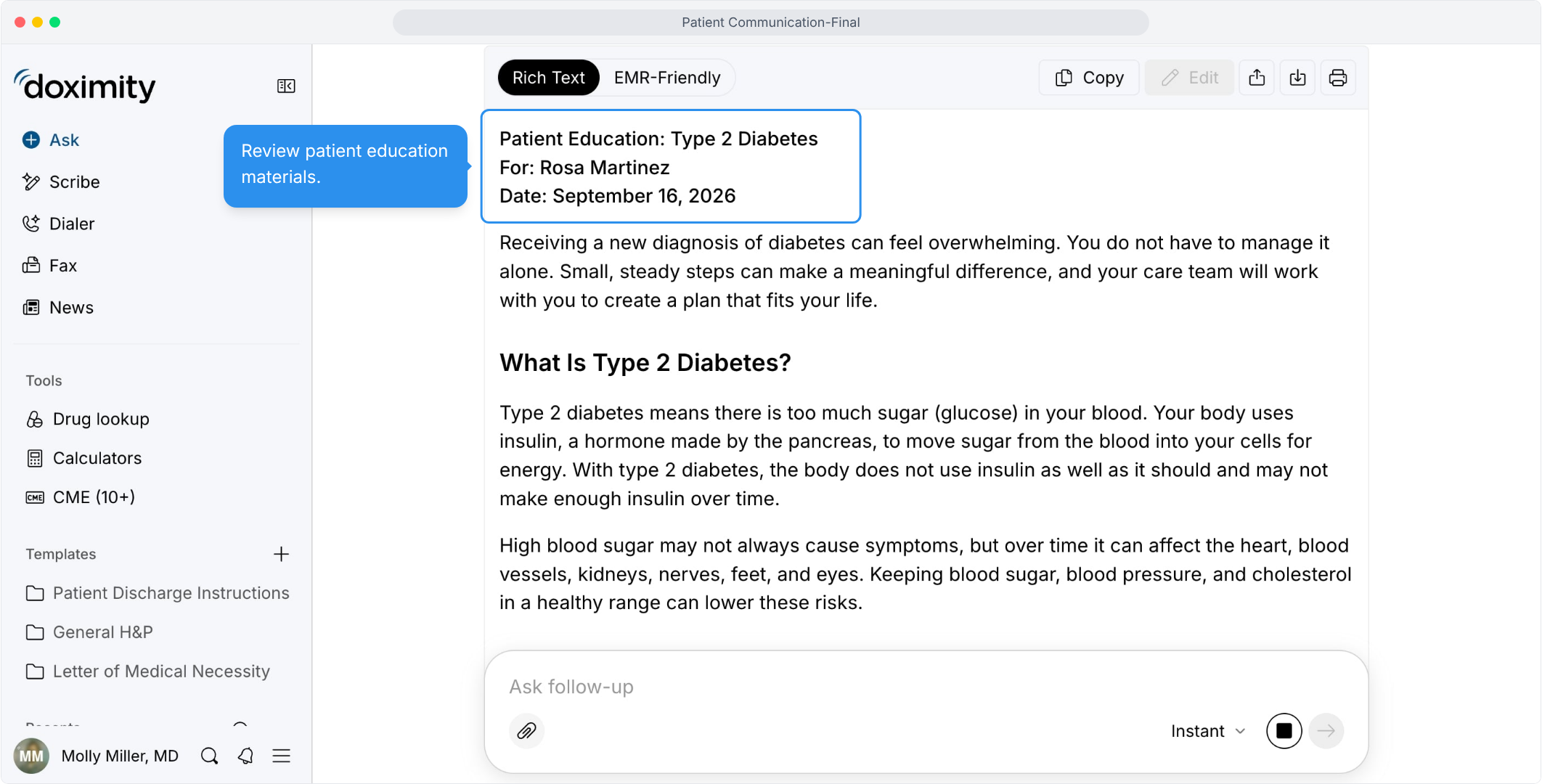
- Review the draft
Edit anything before it reaches the patient.
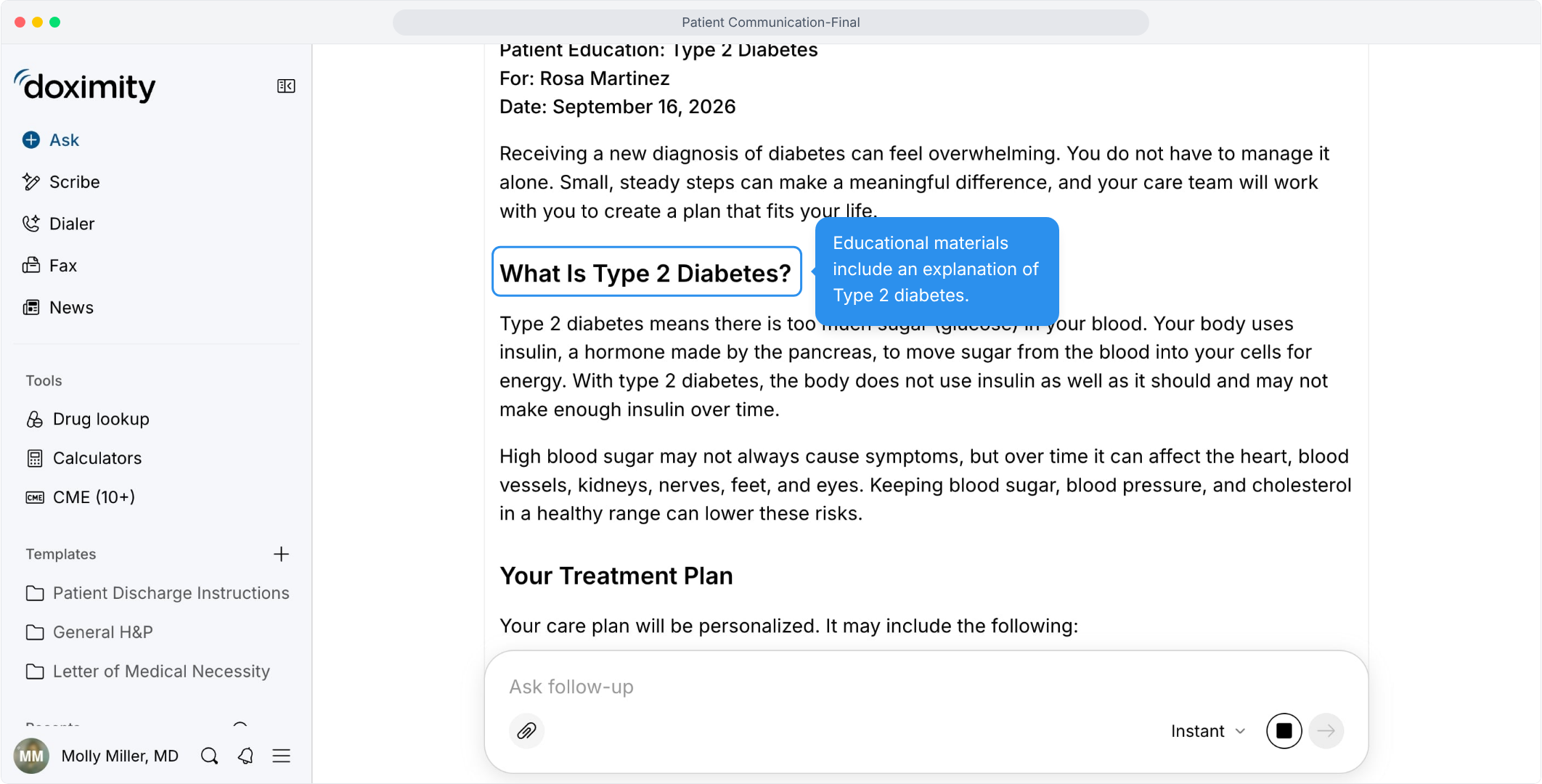
- Explain the diagnosis
A plain-language overview the patient can follow.
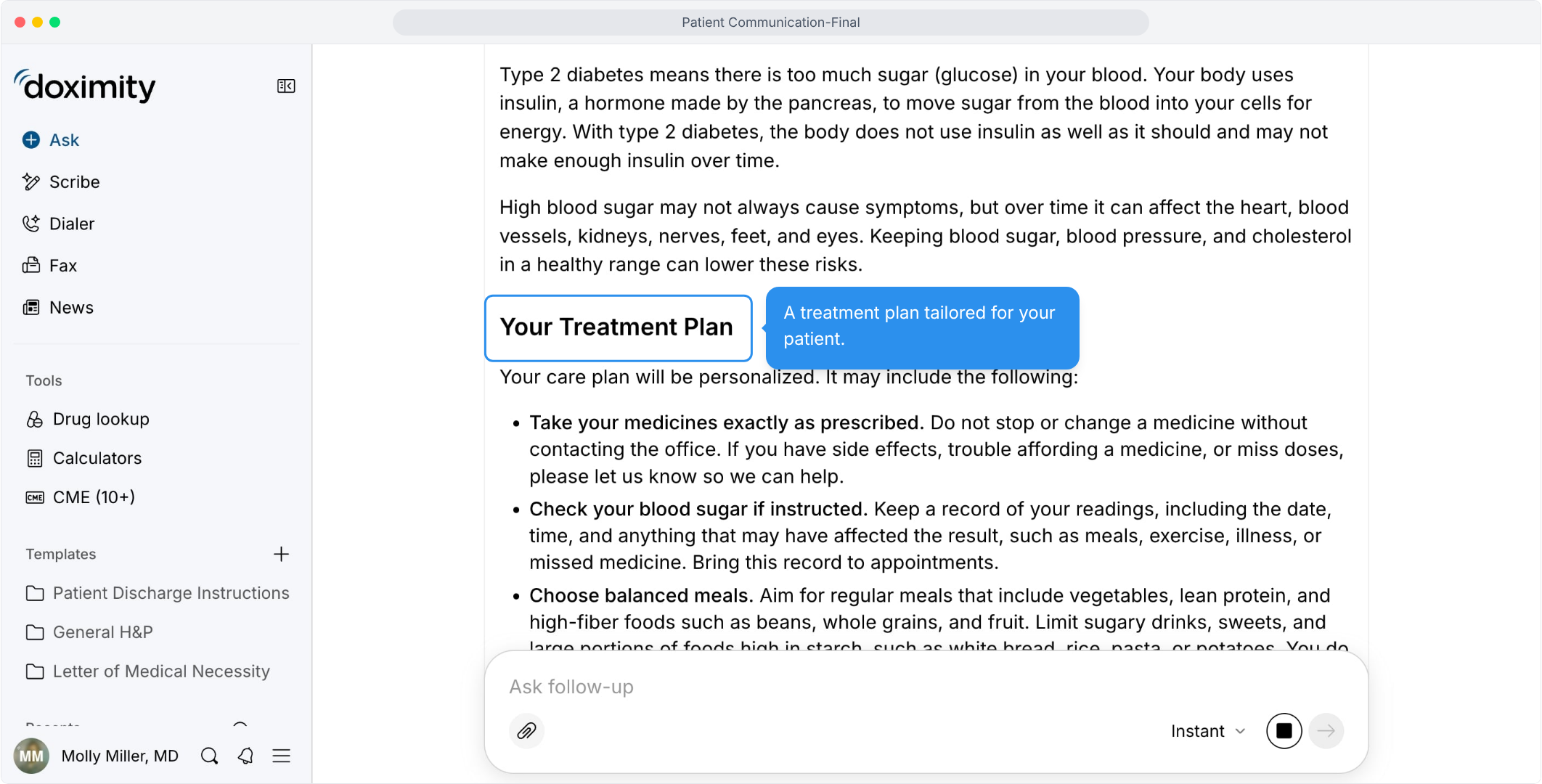
- Outline the treatment plan
Medications, monitoring, and lifestyle guidance in one place.
- Prepare patients for low blood sugar
Symptoms and immediate steps, including when to call 911.
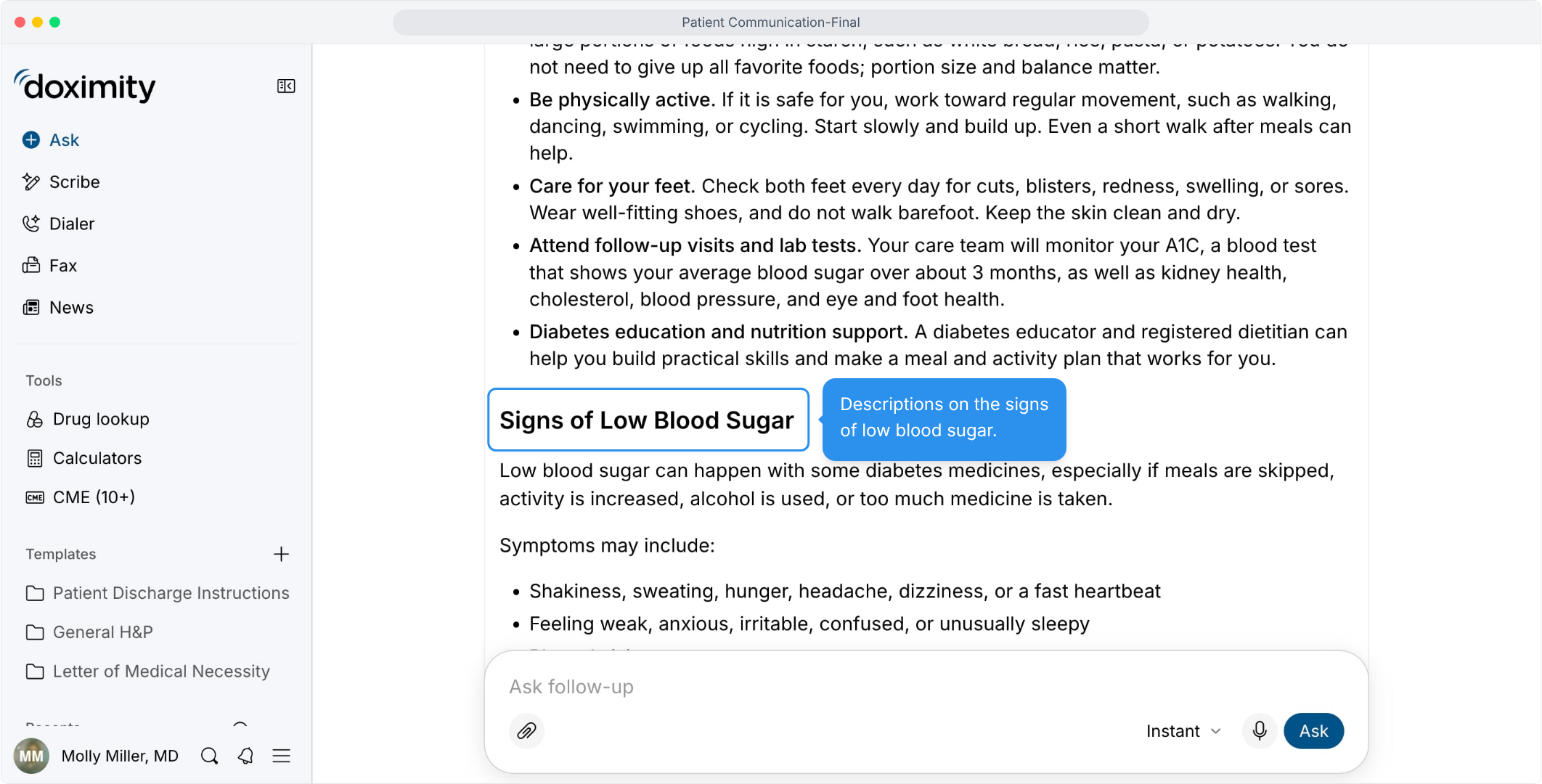
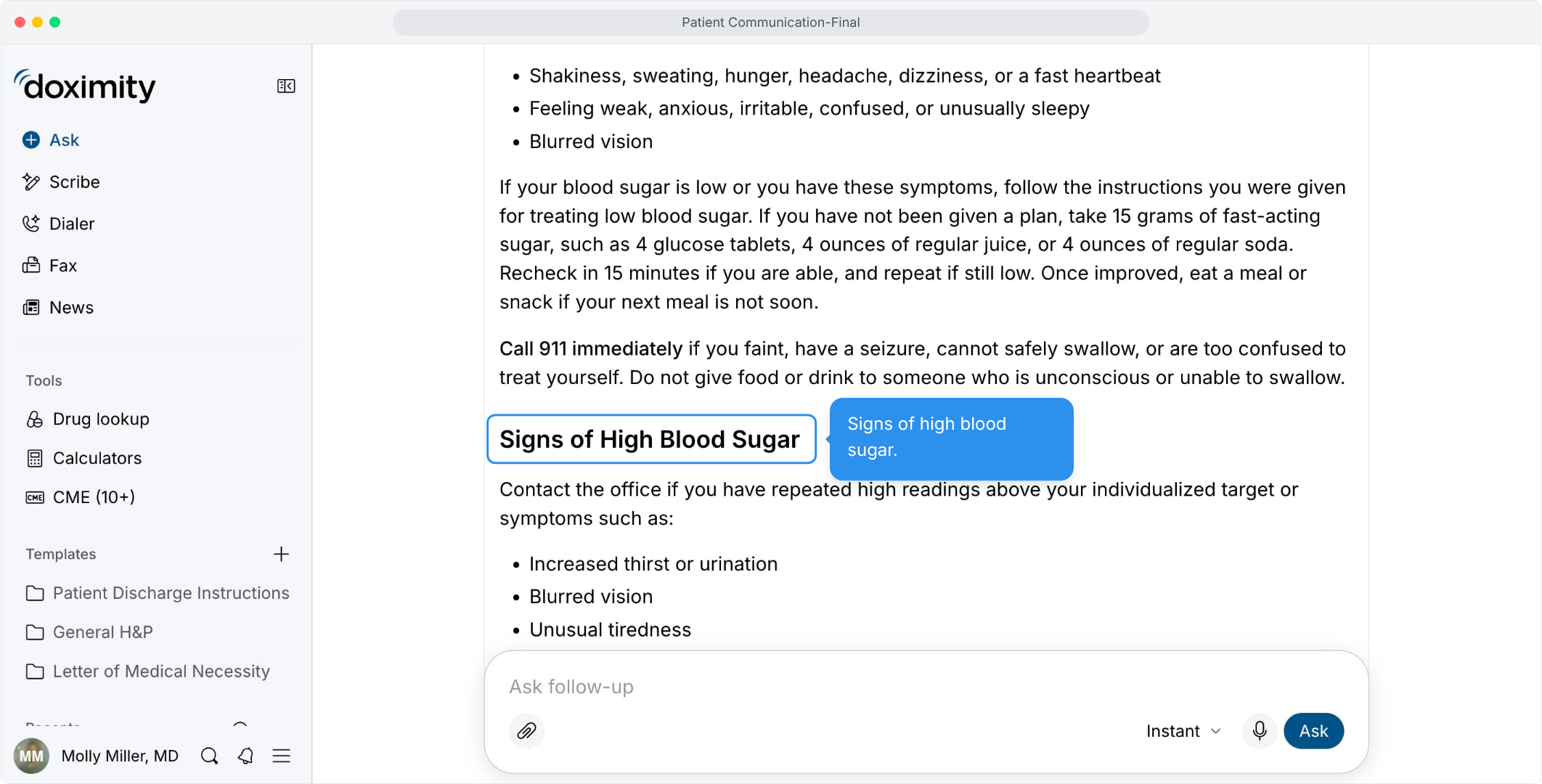
- Help patients recognize high blood sugar
Symptoms to watch for and when to contact the office.
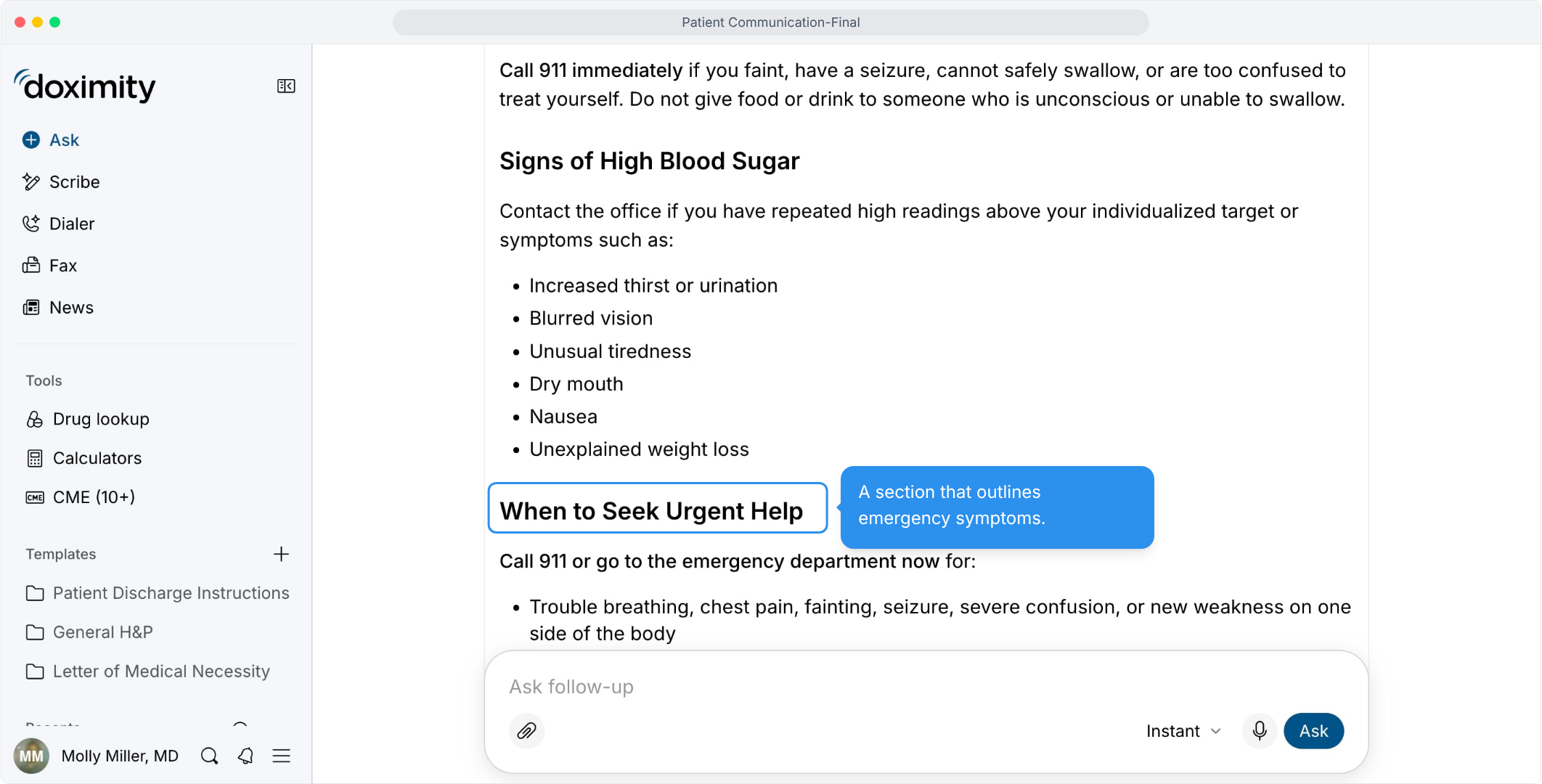
- Highlight urgent warning signs
Clear guidance on when to get help.
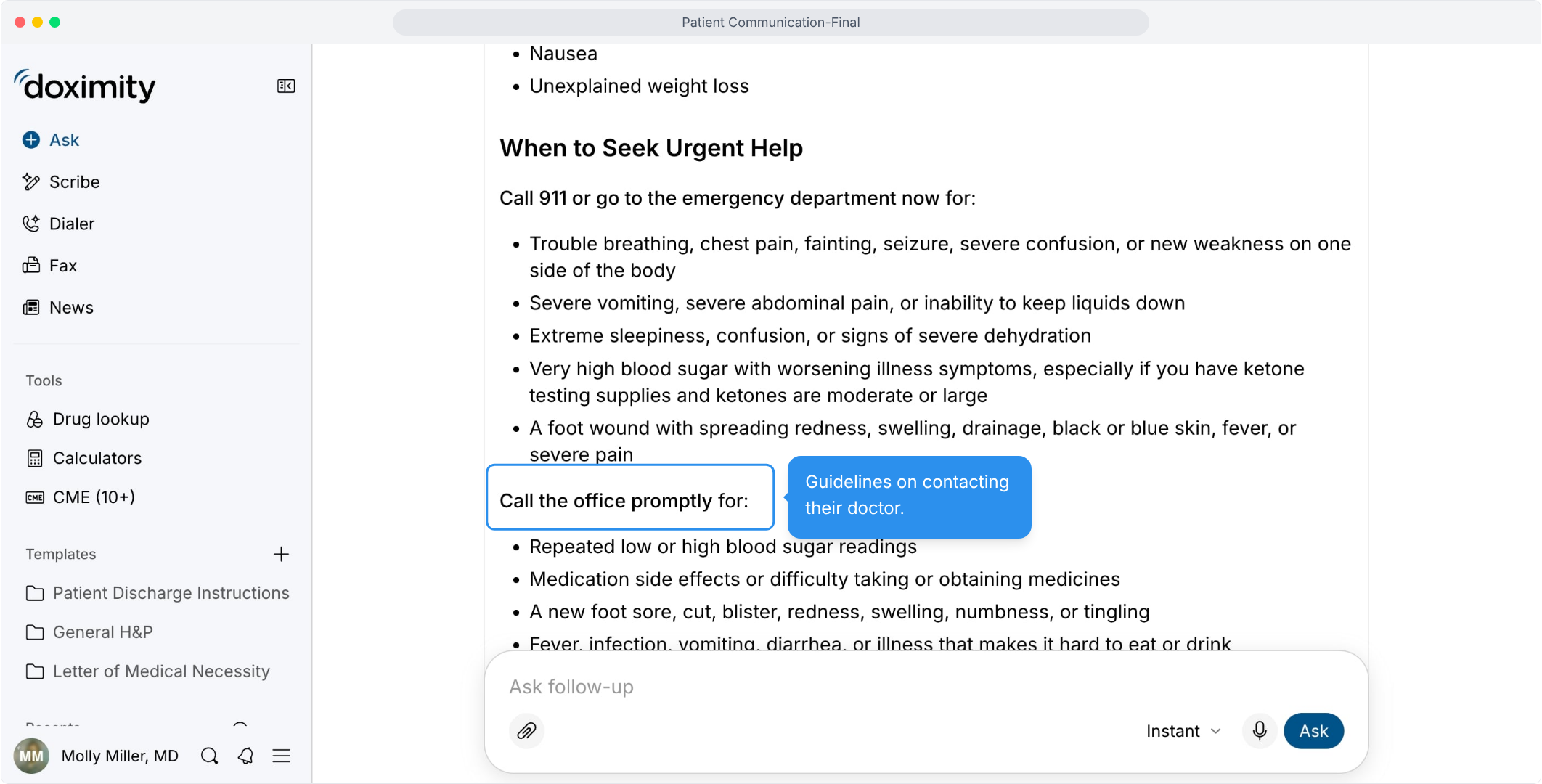
- Separate emergencies from office calls
Patients know when to call 911 and when to call you.
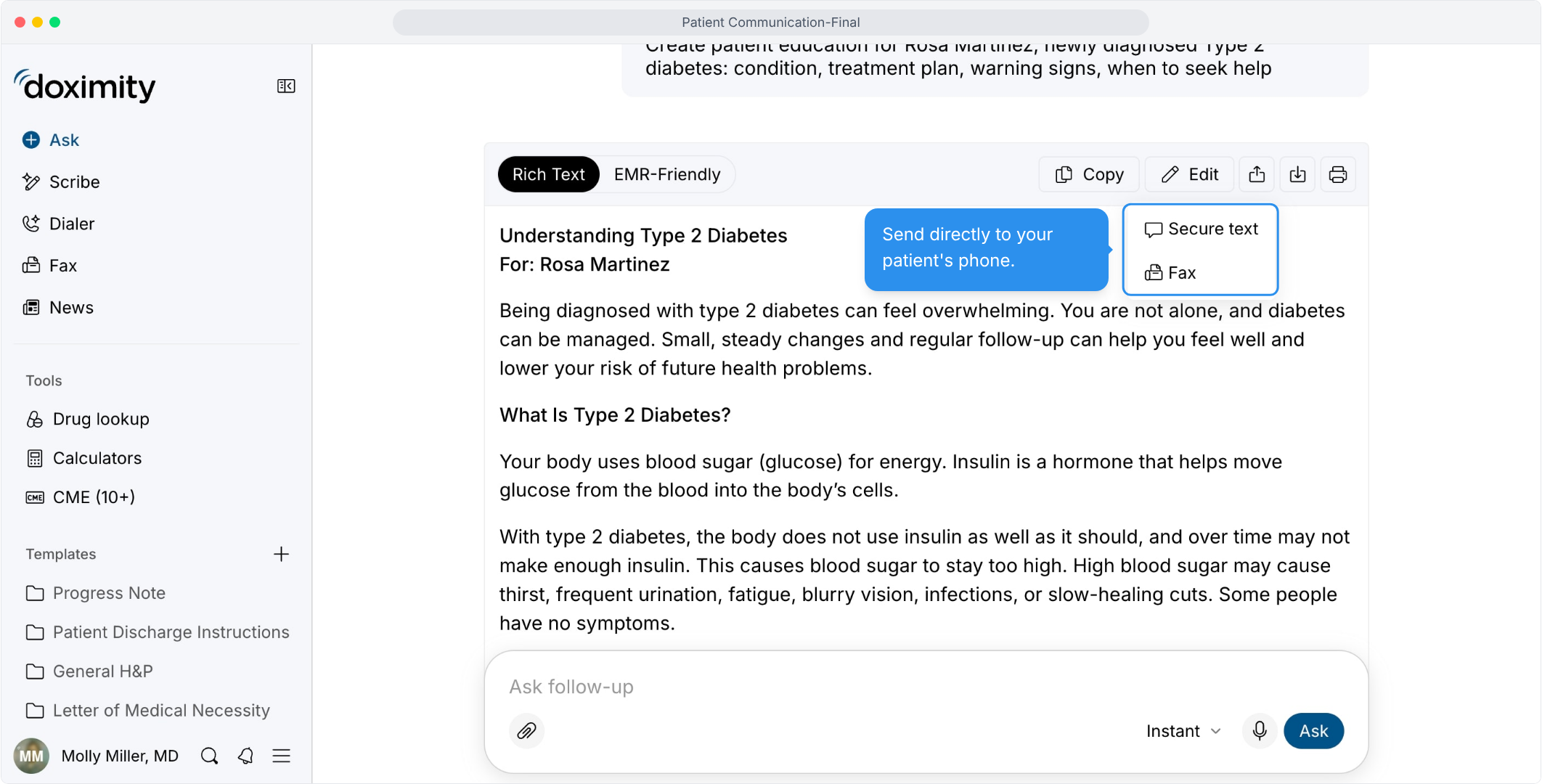
- Send it to the patient
Share by secure text or fax without leaving Ask.
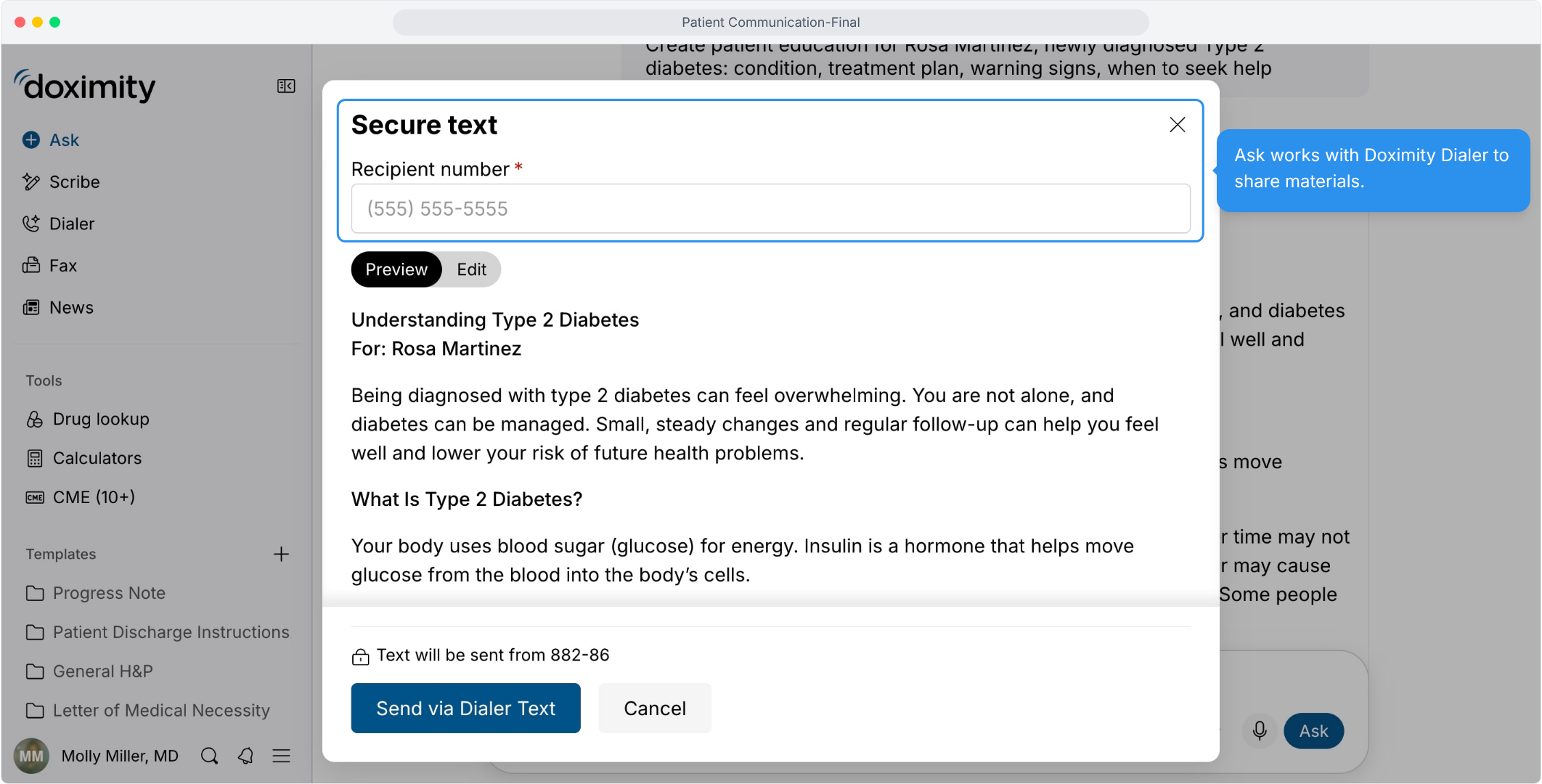
- Text it with Doximity Dialer
Preview and edit the message before sending.
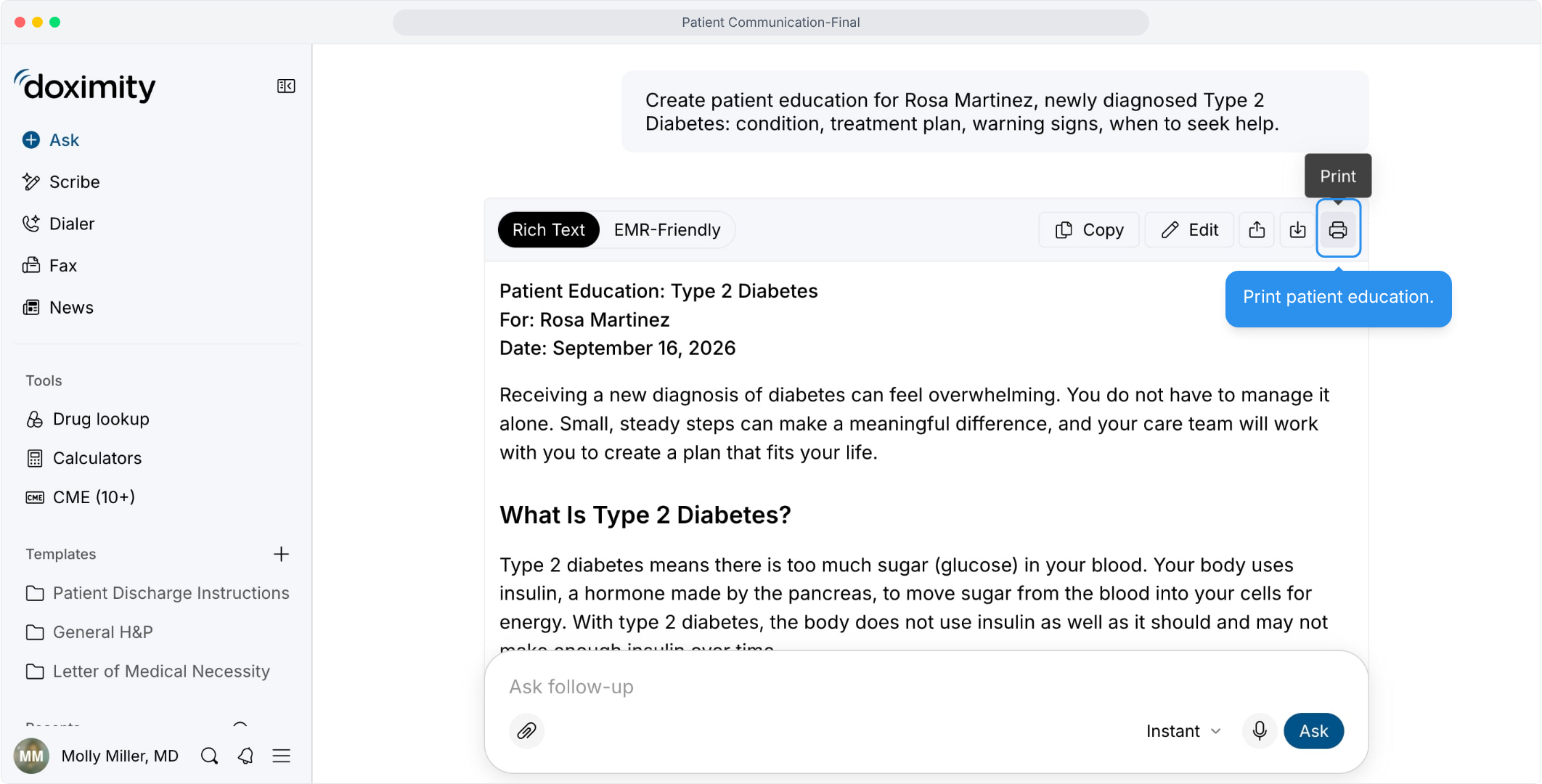
- Print a copy
A paper option for patients who prefer it.
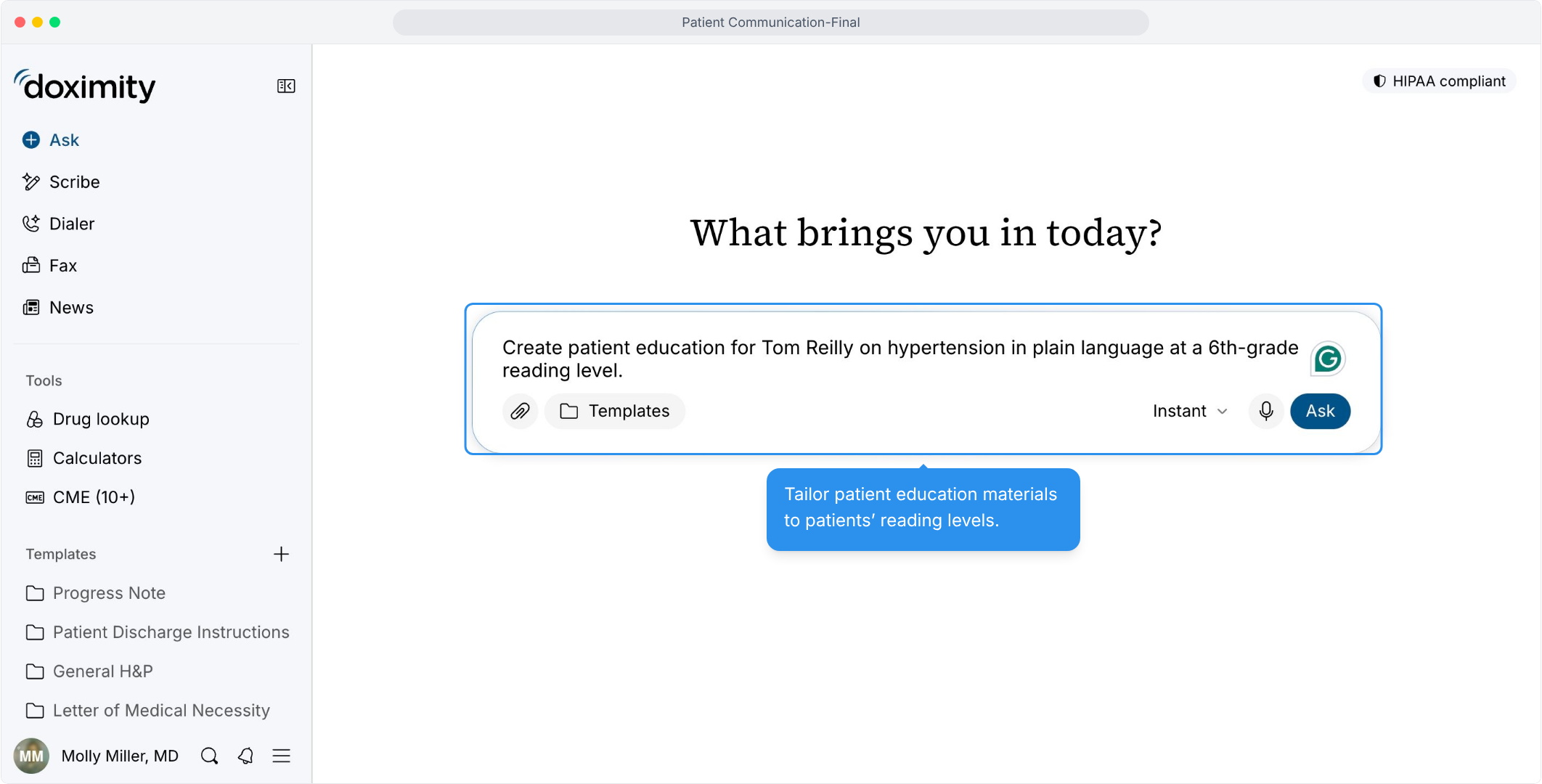
- Set the reading level
Request language at the grade level you need.
- Simplify the language
Short sentences that are easier to follow.
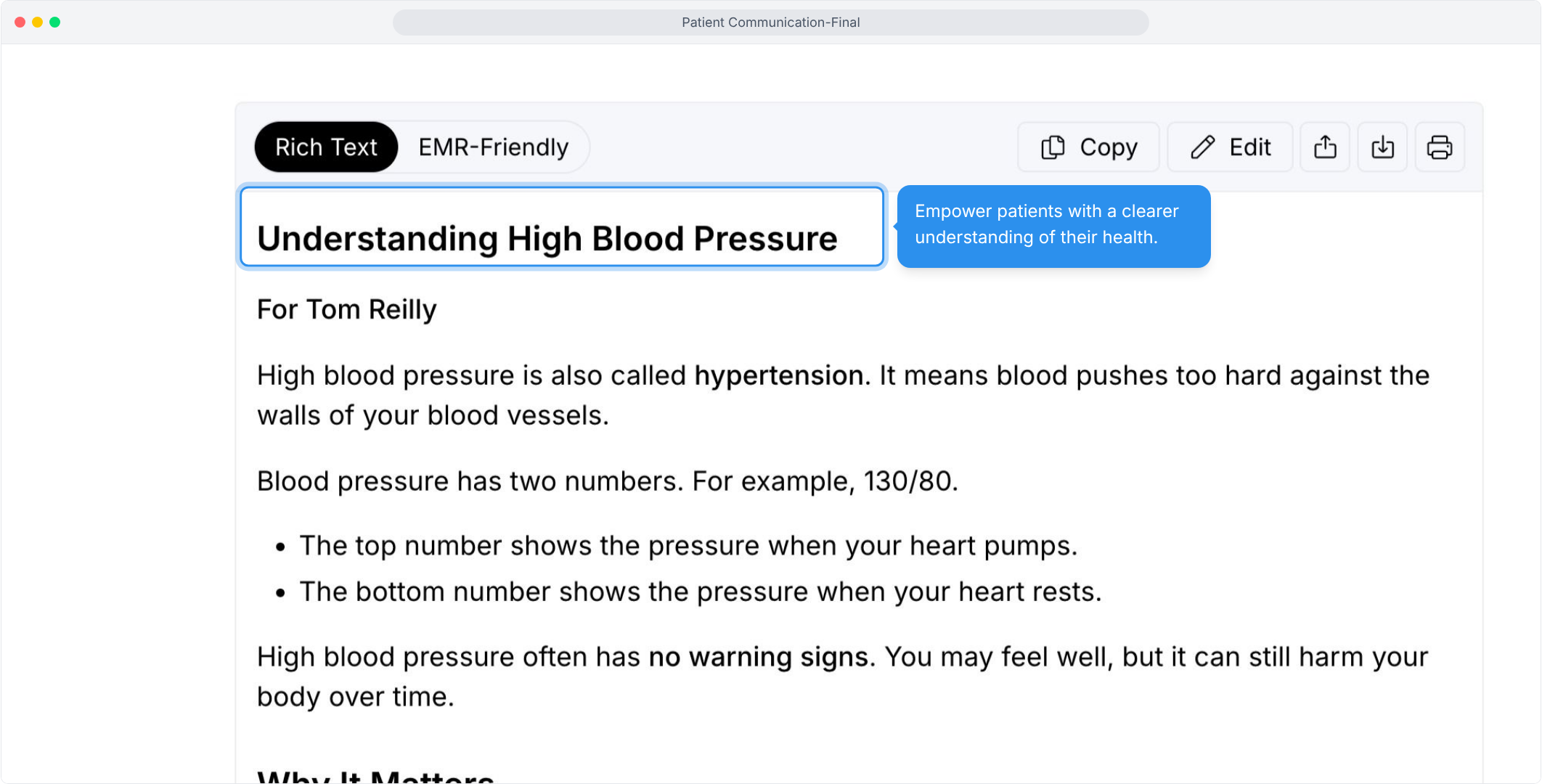
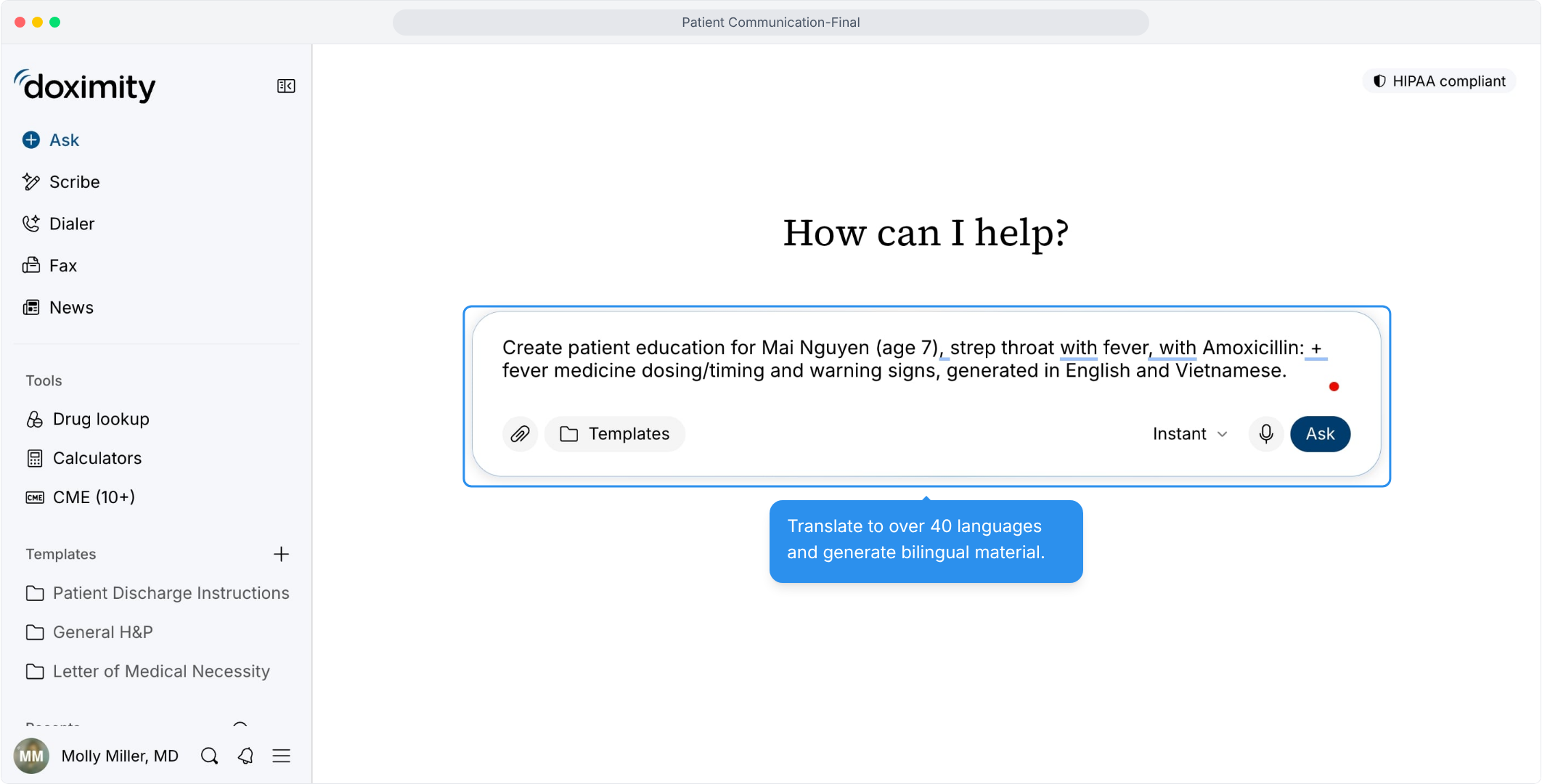
- Translate into 40+ languages
Generate in one language or alongside English.
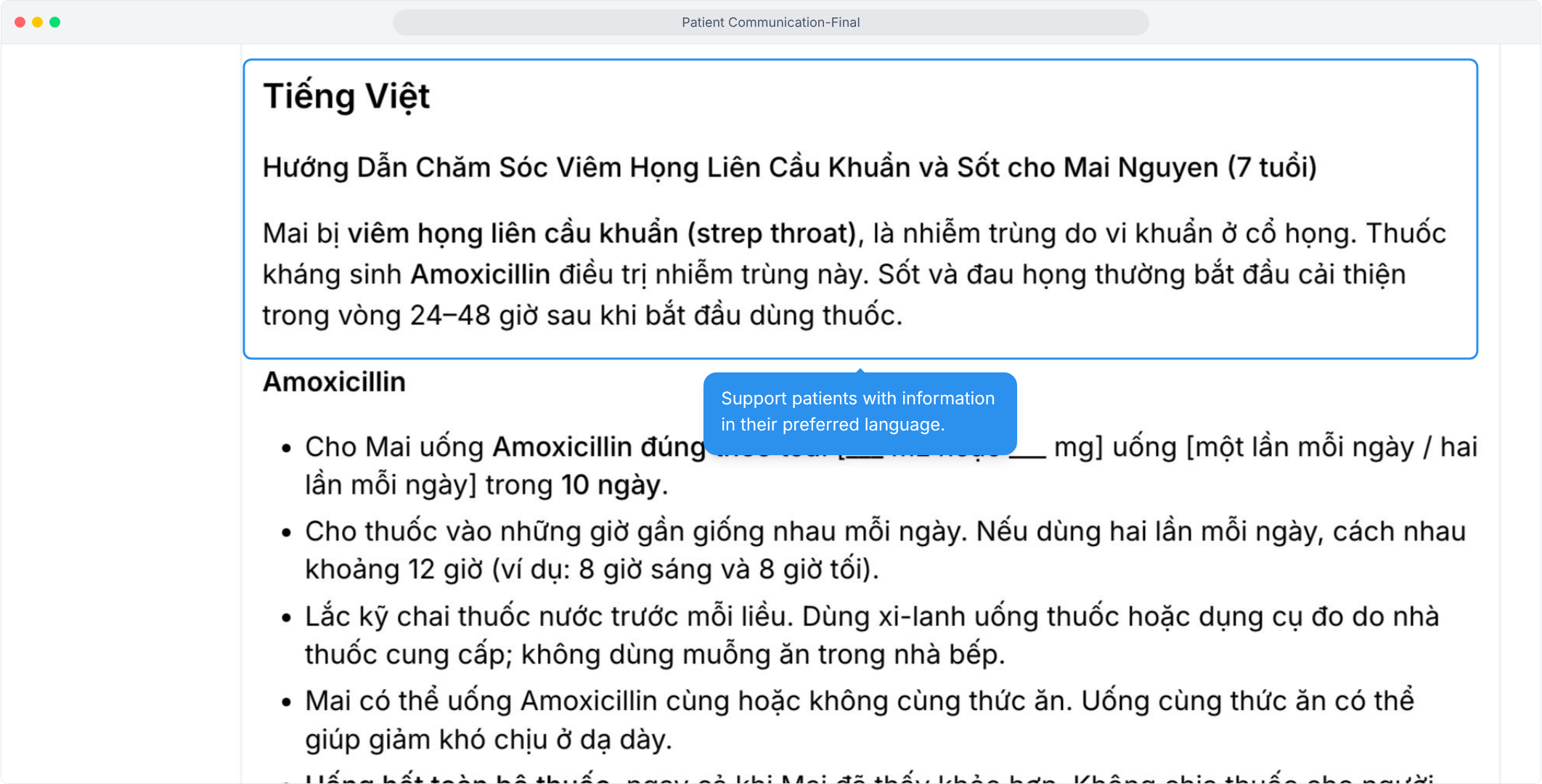
- Share instructions in the patient's language
Information they can follow in their preferred language.
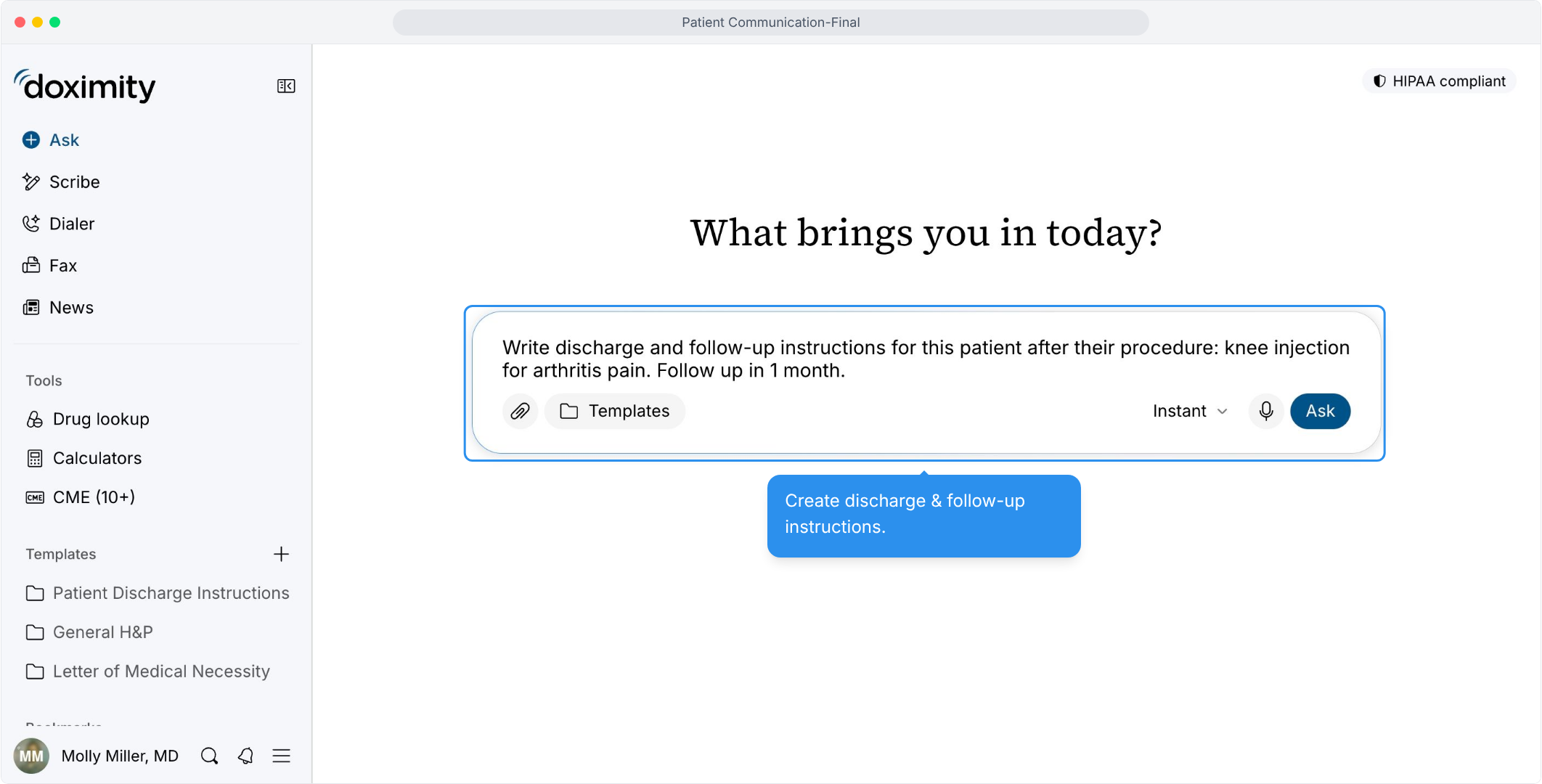
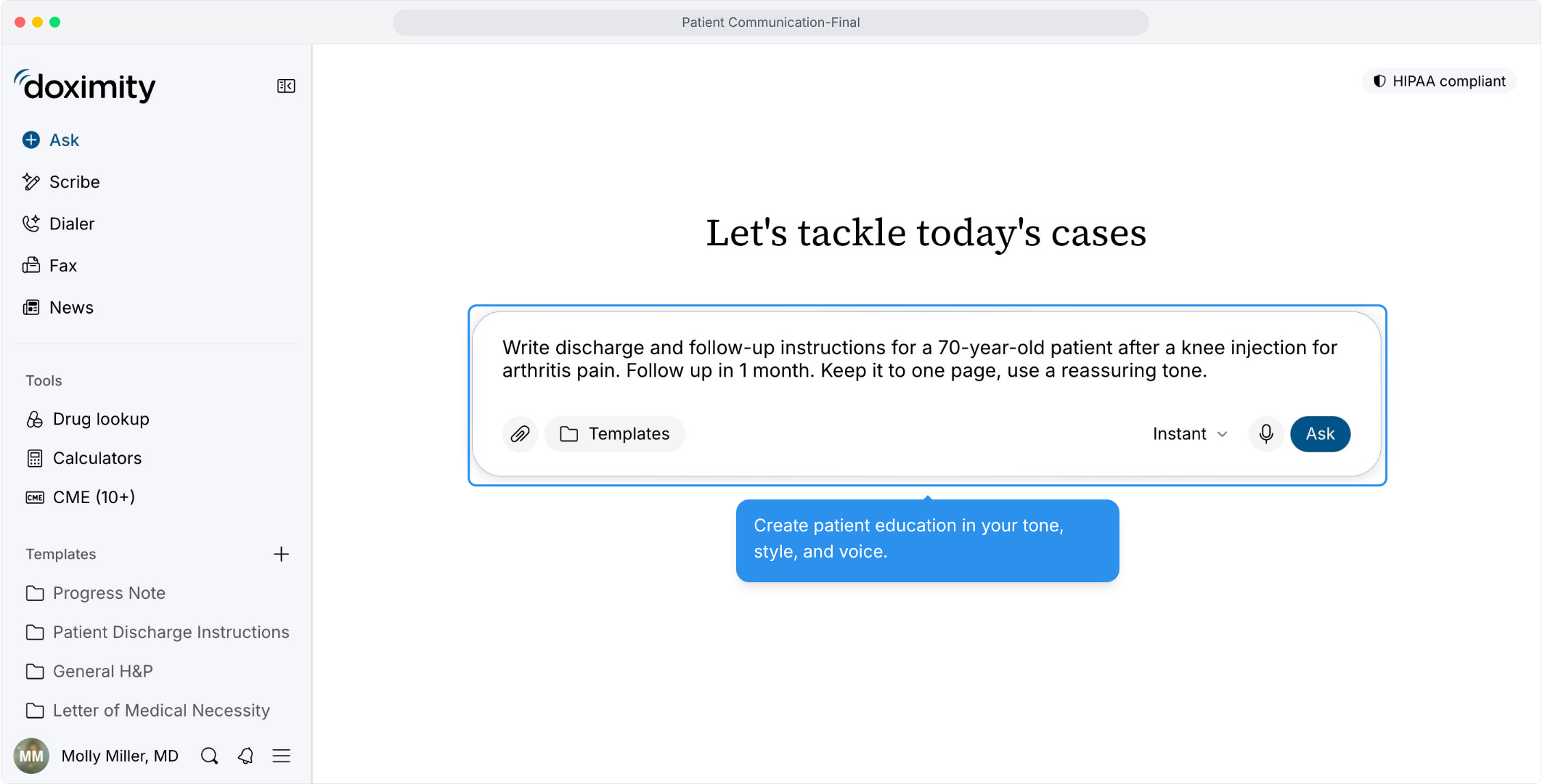
- Request discharge instructions
Post-procedure guidance from a short prompt.
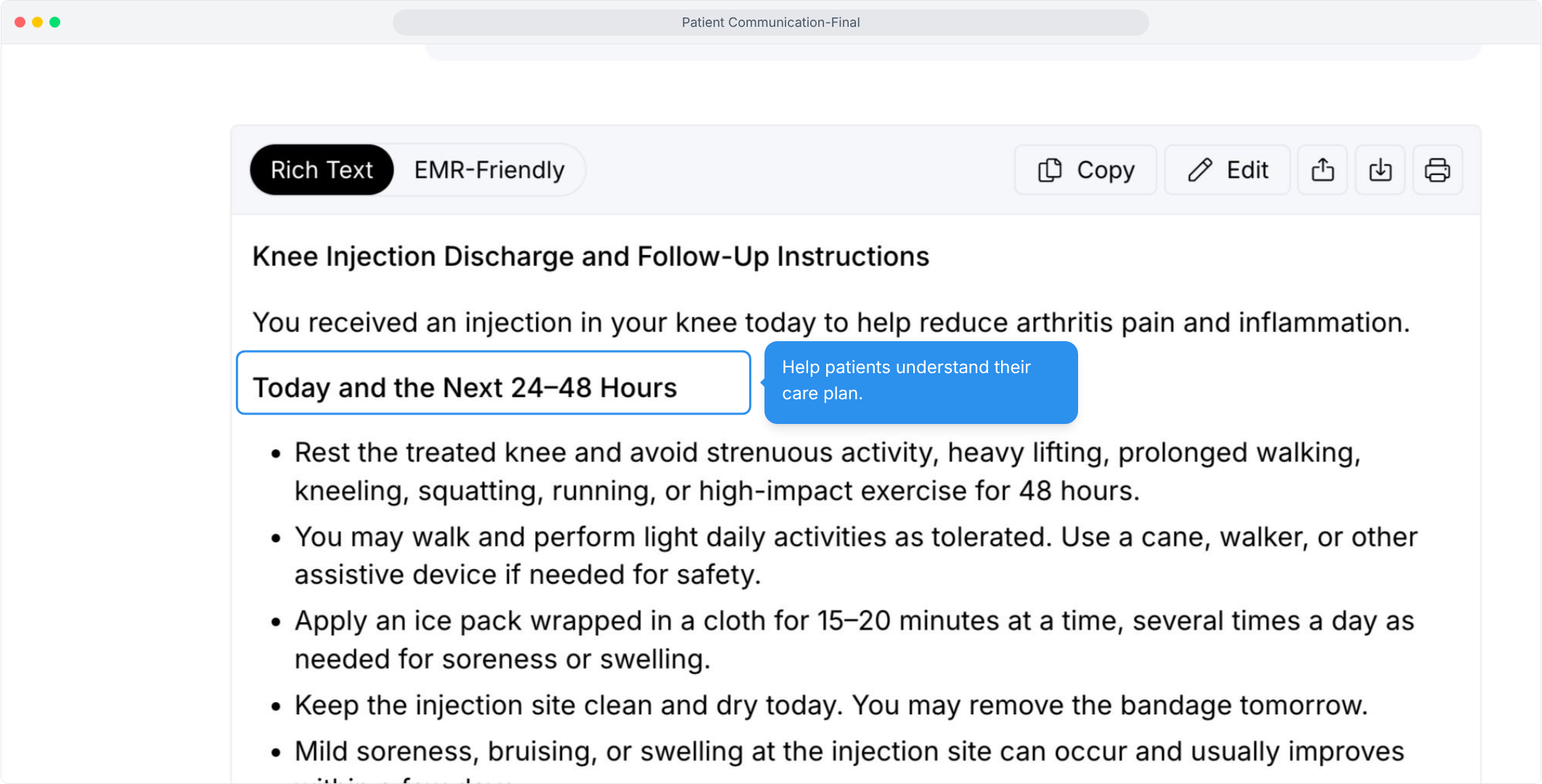
- Set expectations for home recovery
What to do in the first 24-48 hours.
- Specify your tone and style
Materials that sound like you.
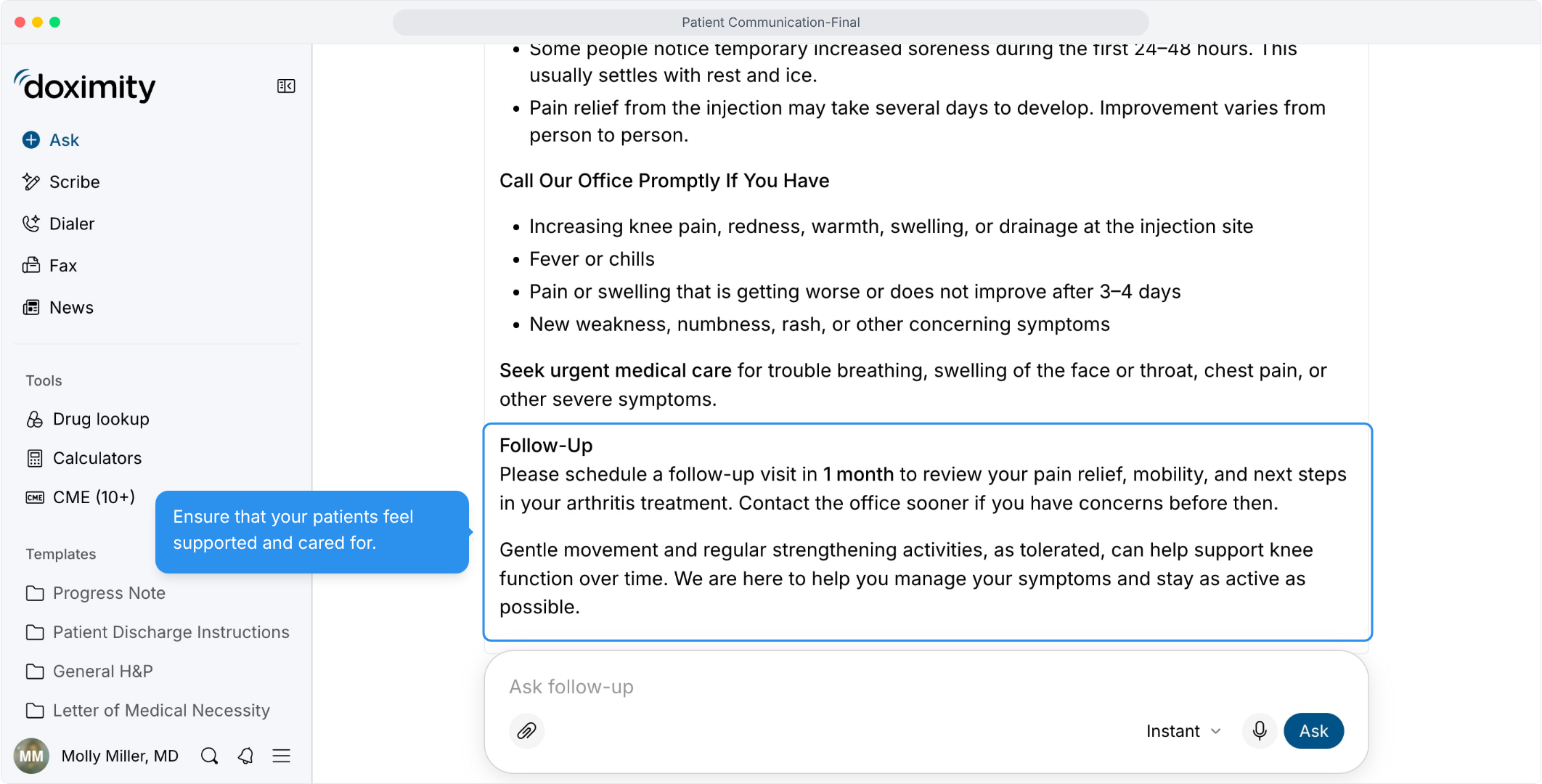
- Add clear follow-up
Patients know the next steps and when to contact the office.

Features
Patient Communication
Ask helps clinicians create patient-facing materials—not just internal documentation—including tailored education handouts, follow-up instructions, and letters.