- Start with a clinical question
Get to your question fast, with no forms or setup.
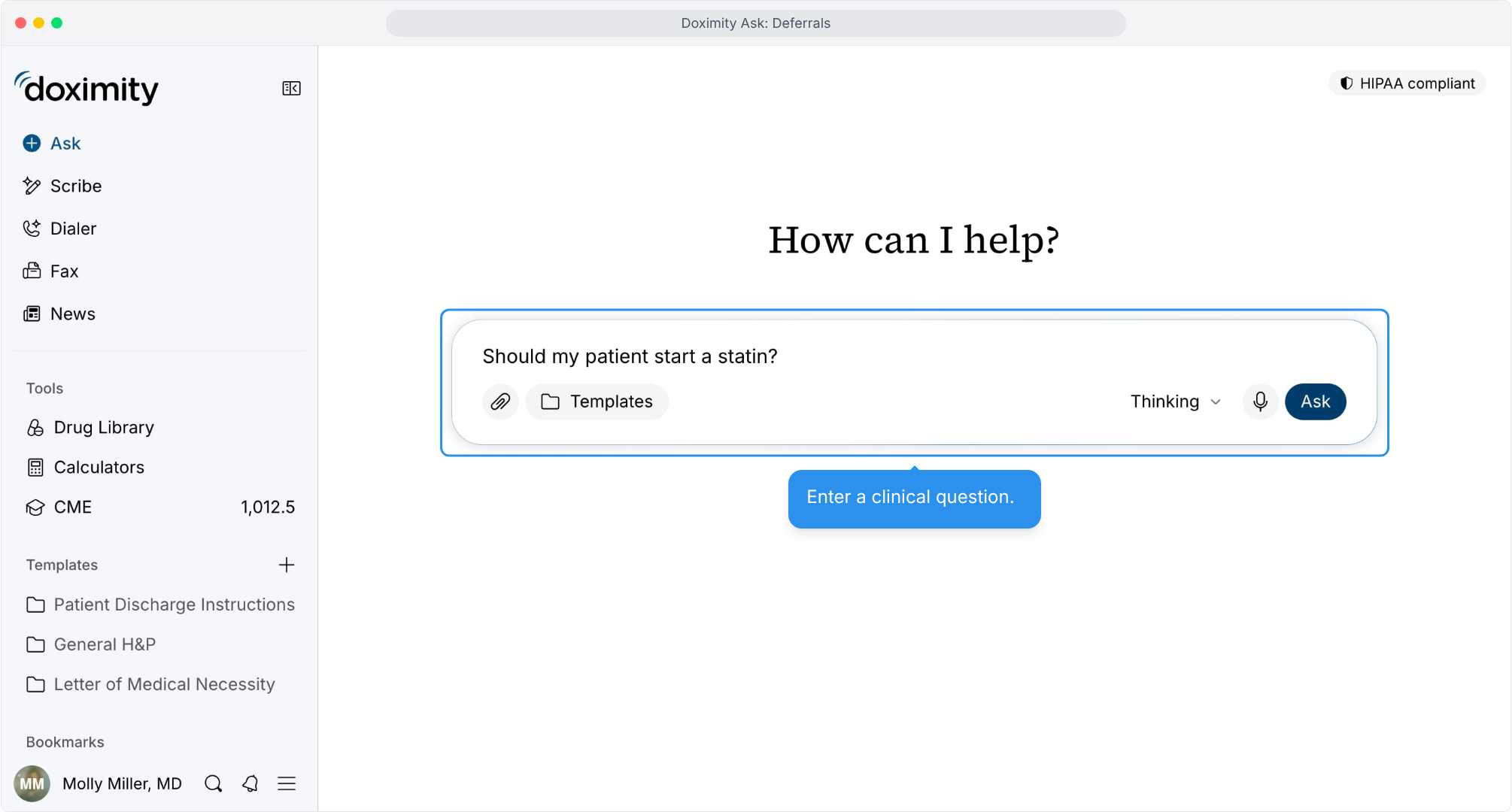
- Thinking mode for complex questions
Ask reasons through the problem before it answers.
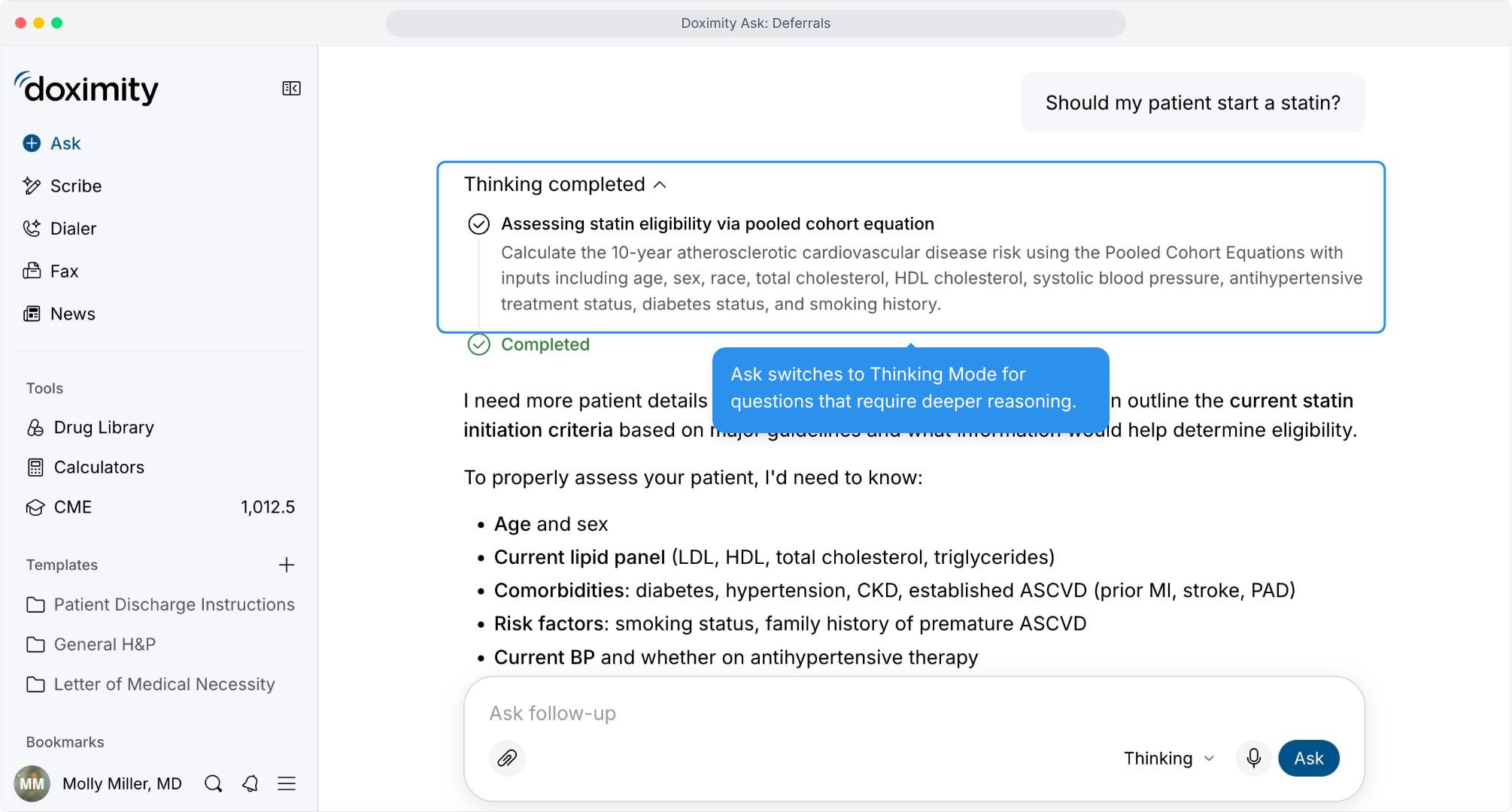
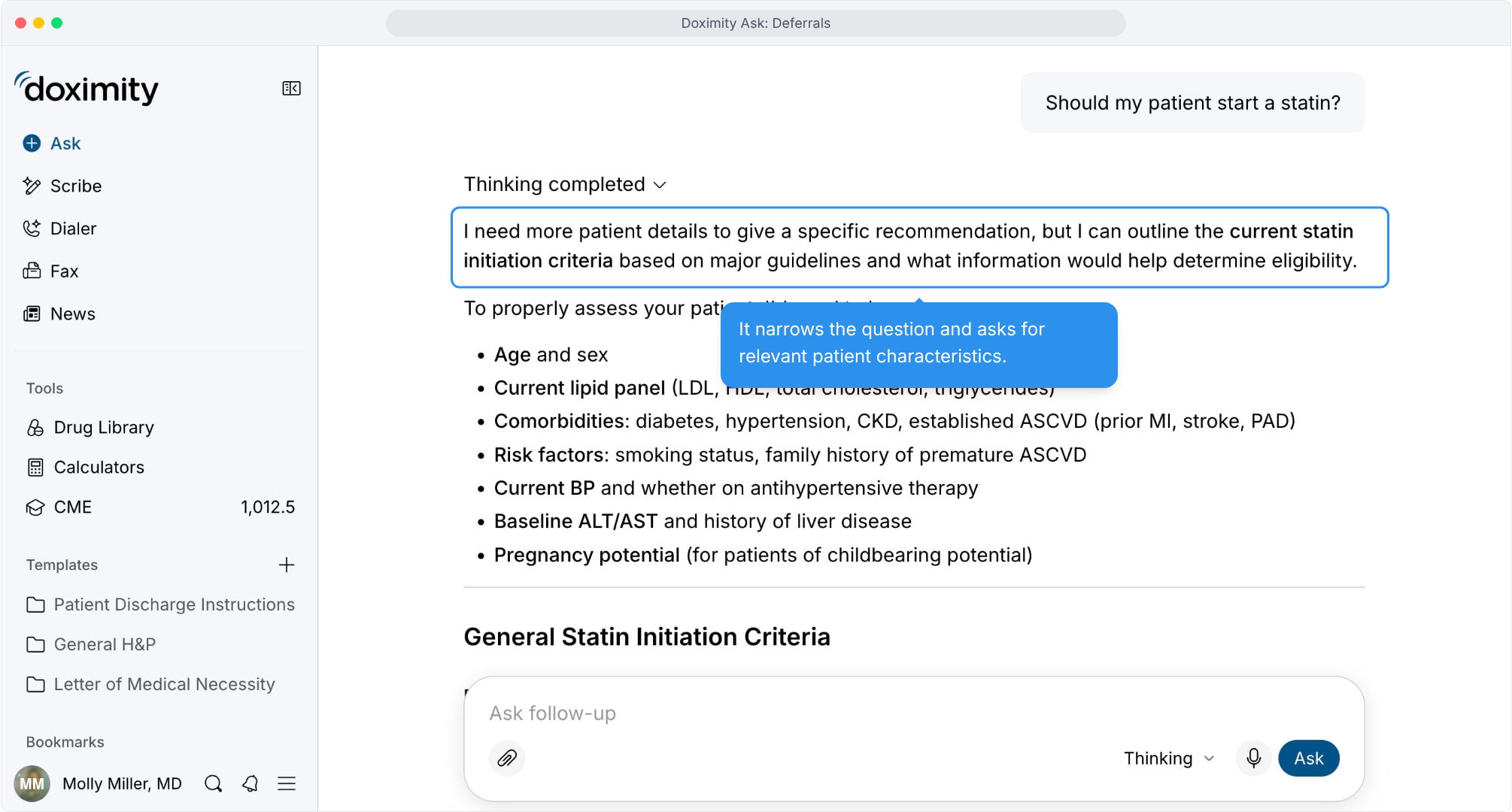
- See what Ask needs to know
Ask wants patient details instead of guessing.
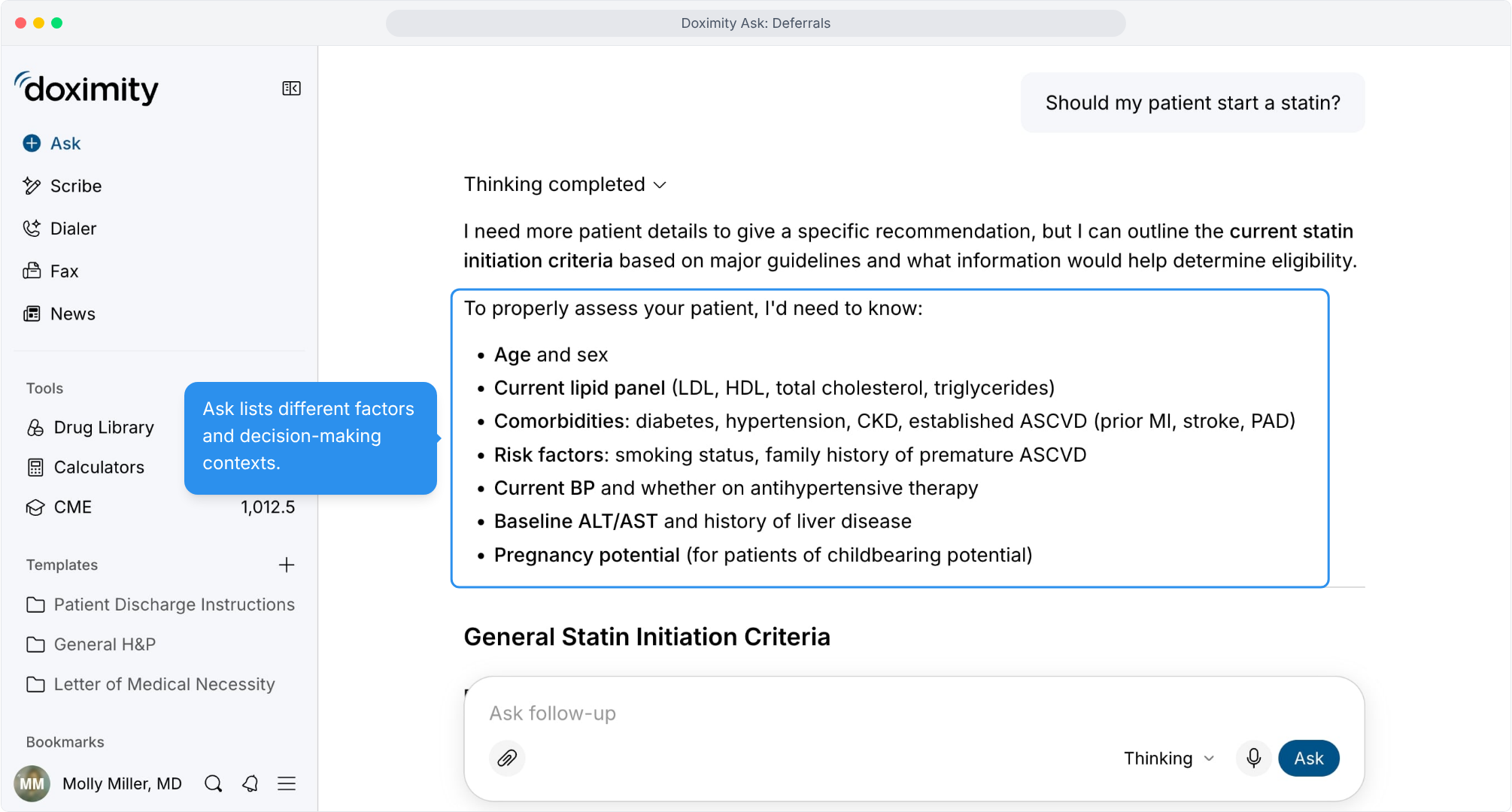
- Review the patient factors
Know which details matter for this decision.
- Compare criteria at a glance
Patient categories, indications, and intensity in one table.
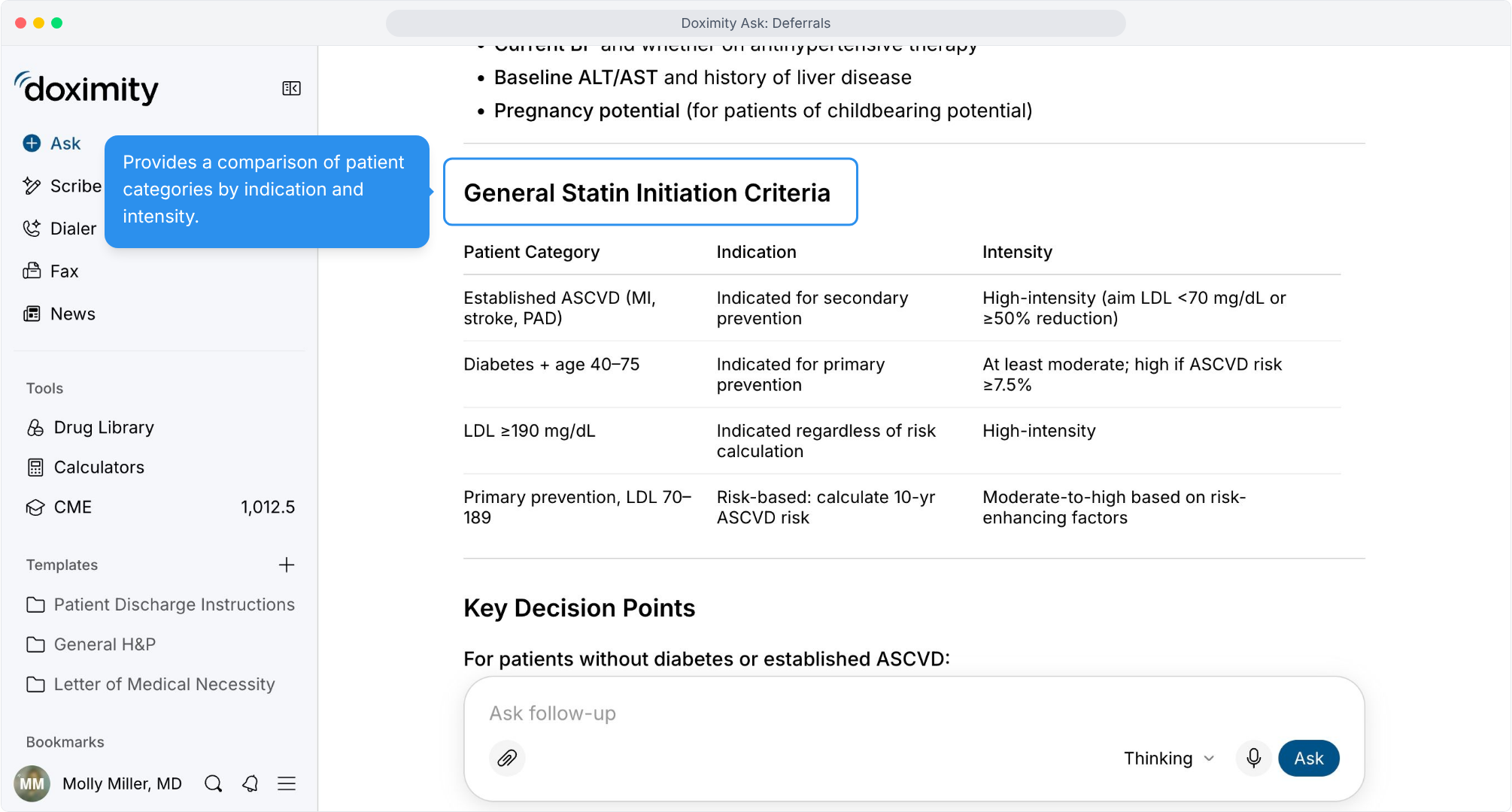
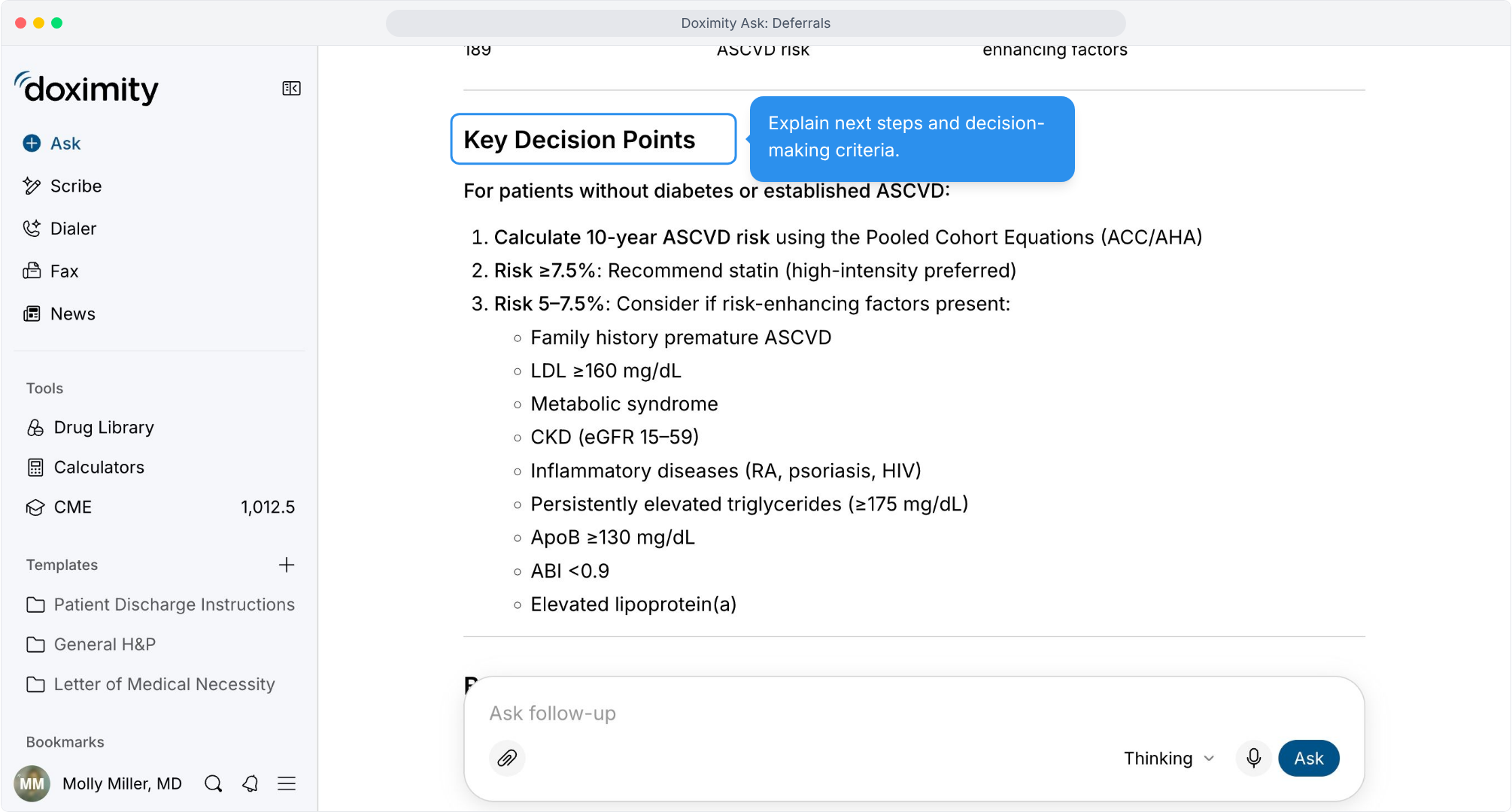
- Walk through key decision points
Risk thresholds and risk-enhancing factors, step by step.
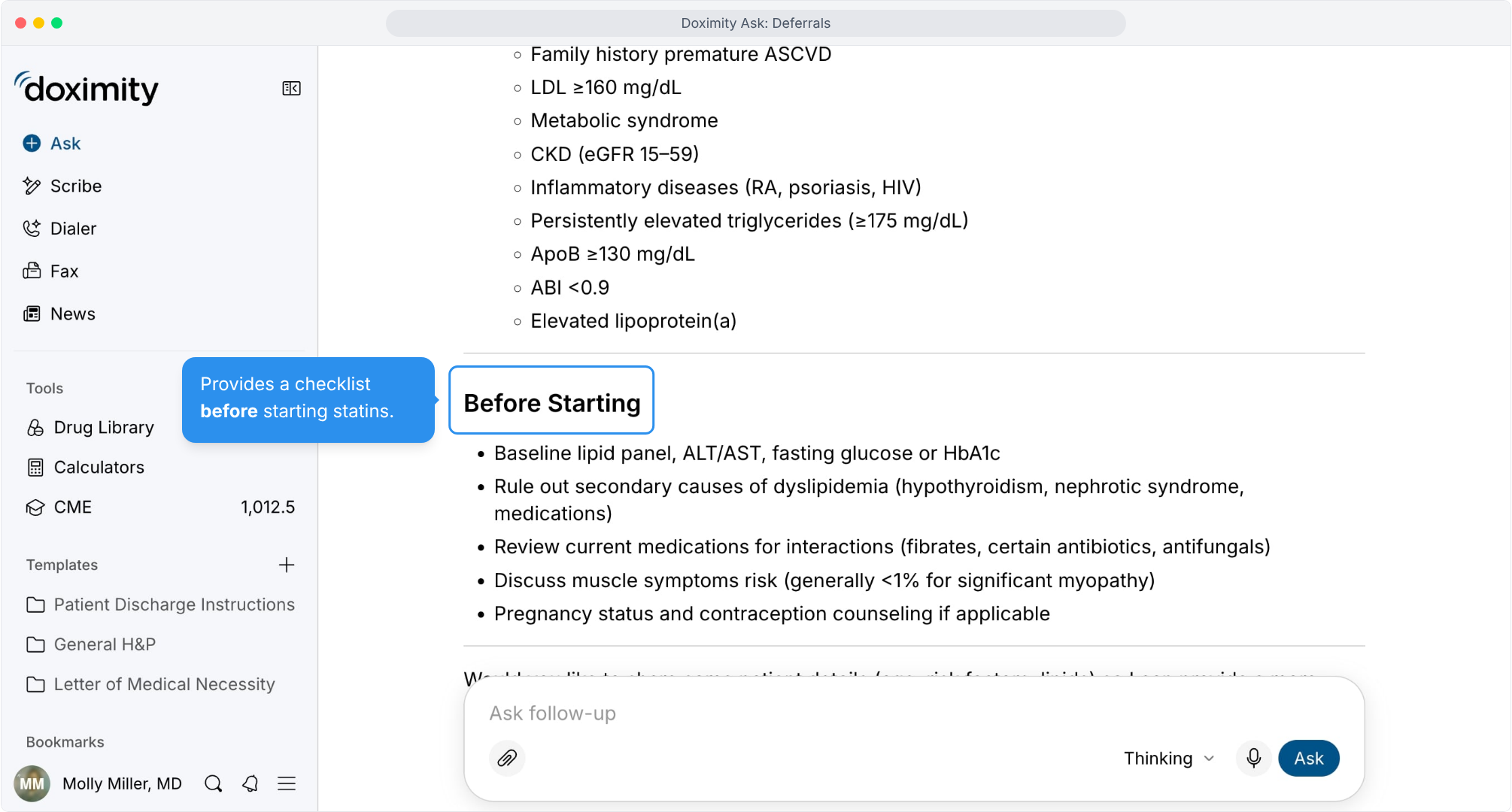
- Review the pre-treatment checklist
Labs, interactions, and counseling points to confirm before starting.
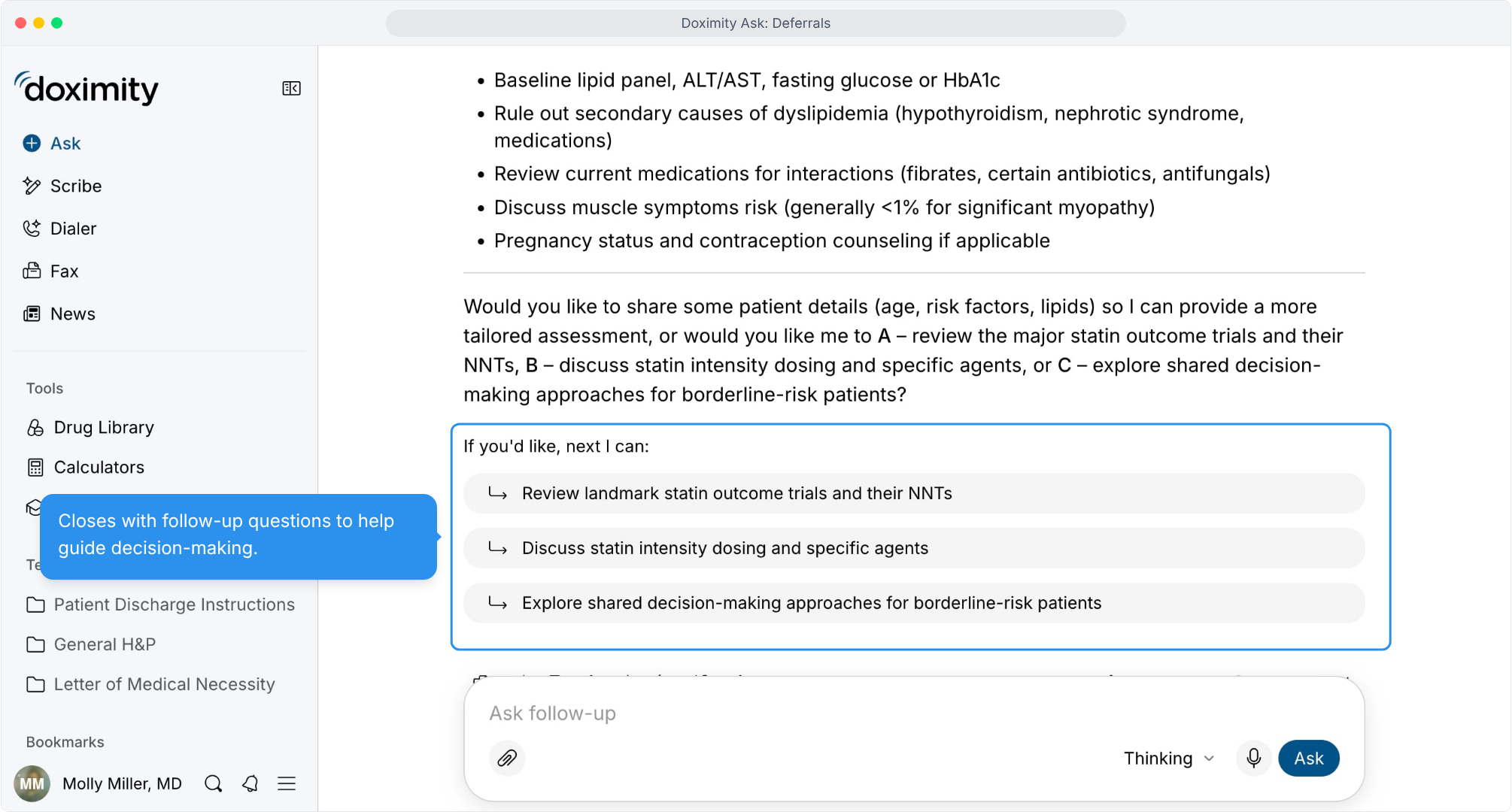
- Choose your next step
Follow-up prompts keep the conversation moving.
- Ask about an uncertain interaction
Works on questions where the evidence may be limited.
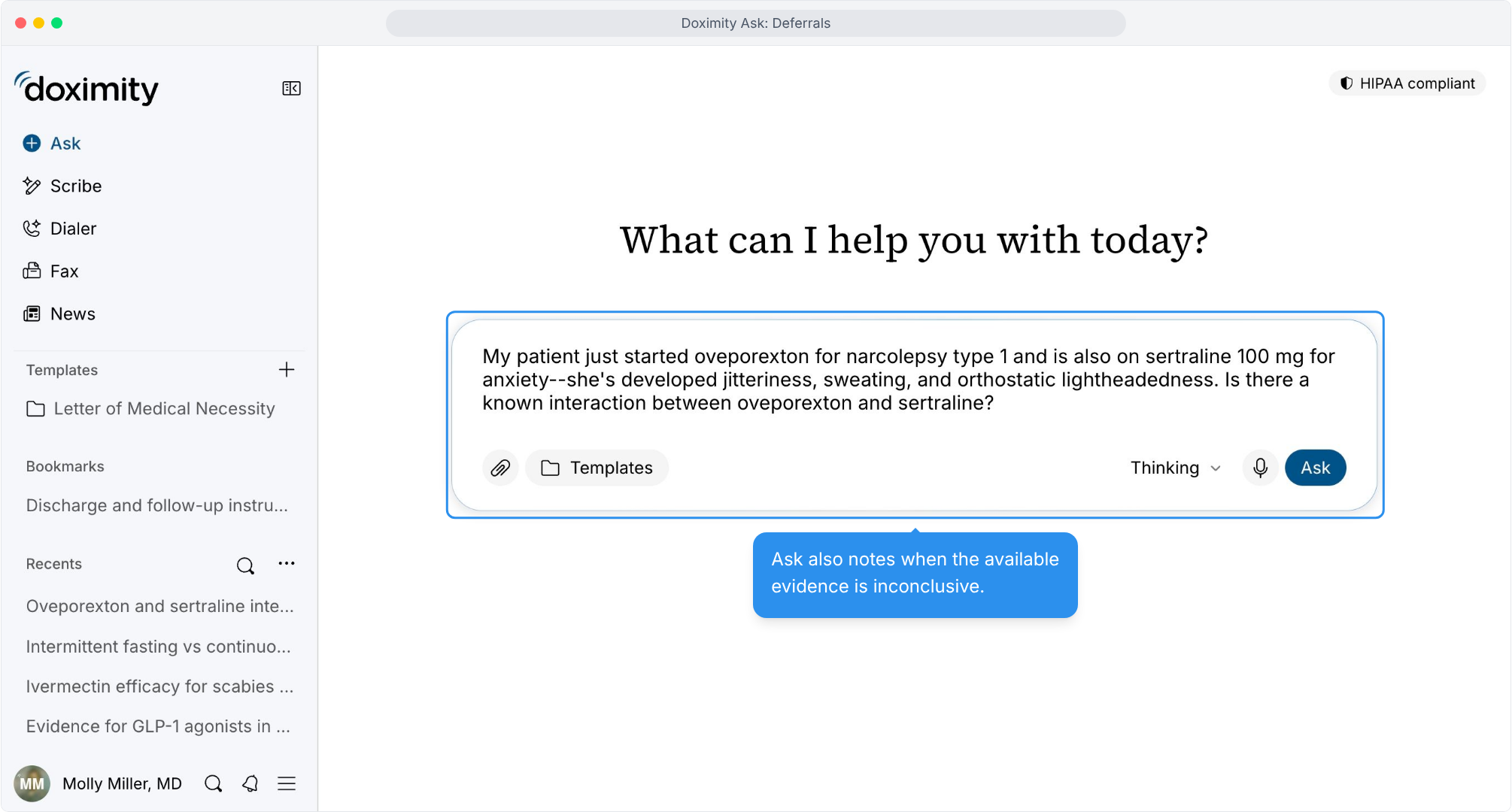
- Check for documented interactions
Ask states plainly when no interaction is on record
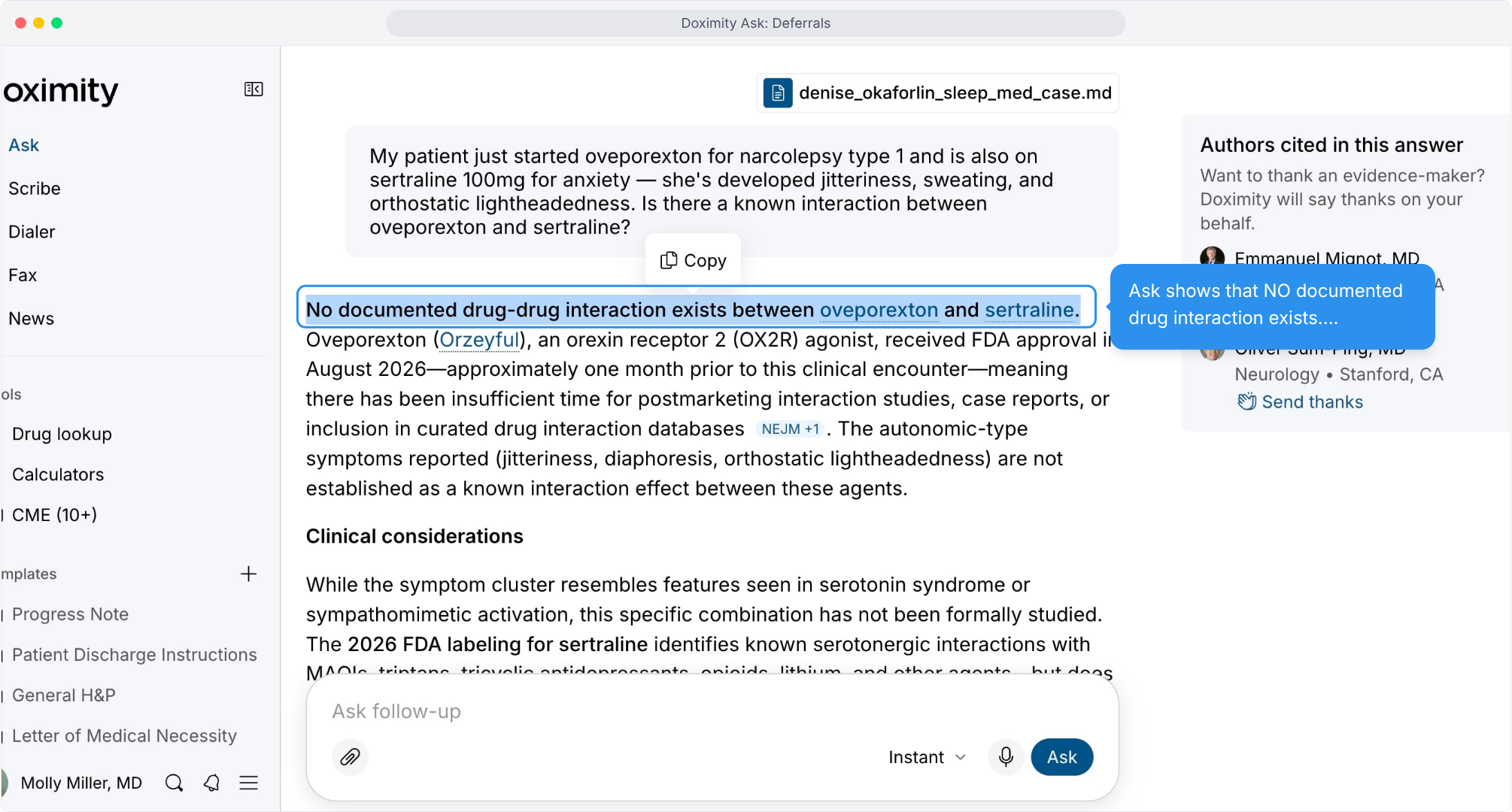
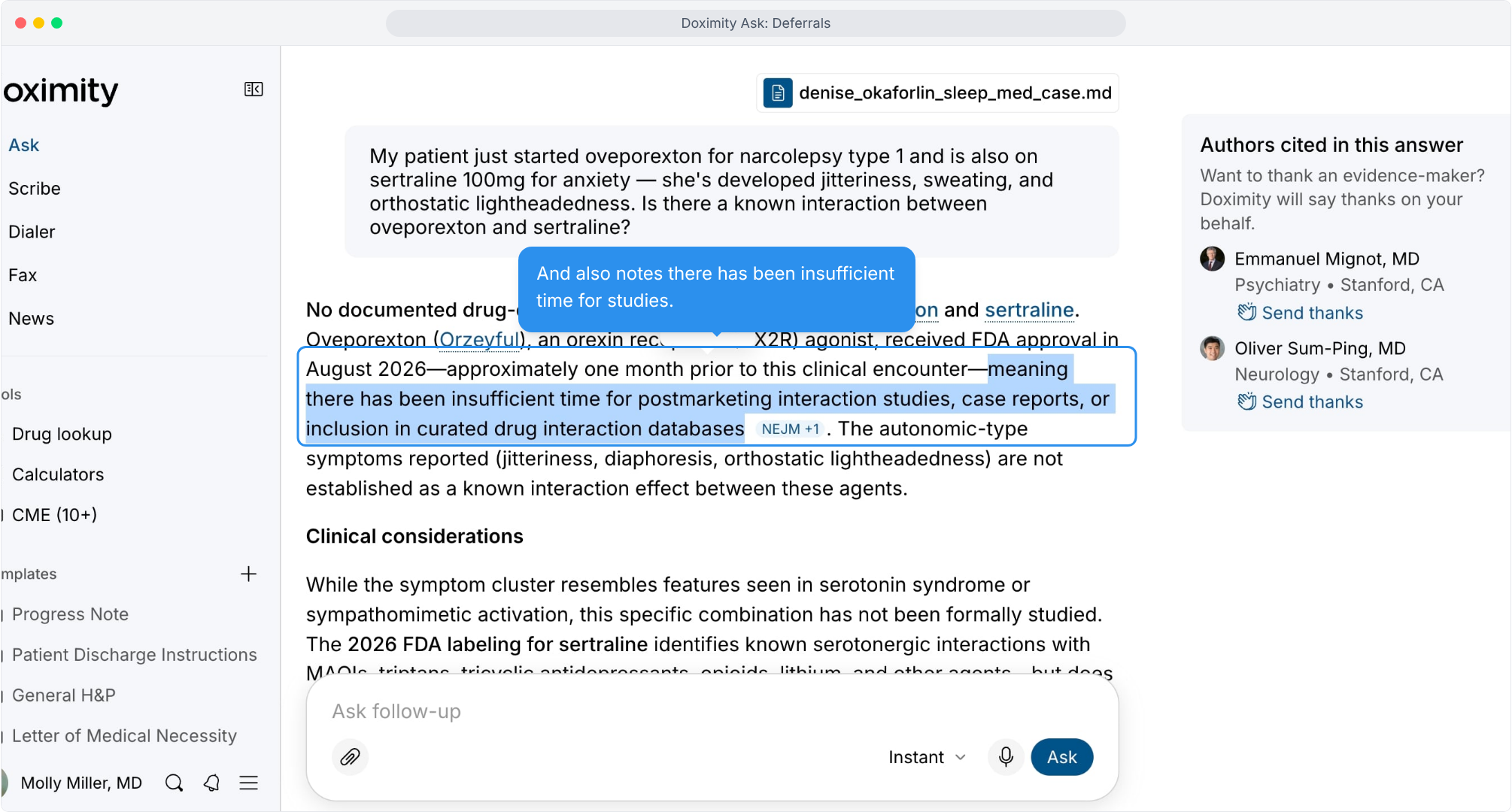
- See why the evidence is limited
Ask explains the gap, such as a recently approved drug.
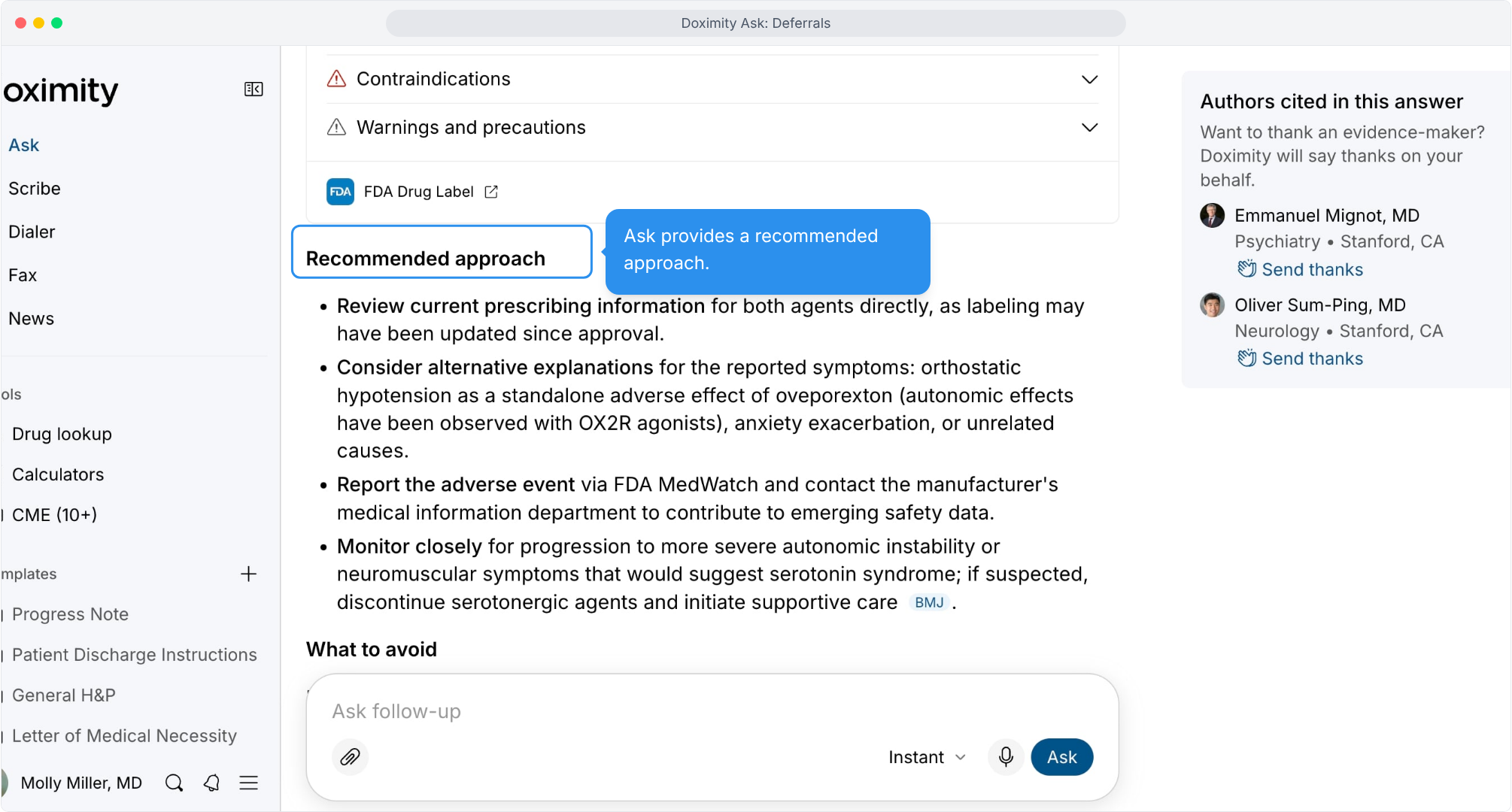
- Get a recommended approach
Practical next steps, with sources you can verify.
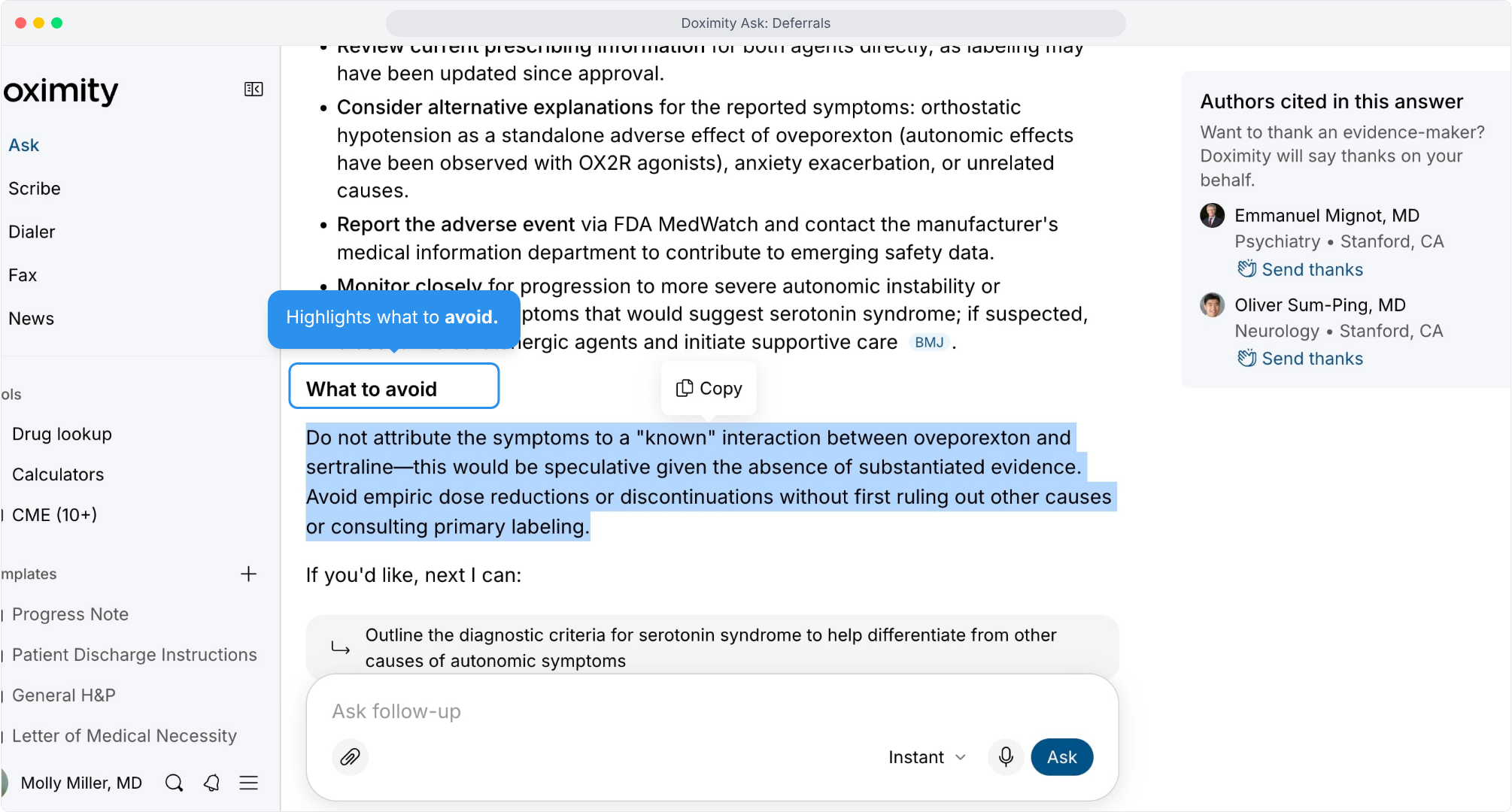
- Know what to avoid
Ask flags conclusions the evidence doesn't support.
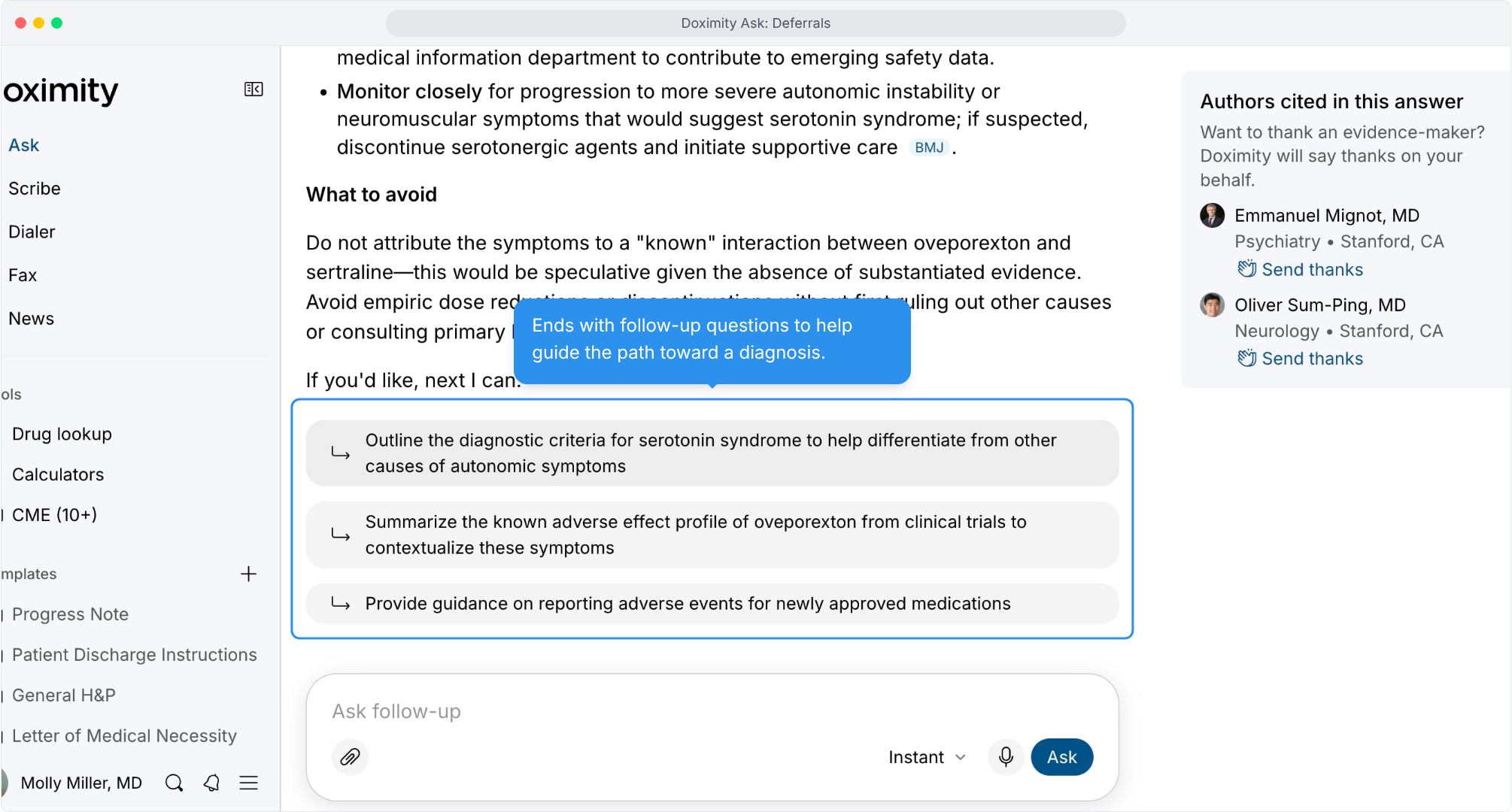
- Explore the next question
Follow-ups help you work toward a diagnosis.

Features
Deferrals
Ask supports clinical decision-making while recognizing when a question requires more context or review. Rather than speculate, Ask requests additional information or evidence and suggests appropriate next steps.