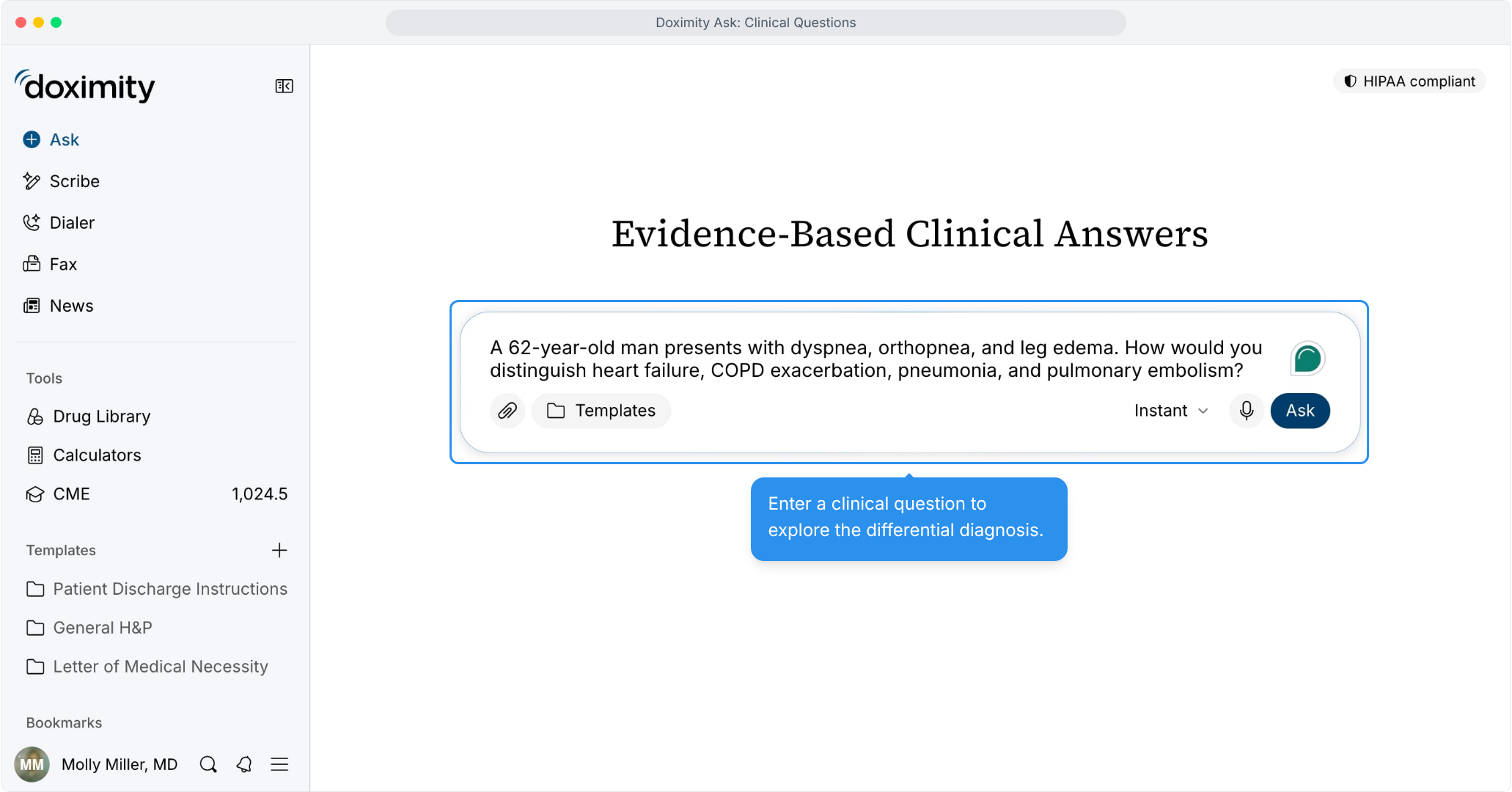
- Start with a clinical question
Describe the presentation and the conditions you’re weighing in one question.
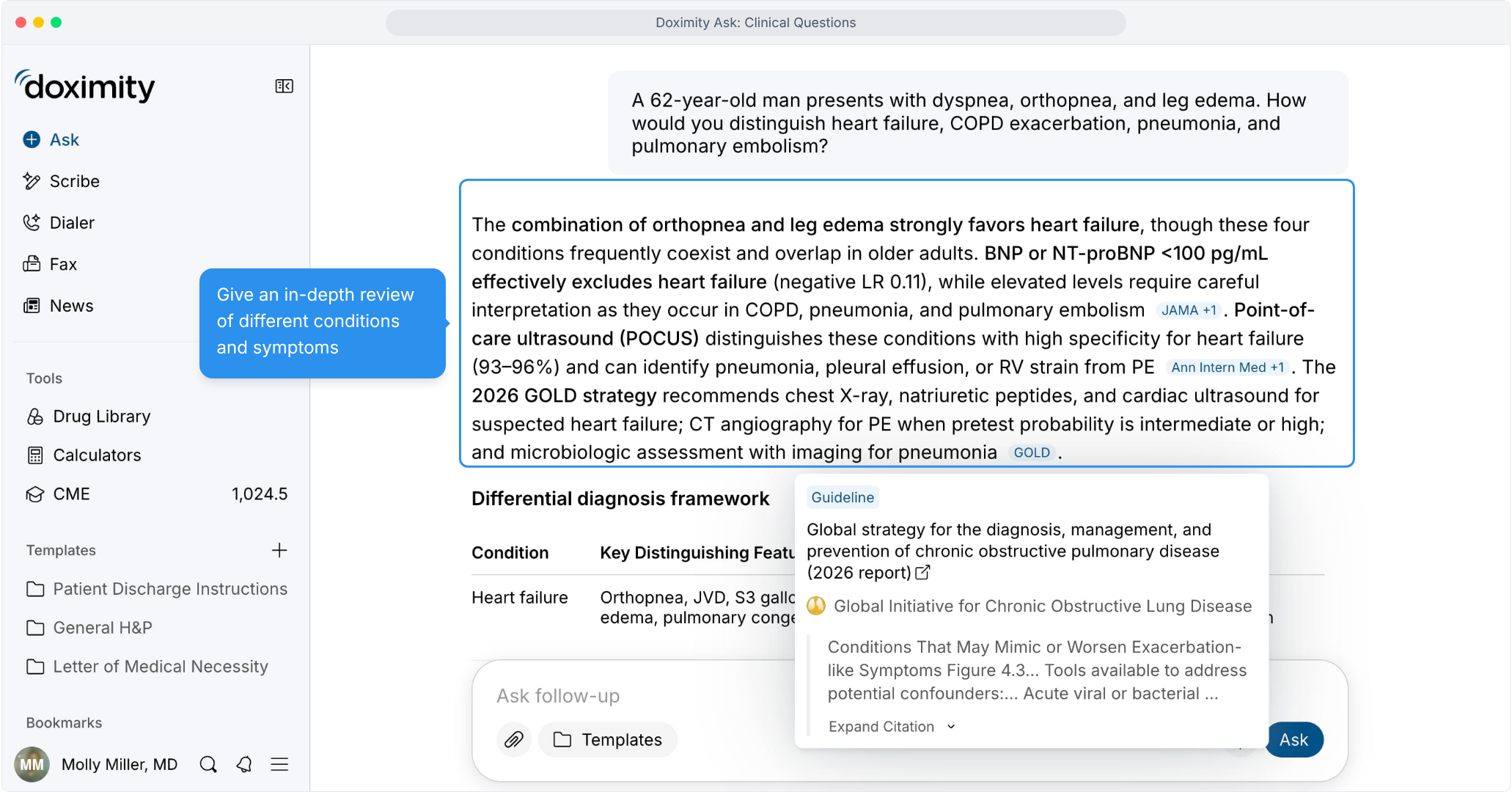
- Get a Focused Differential Summary
One answer works through how heart failure, COPD, pneumonia, and PE overlap, with citations along the way.
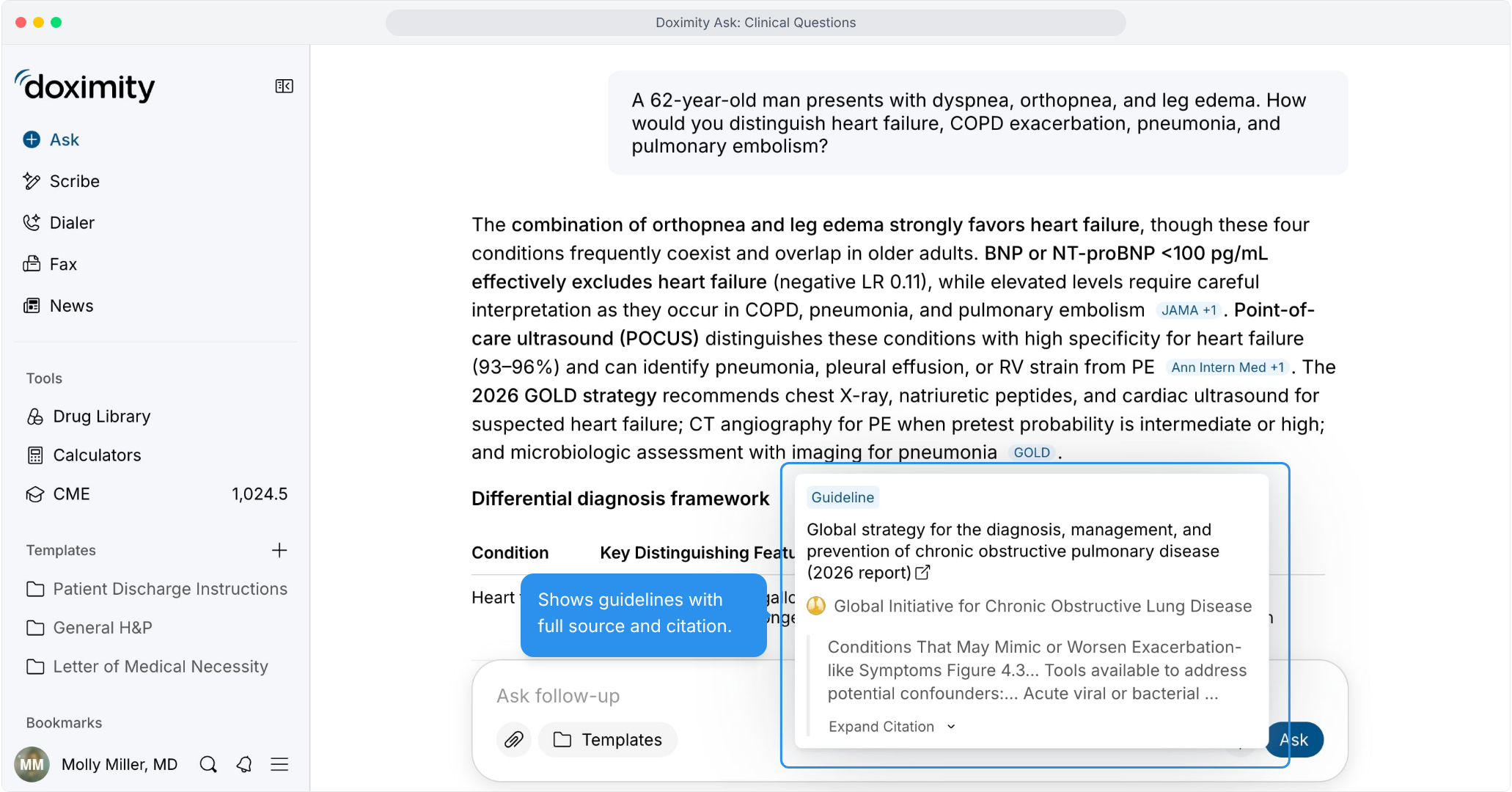
- Trace a Statement to Its Source
Citation cards show where a cited statement comes from, down to the guideline passage.
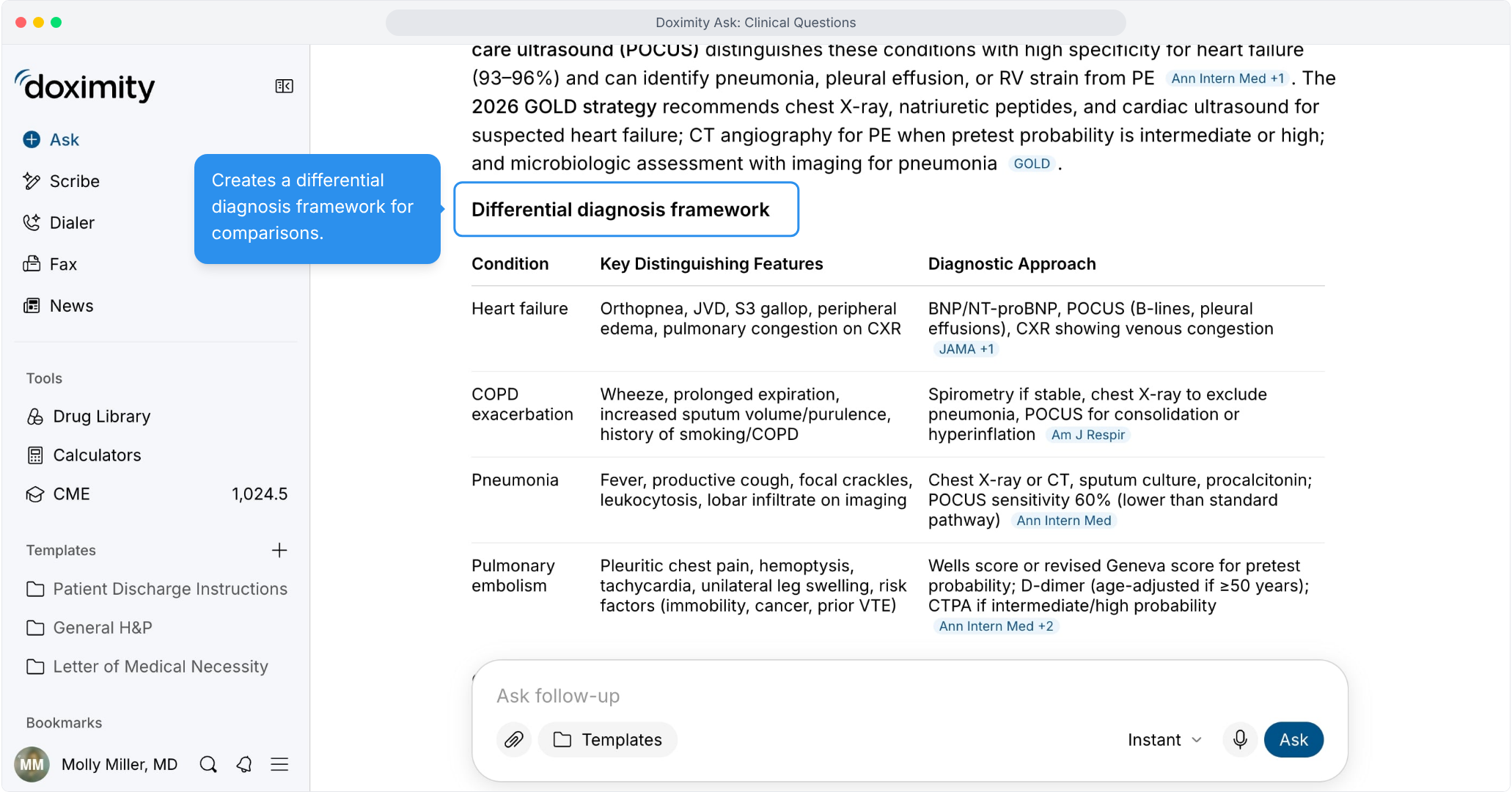
- Use the Differential Framework
Heart failure, COPD exacerbation, pneumonia, and PE are laid out with the features that separate them.
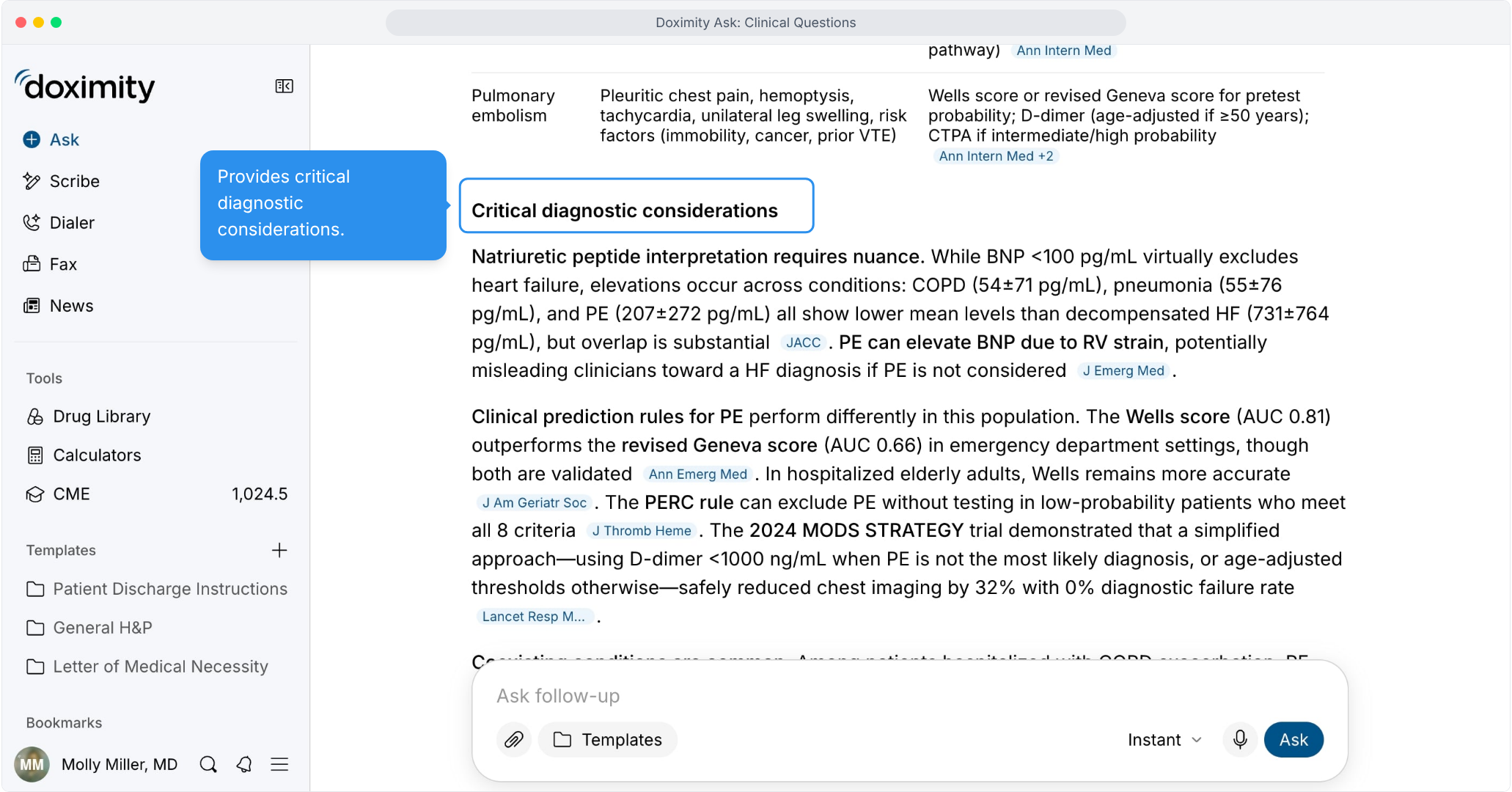
- Avoid Common Diagnostic Pitfalls
It notes where overlap between conditions can mislead, such as elevated BNP in PE.
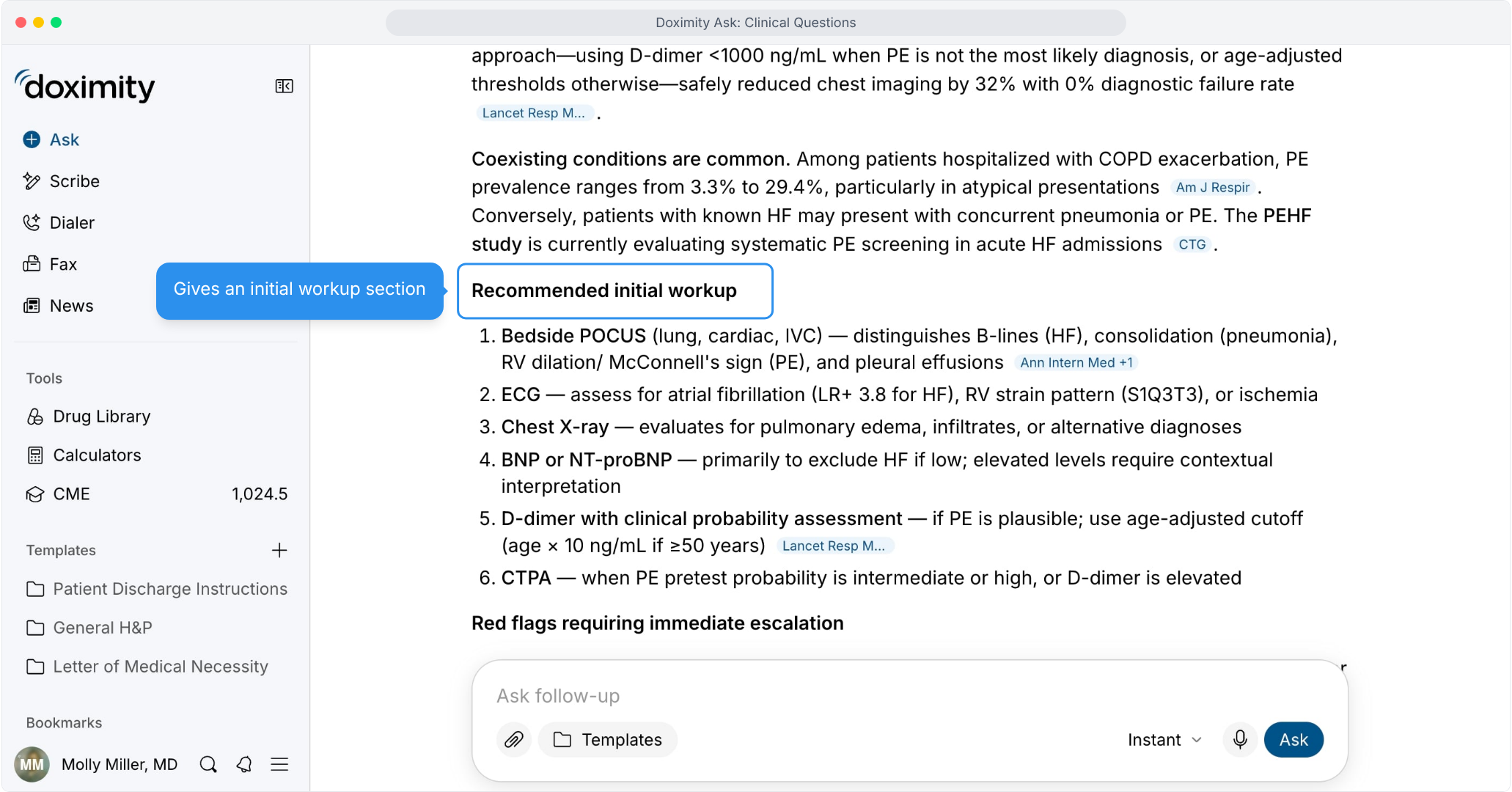
- Plan the Initial Workup
Each step comes with a short reason, so the order makes sense at the bedside.
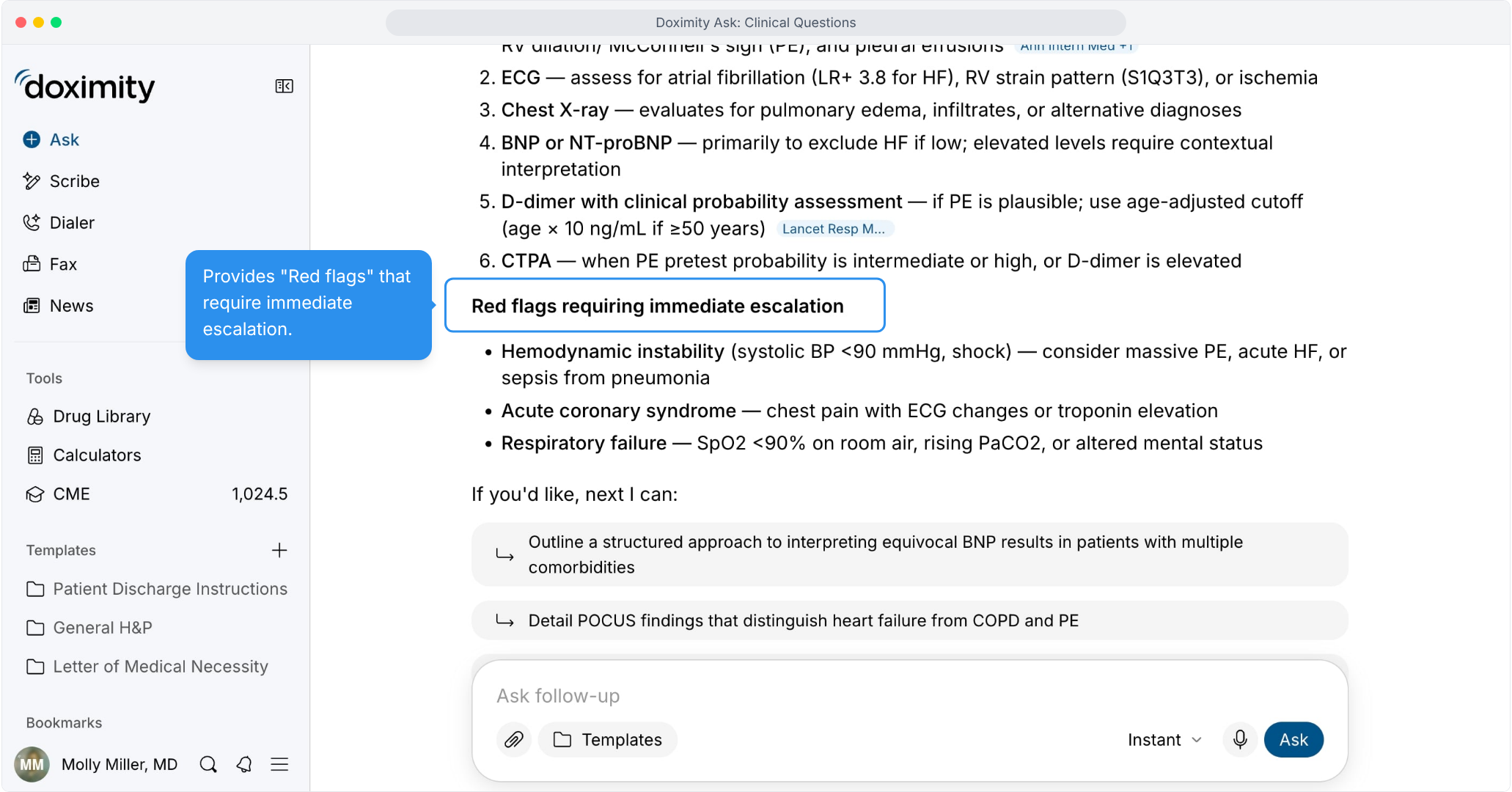
- Know When to Escalate
A short list of findings that call for immediate escalation sits at the end of the answer.
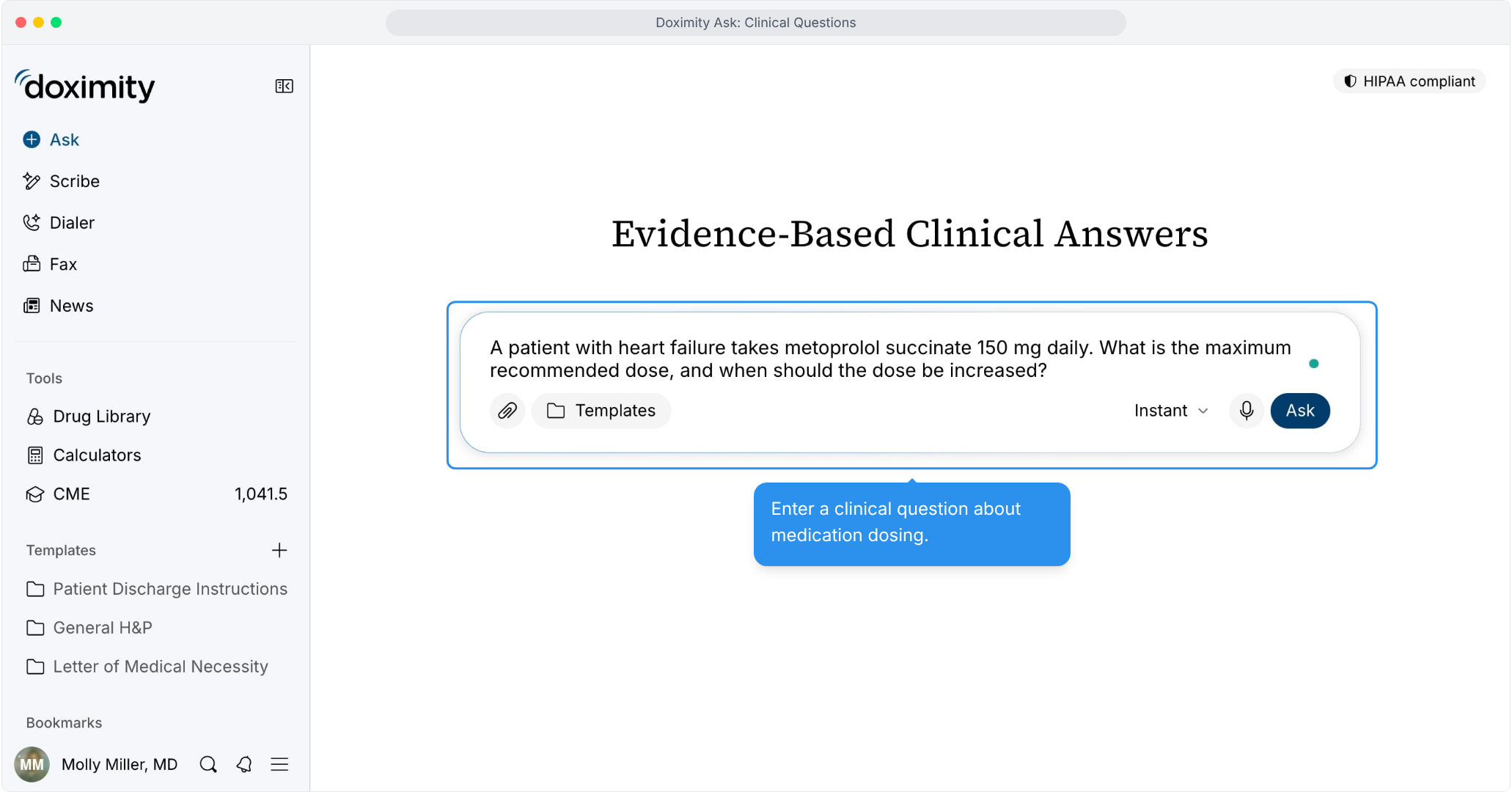
- Enter a clinical question
Naming a specific drug and dose gives the answer a clear starting point.
- Cross-Check Doses With DoseCheck
Doses that match reference data carry a green check mark in the answer.
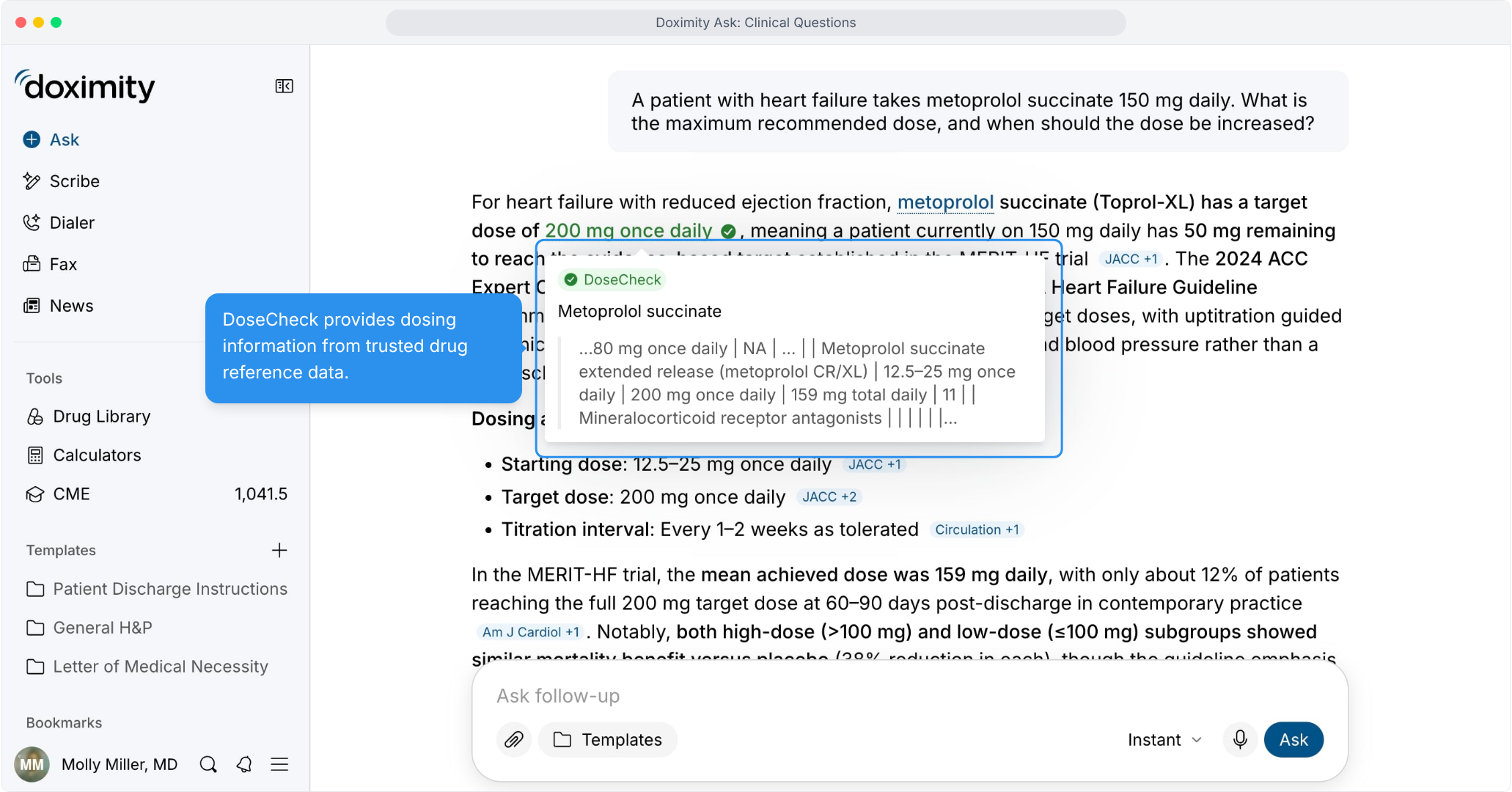
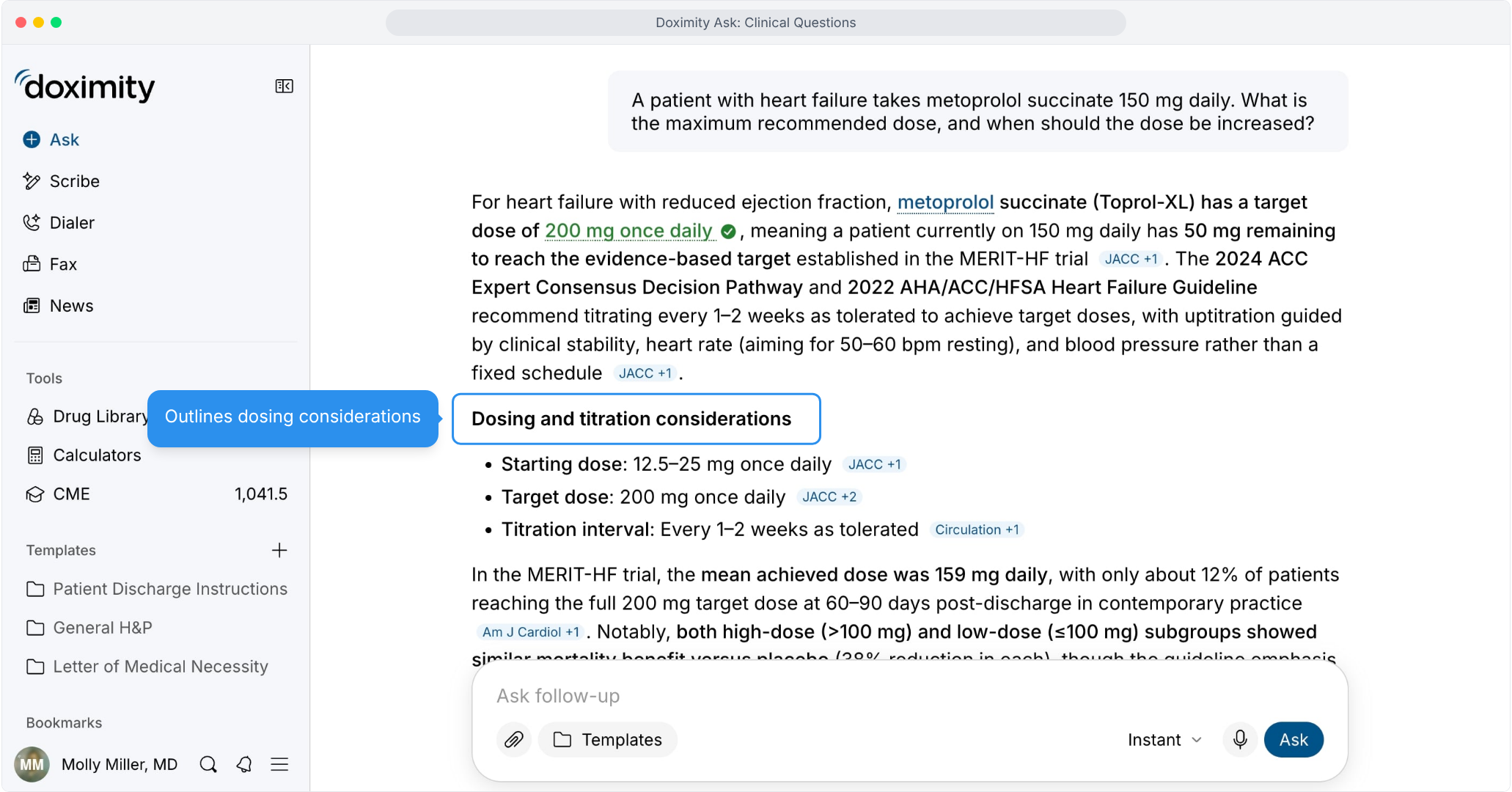
- Review Dosing and Titration
The answer separates the starting dose, target dose, and titration interval, then adds trial context for the achieved doses.
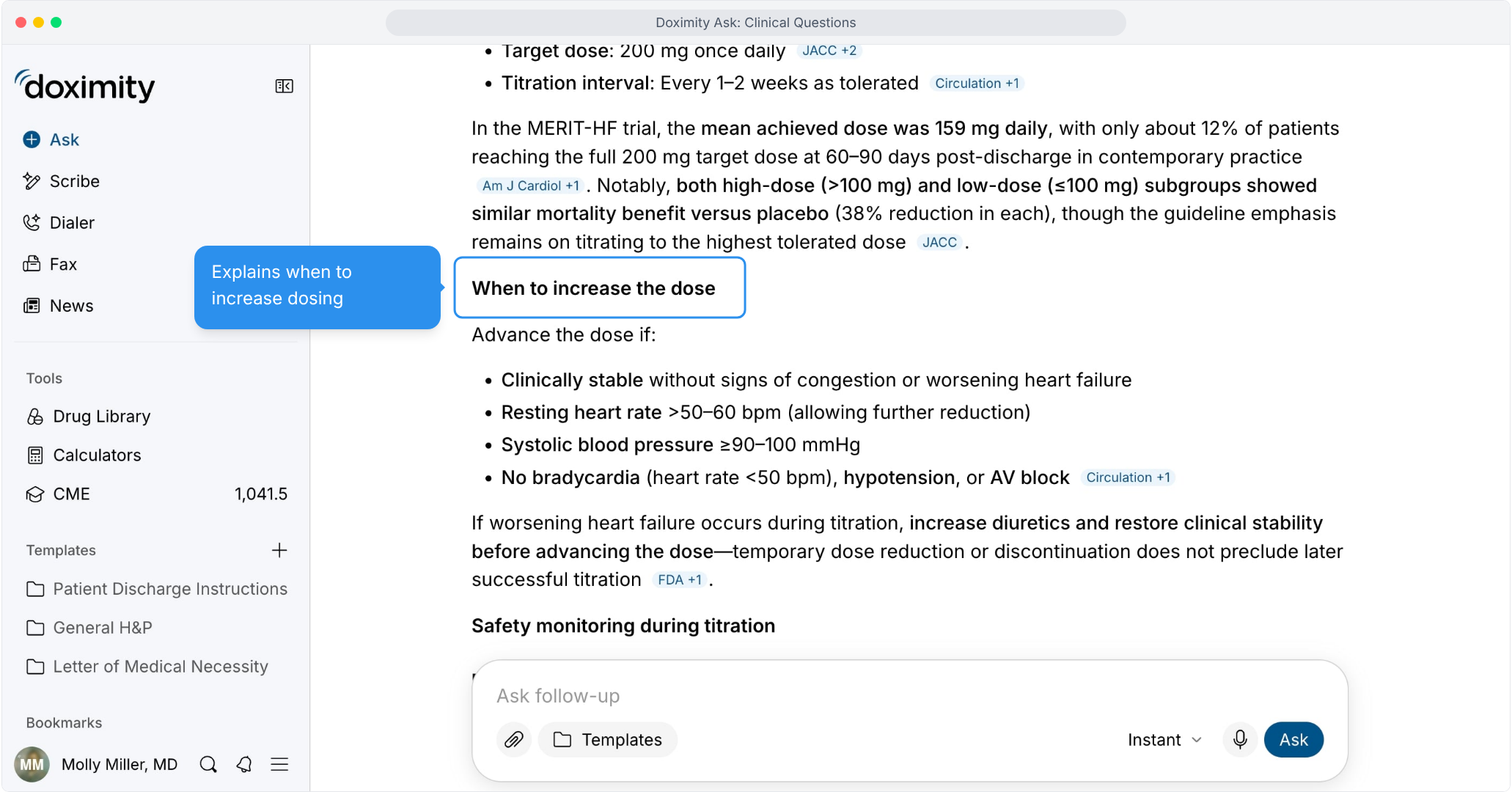
- Decide When to Increase the Dose
Clear criteria, from stability and resting heart rate to blood pressure and conduction, show when it’s reasonable to advance.
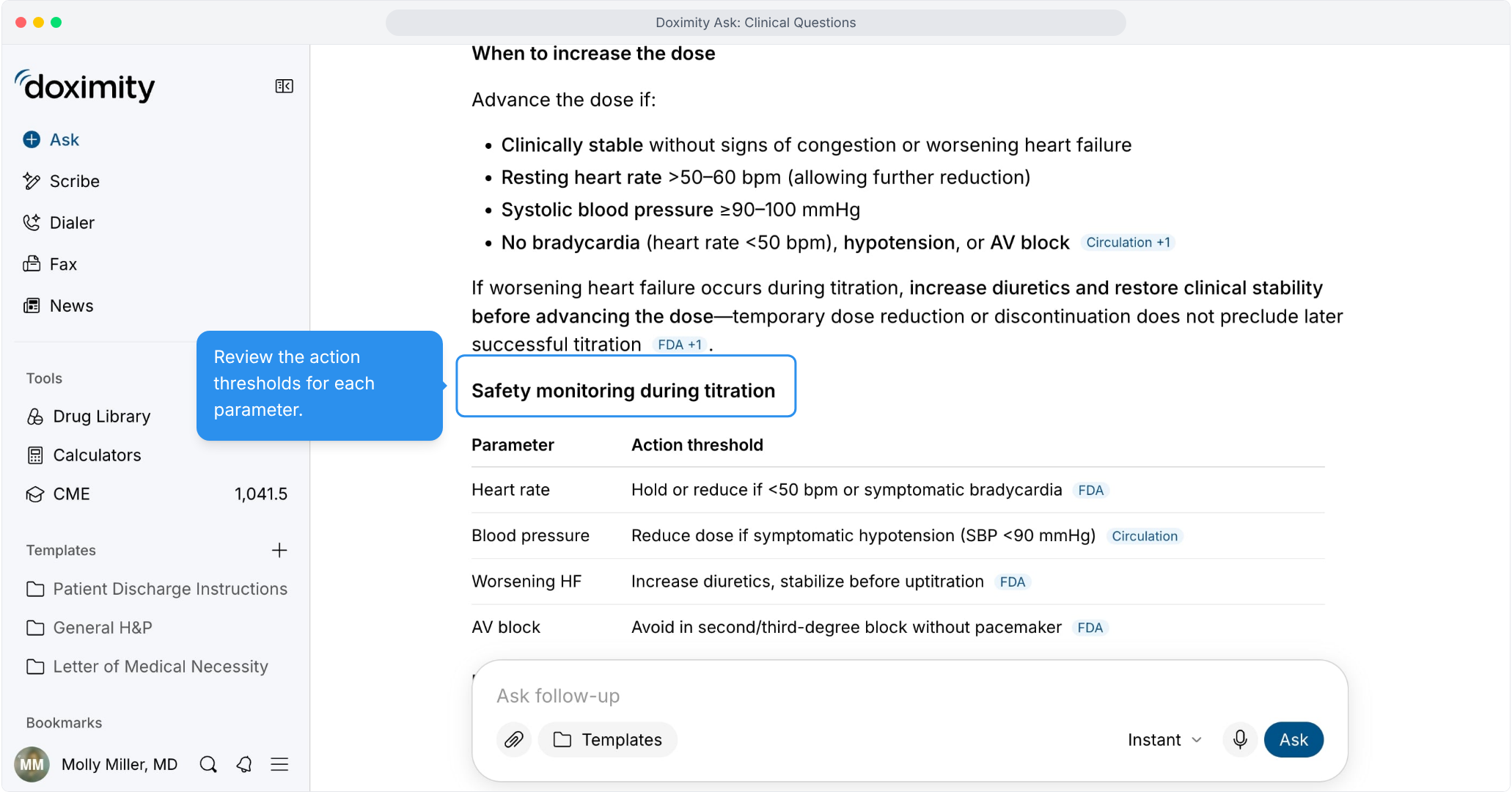
- Know When to Hold the Dose
A table pairs each parameter with the point at which to hold, reduce, or change course.
- Note the Safety Caveats
Three takeaways cover not delaying other heart failure therapies, CYP2D6 poor metabolizers, and BNP changes after starting.
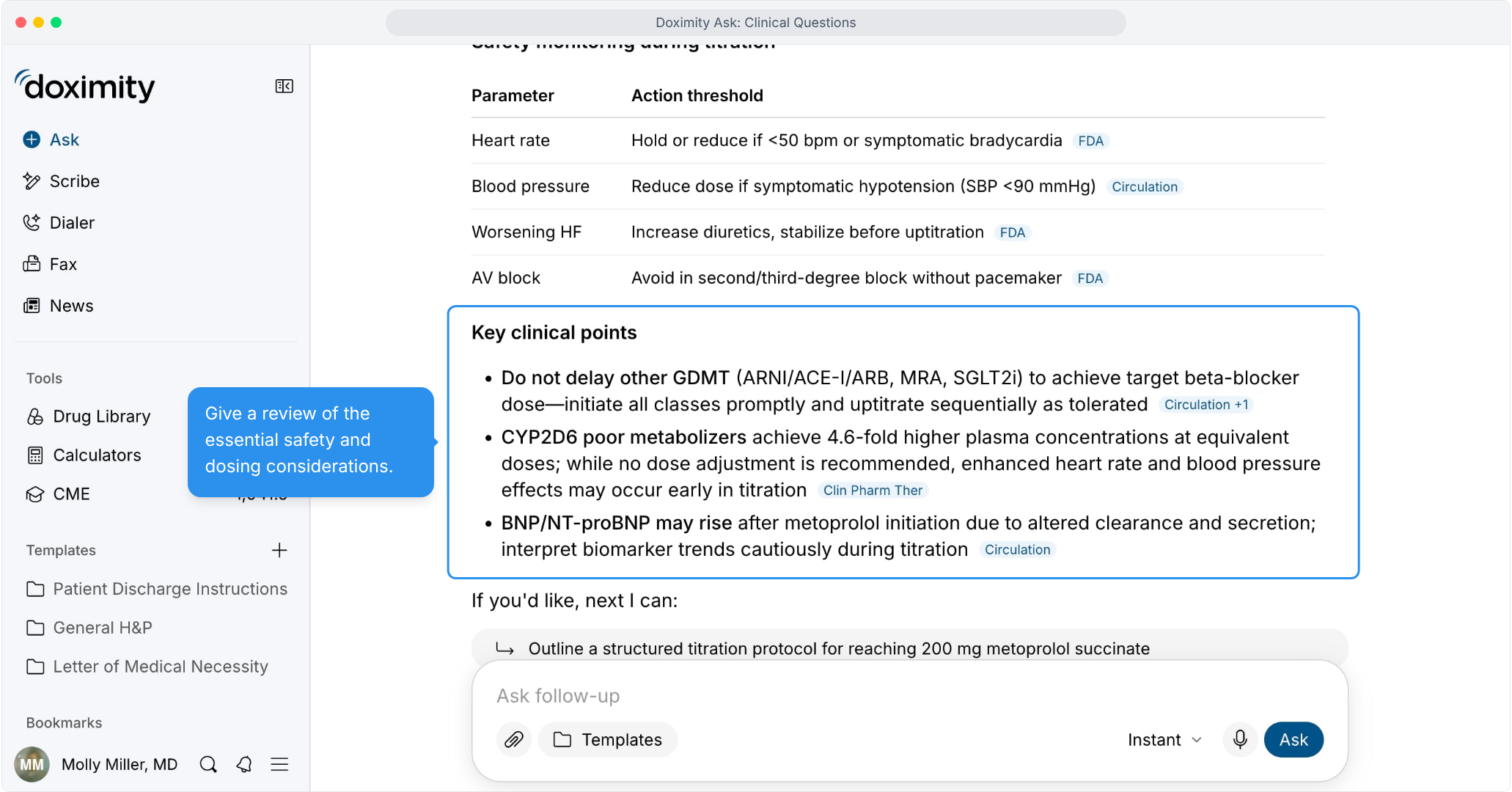
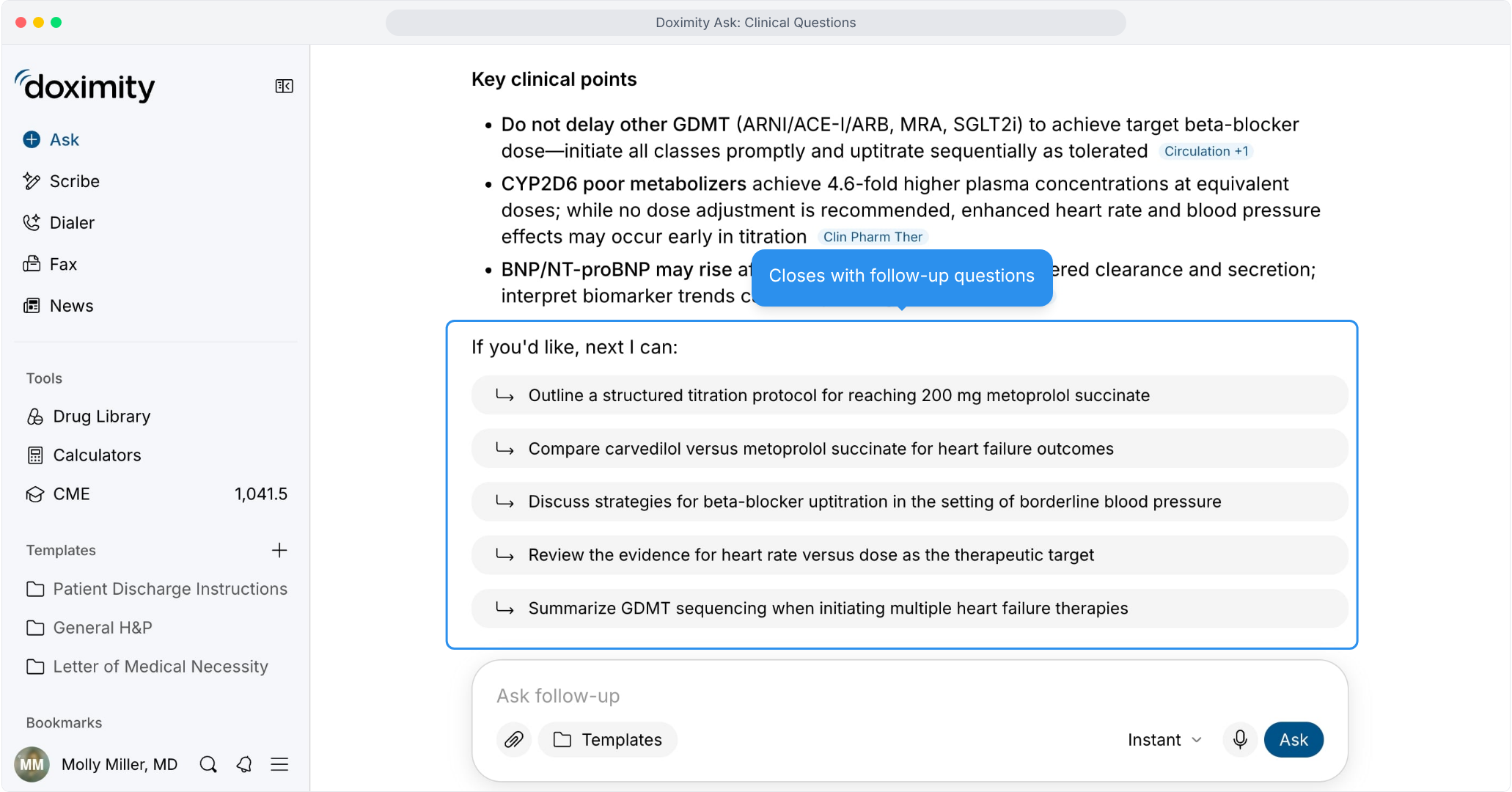
- Continue the Conversation
Five suggested prompts, such as comparing carvedilol with metoprolol, let you continue from where the answer ends.
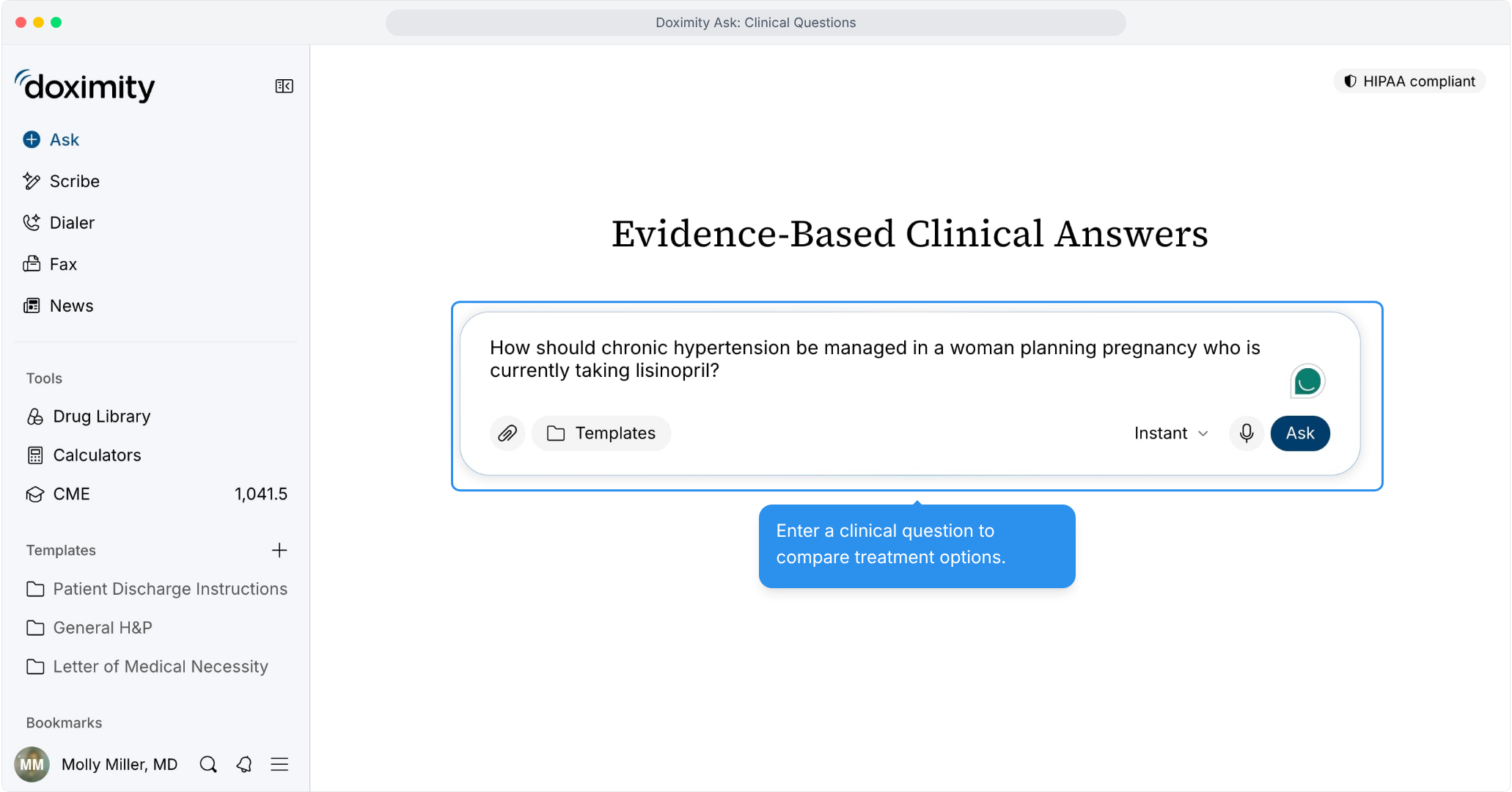
- Enter a clincial question
State the goal and the current medication and Ask weighs the options.
- Lead With the Safety Finding
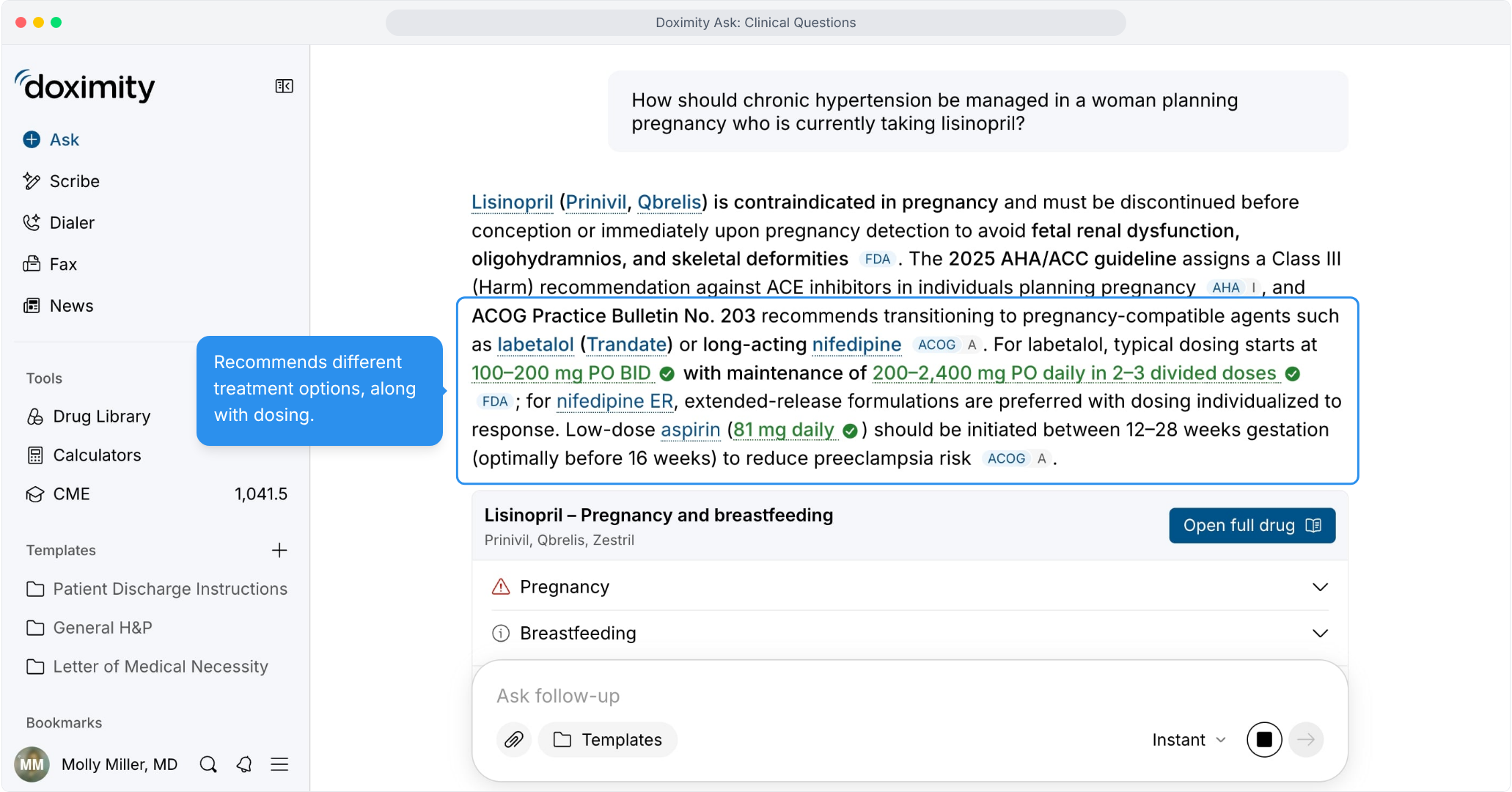
The answer opens with the key finding that lisinopril is contraindicated in pregnancy and cites the guidance behind it.
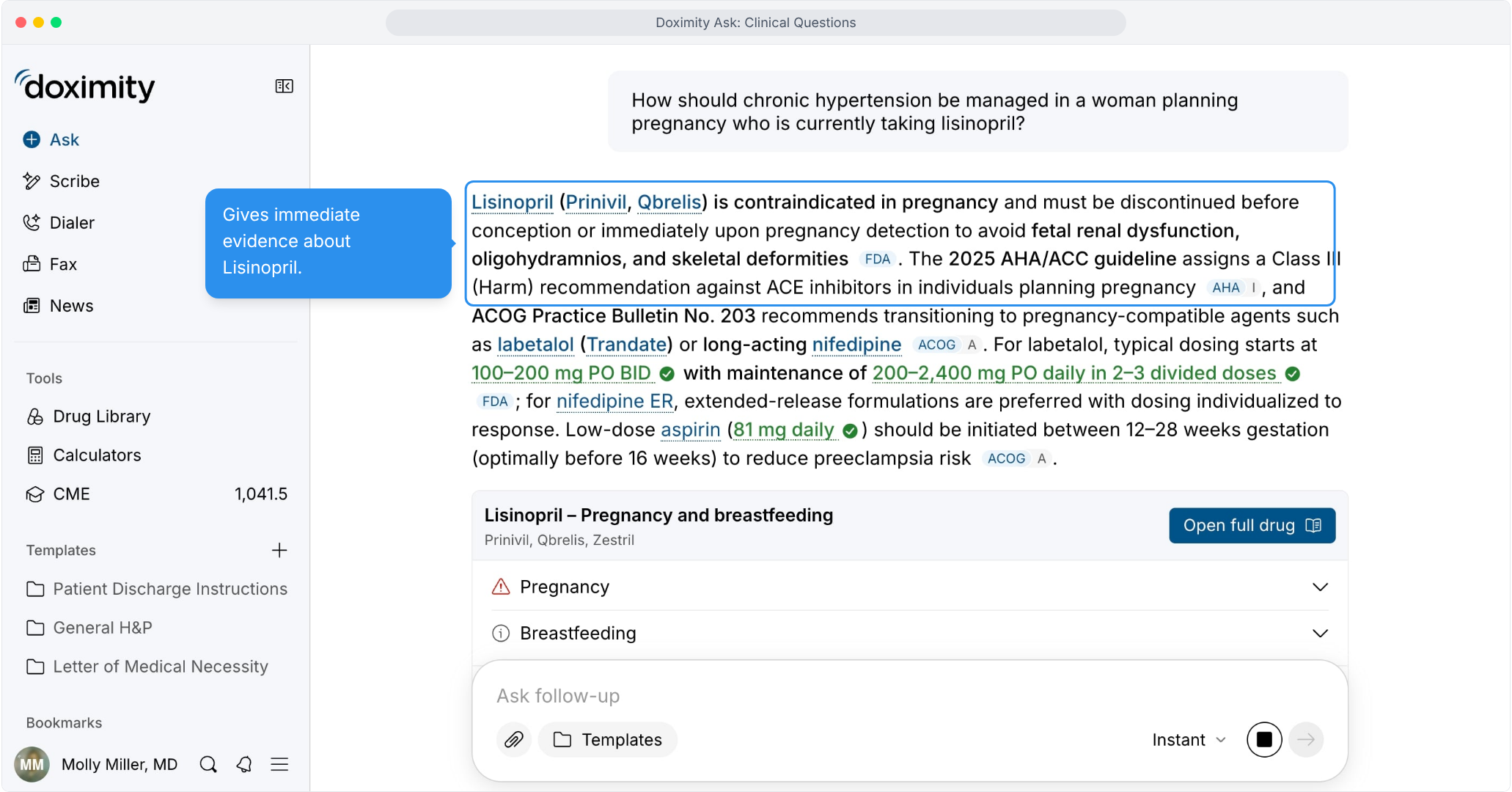
- Weigh Compatible Alternatives
Typical dosing is listed next to each recommendation so you can compare options quickly.
- Verify the Pregnancy Warning
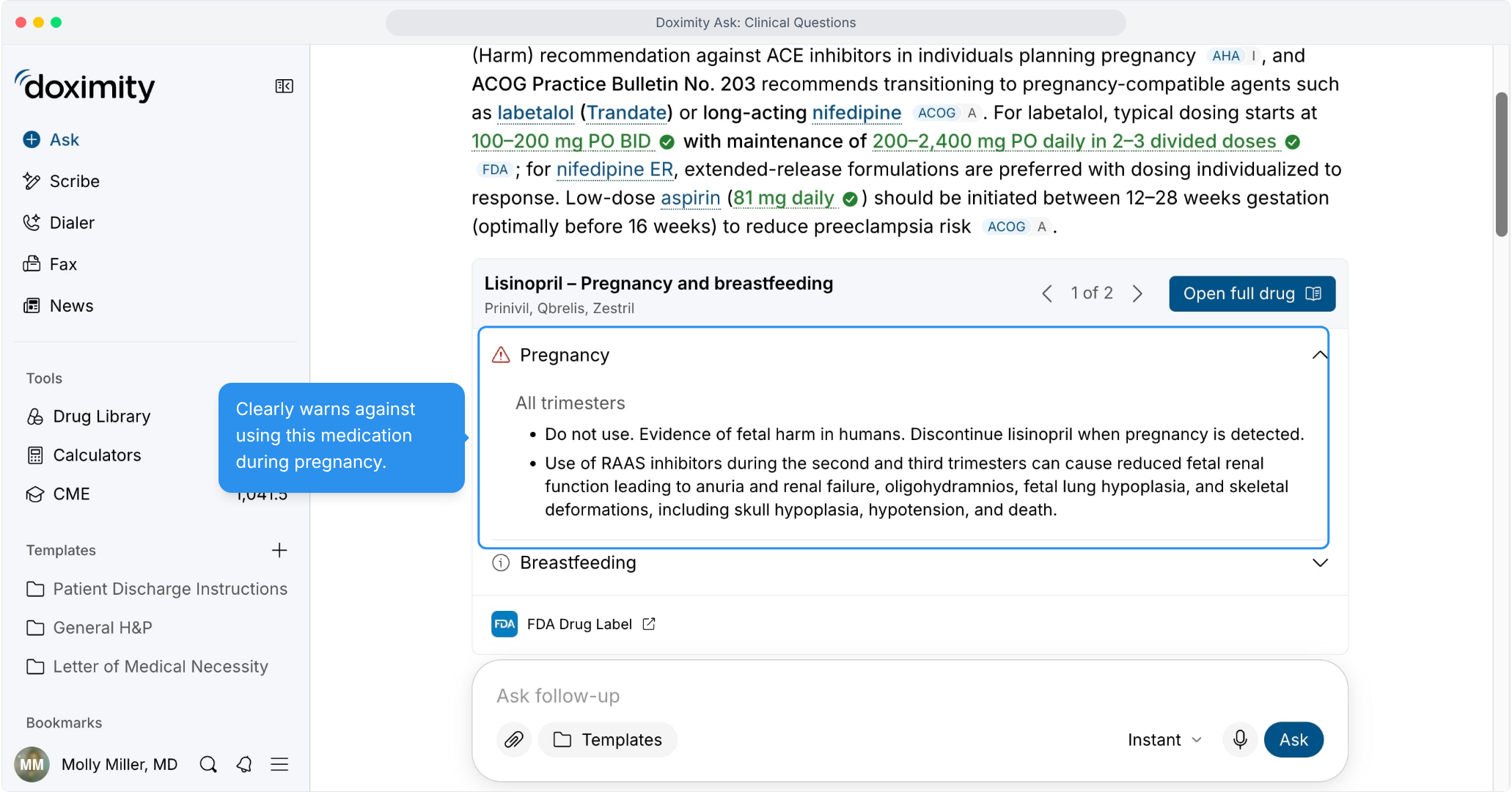
An expandable drug card shows pregnancy guidance across all trimesters, with a link to the FDA label.
- Map the Preconception Transition
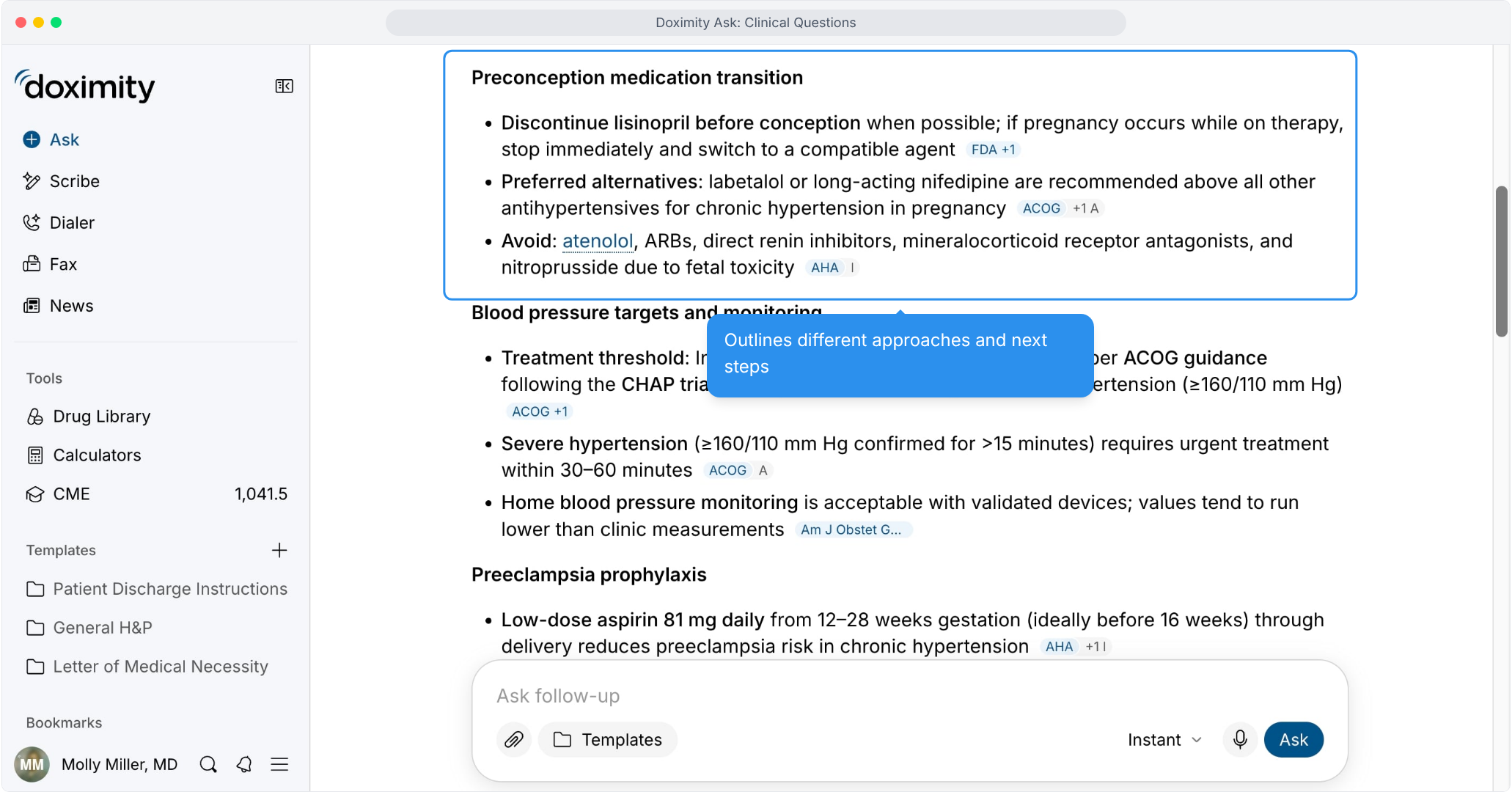
Steps for stopping lisinopril, preferred alternatives, and agents to avoid together, followed by blood pressure targets.
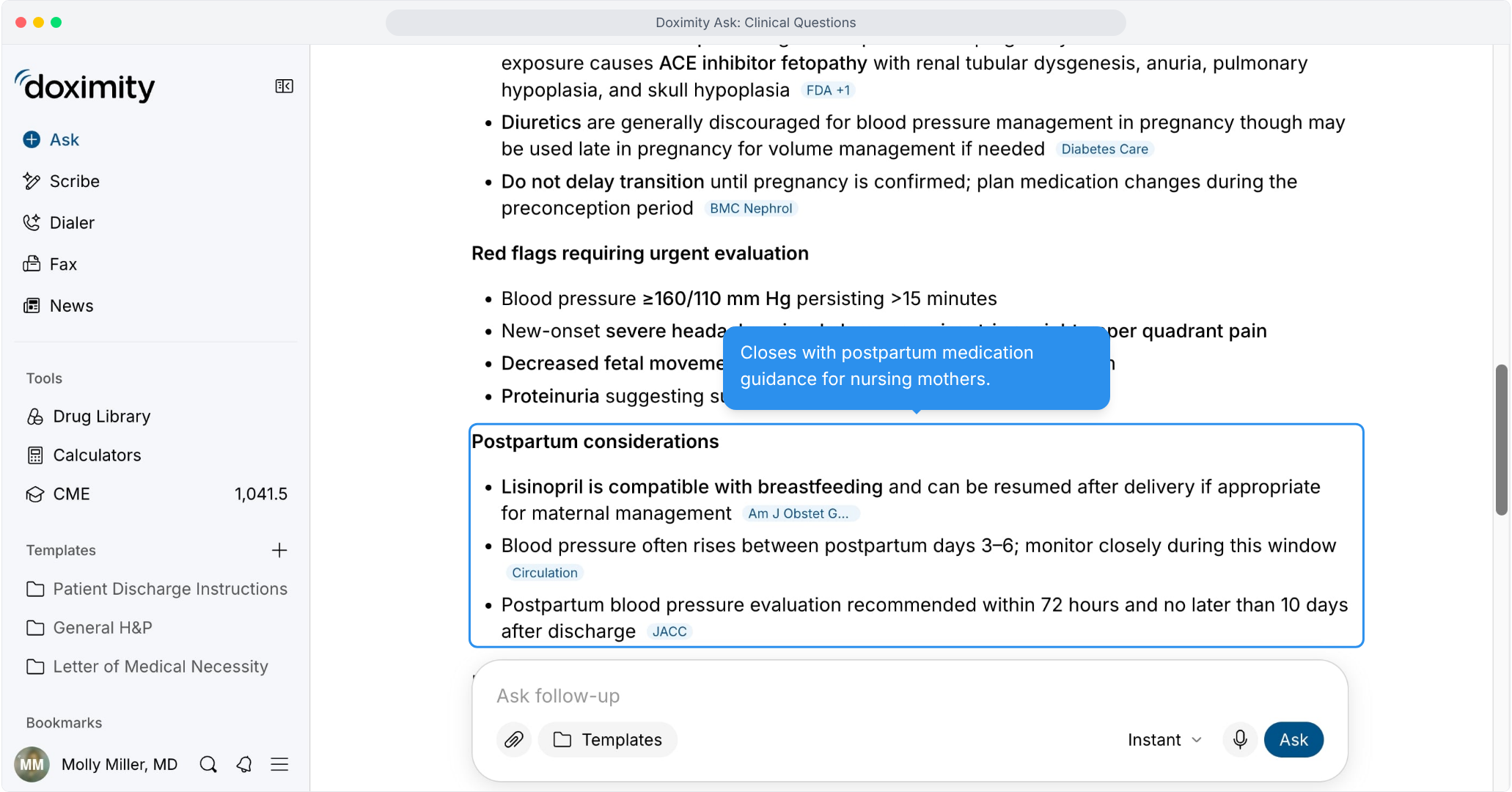
- Recognize Urgent Warning Signs
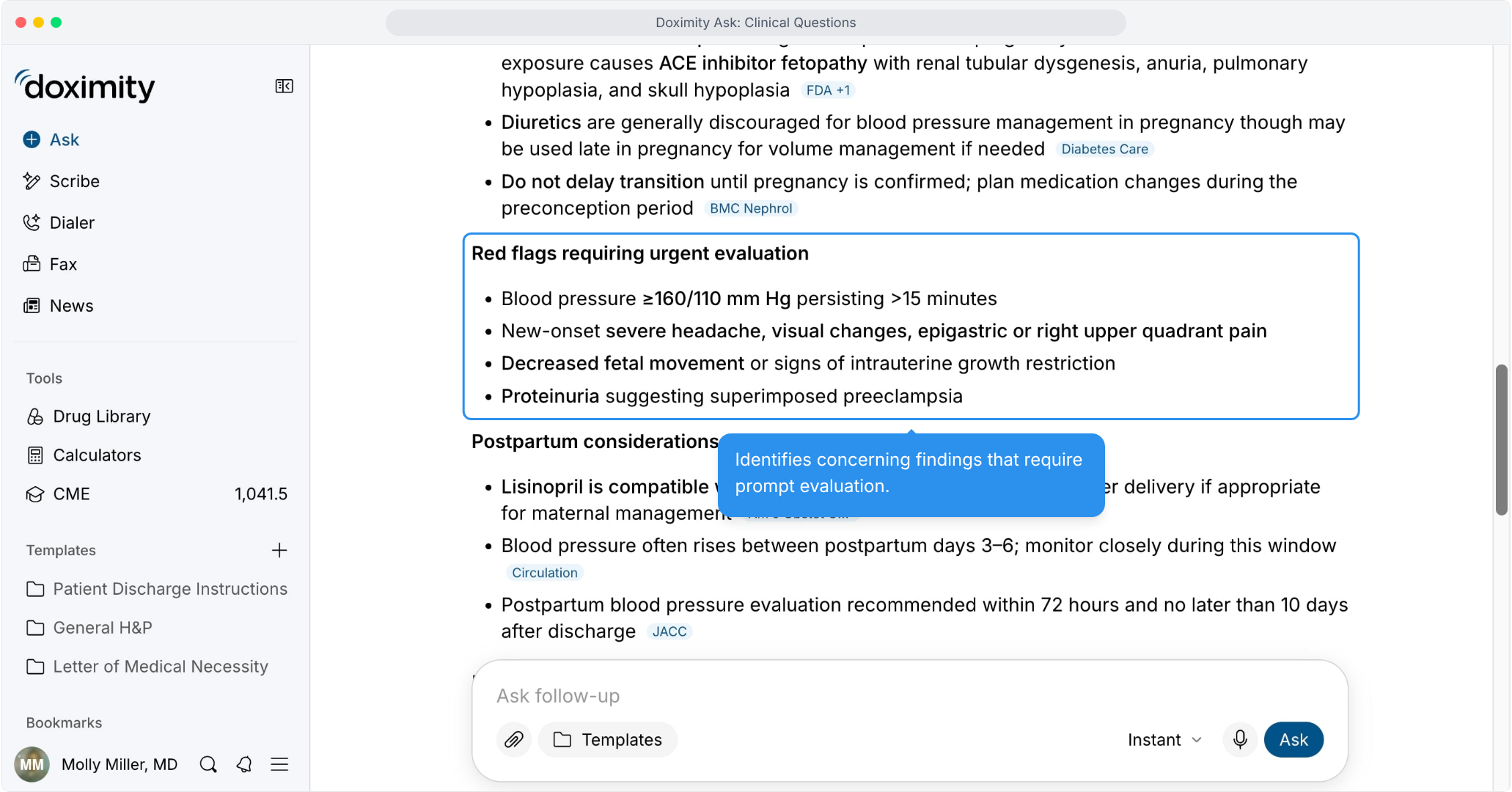
A concise list compiles the findings that require evaluation without delay.
- Address Postpartum Medication Needs
The answer ends with breastfeeding compatibility and a timeline for postpartum blood pressure checks.
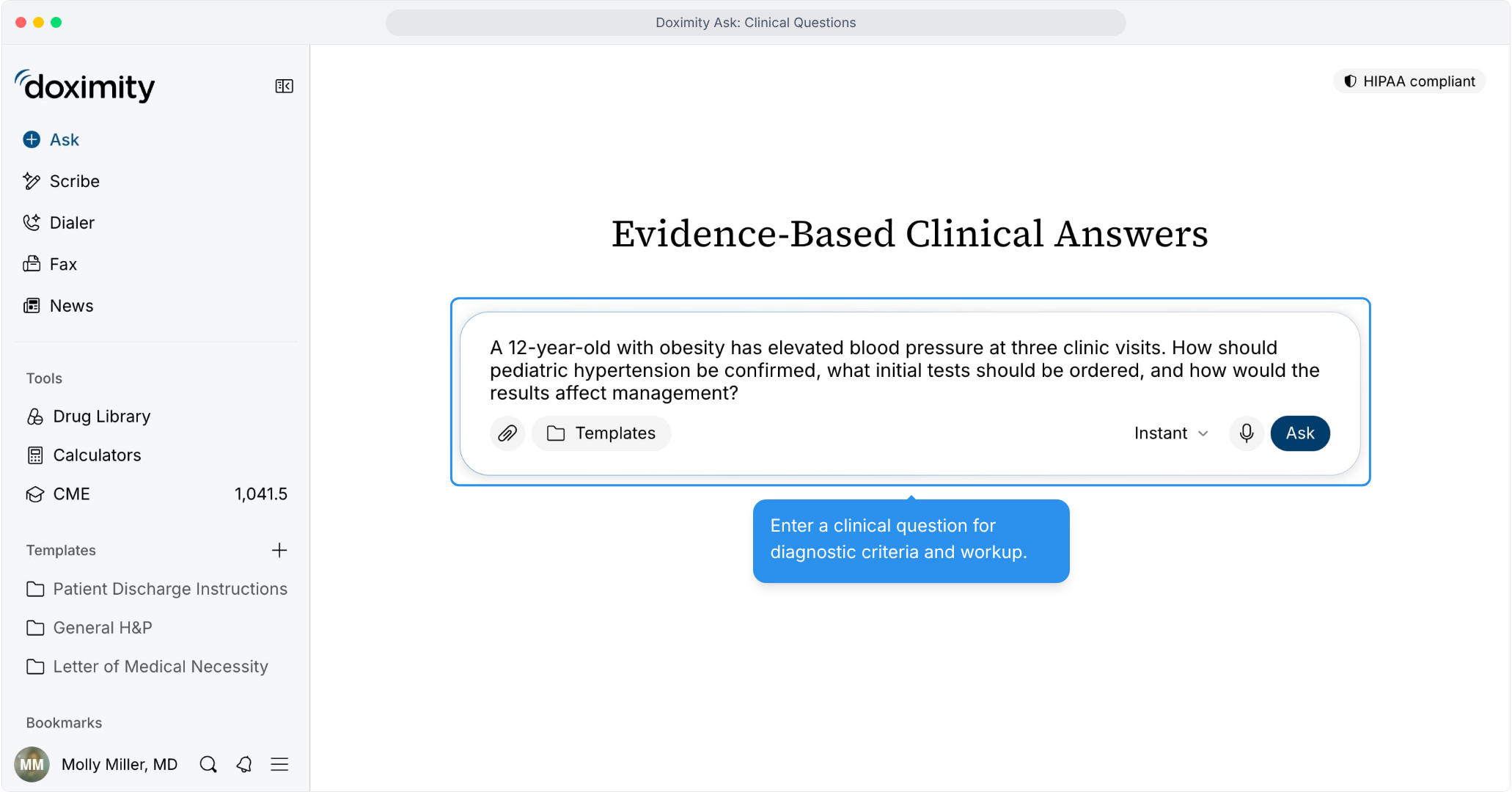
- Enter a clinical question
Describe the repeated elevated readings and the questions you want answered about confirmation and workup.
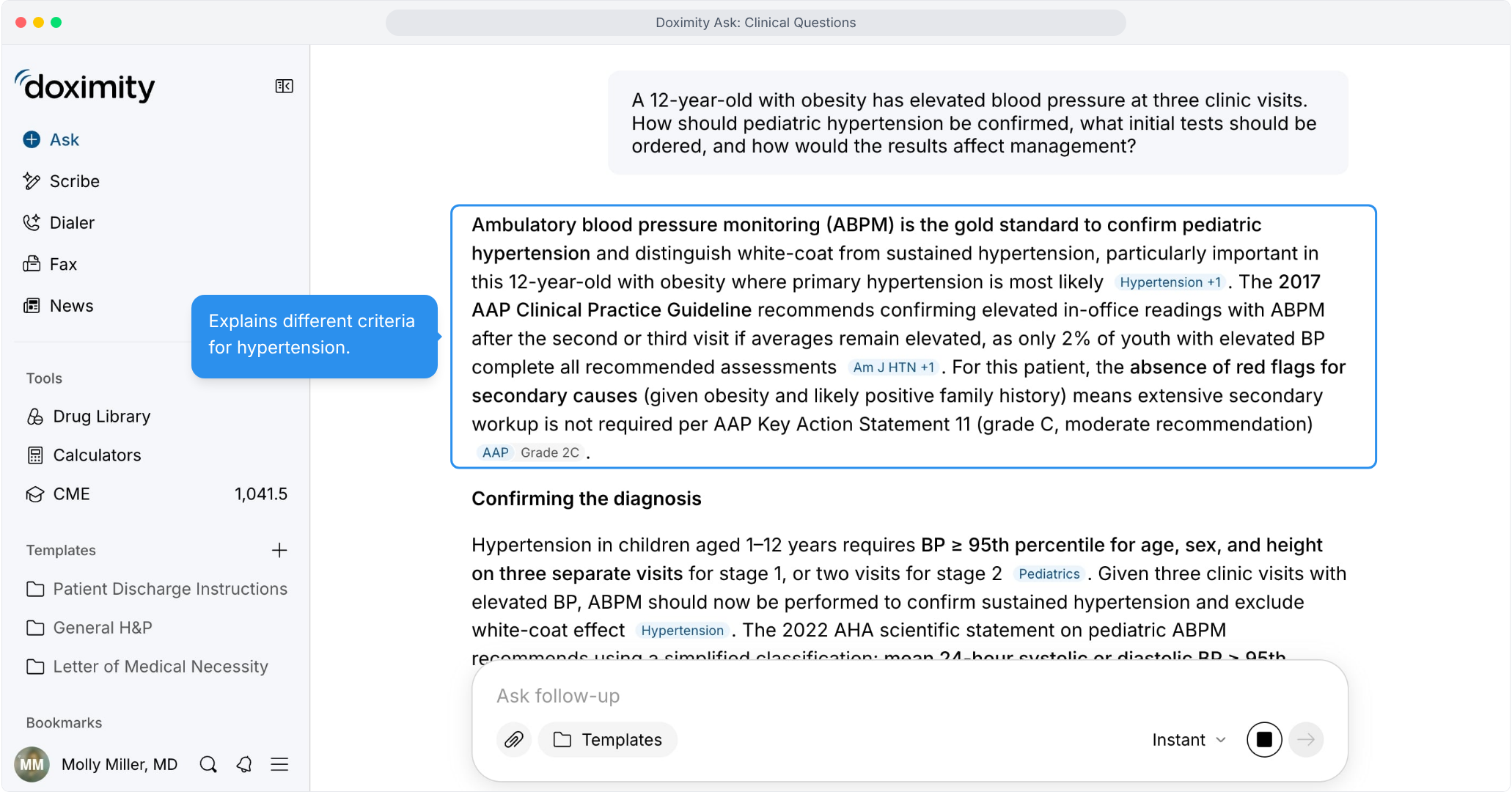
- Understand the Confirmation Approach
The answer explains how ambulatory monitoring confirms the diagnosis and why the guideline calls for a targeted workup in this patient.
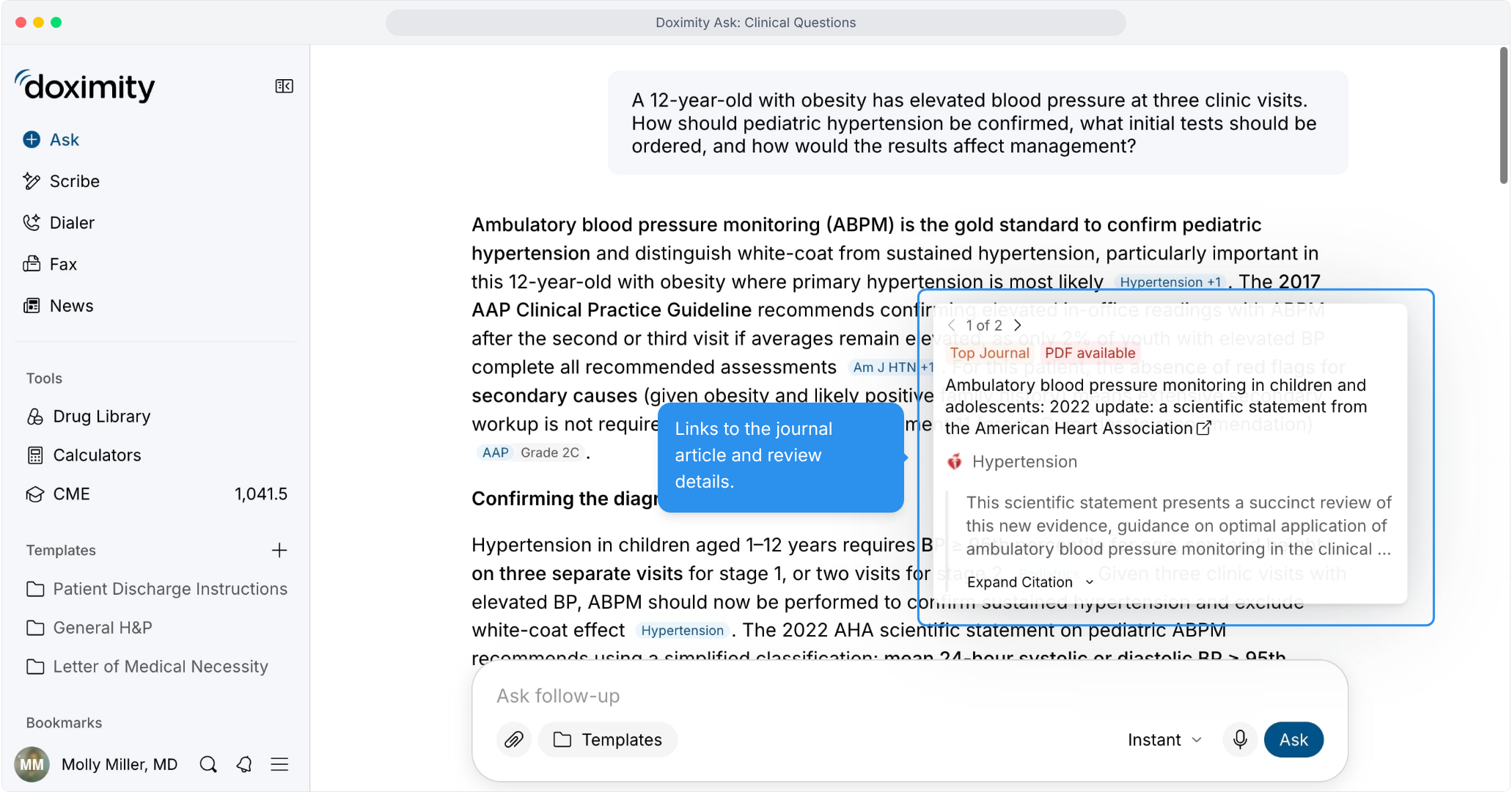
- Check the Evidence Behind It
A citation card shows the journal, a PDF availability tag, and a preview of the AHA scientific statement behind the recommendation.
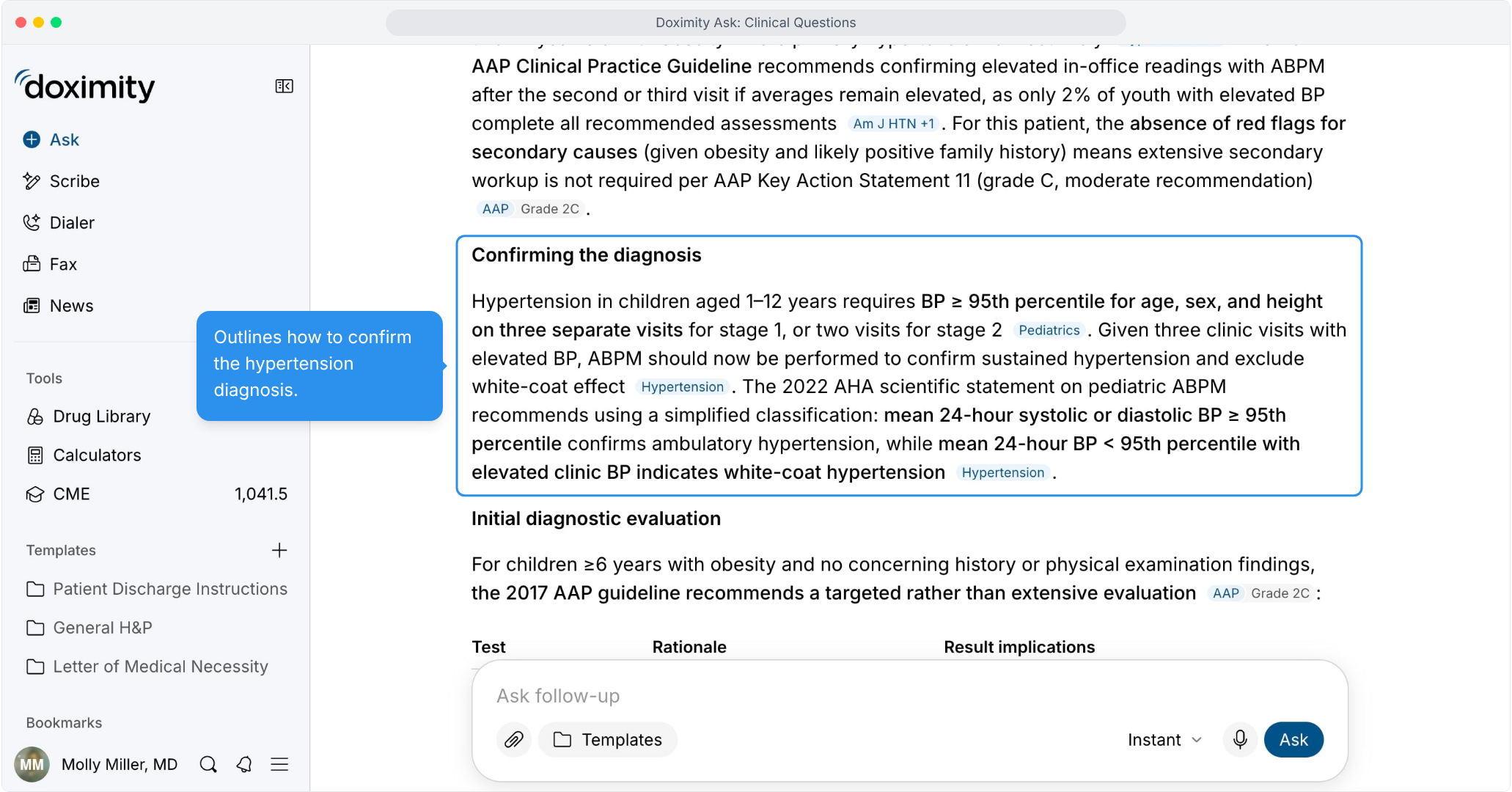
- Confirm the Diagnosis
Percentile thresholds across visits and ambulatory monitoring classifications are laid out step by step.
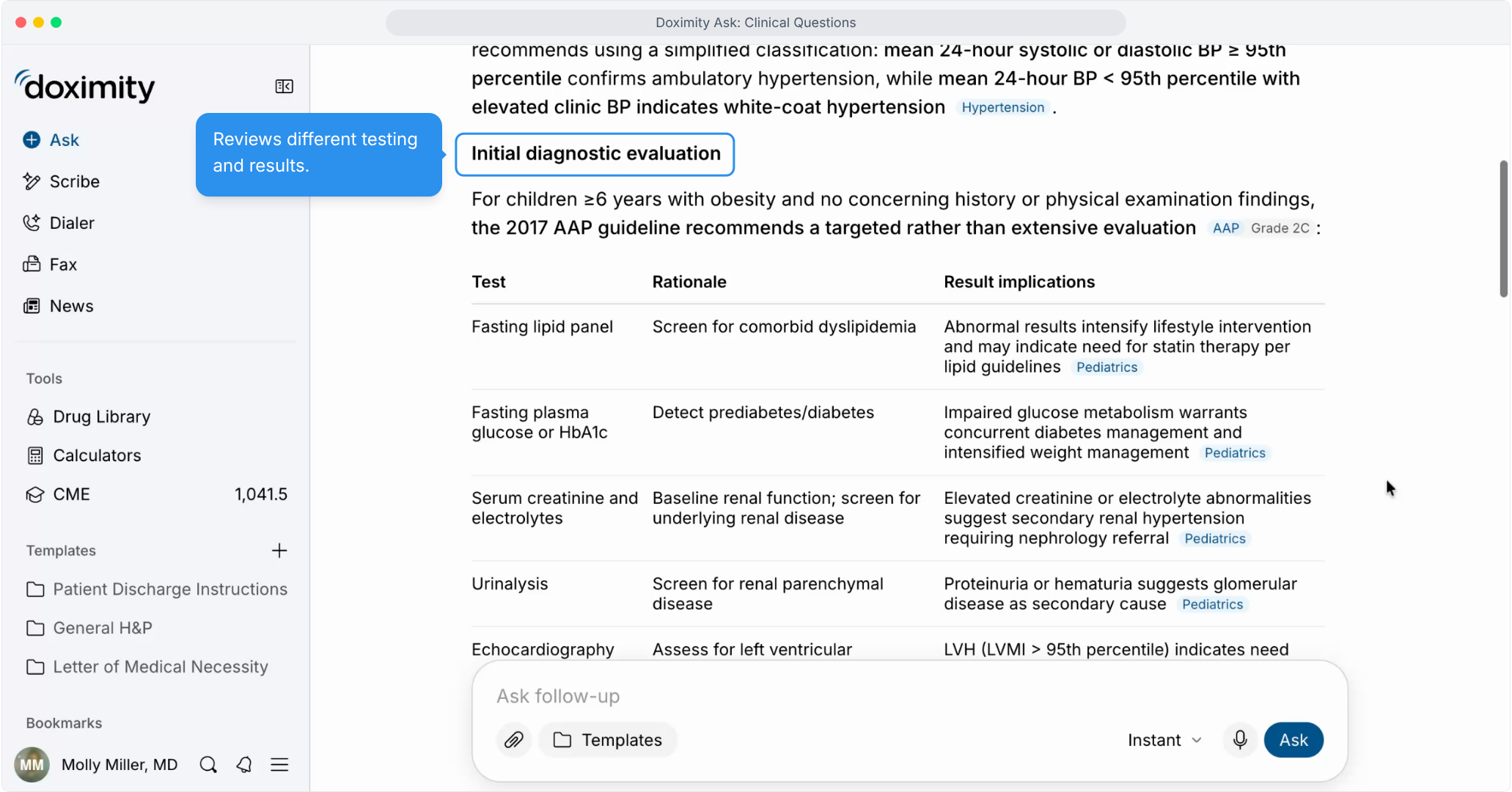
- Order a Targeted Workup
Lipid panel, glucose or HbA1c, renal tests, urinalysis, and echocardiography are listed with reasons.
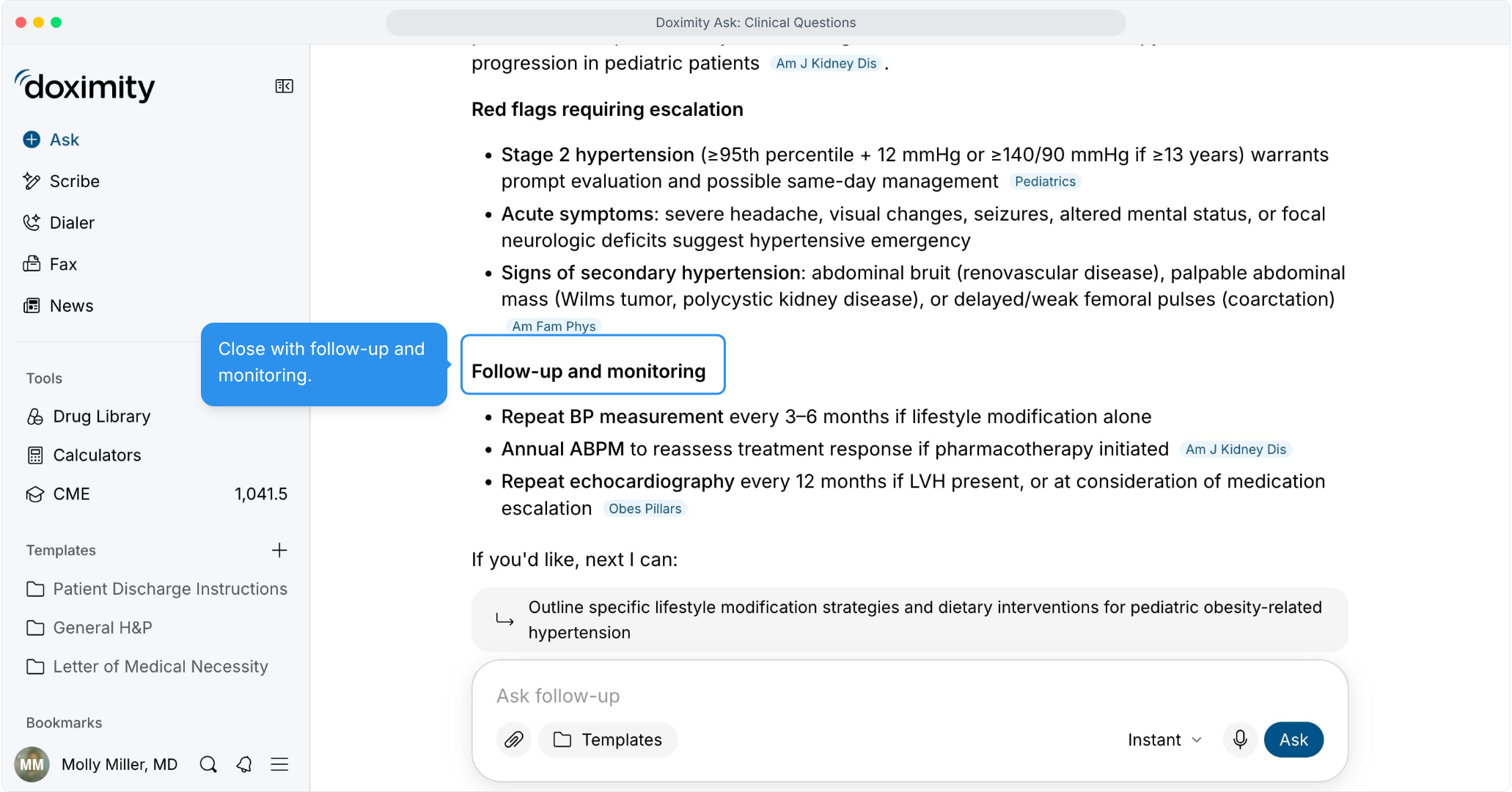
- Set a Monitoring Timeline
Concludes with guidance on when to repeat blood pressure checks, perform ambulatory monitoring, and perform echocardiography.

Features
Clinical Decision Making
Turn everyday clinical questions into focused, actionable answers. From narrowing a differential to reviewing medication safety, comparing treatment options, or planning a diagnostic workup, Ask supports decision-making at the point of care.